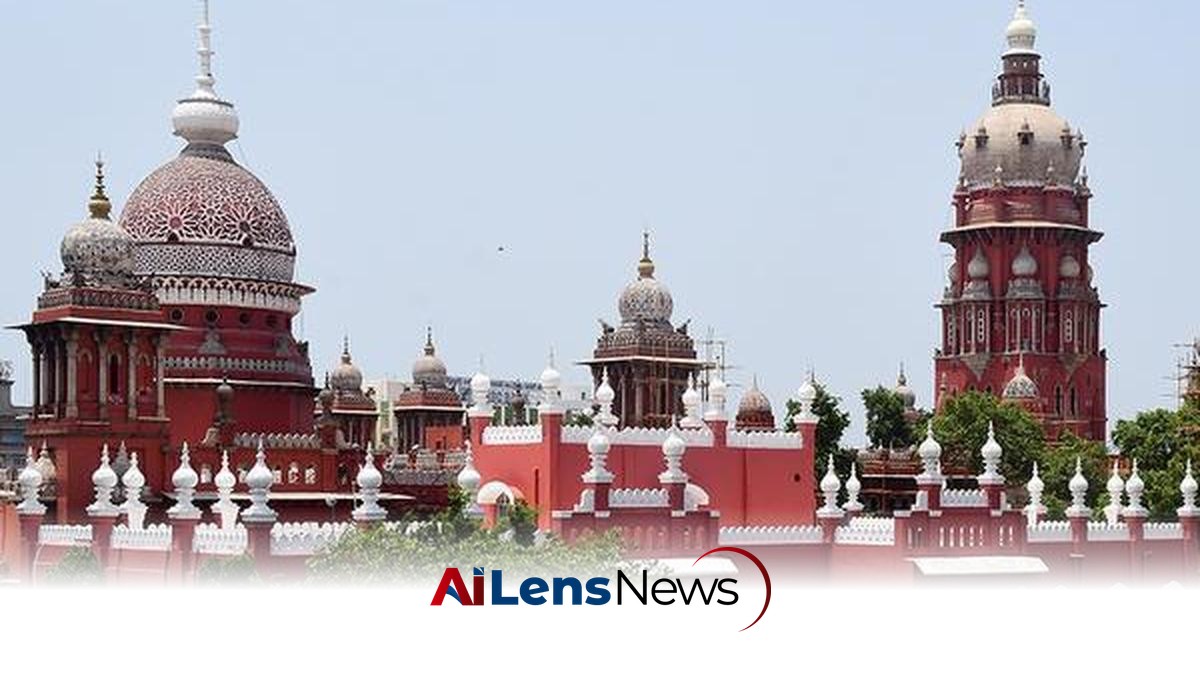


A public interest litigation has been filed in the Madras High Court, requesting a CBI probe into allegations of bribery against TVK MLA N. Elayaraja, involving ₹35 crore.
Chennai, India Jul 16, 2026 ALN: A public interest litigation (PIL) petition has been filed in the Madras High Court seeking a Central Bureau of Investigation (CBI) inquiry into an alleged bribery case involving N. Elayaraja, a Member of the Legislative Assembly (MLA) from the aga Vivasayigal Katchi (TVK) party, who represents the Uthangarai constituency. The case revolves around a reported bribe of ₹35 crore offered to the MLA to vote in favor of a proposed resolution aimed at removing Legislative Assembly Speaker J.C.D. Prabhakar from his position. The implications of this case are vast, touching on issues of political integrity, governance, and the relationship between law enforcement and political power.
The plea has been scheduled for hearing before the first Division Bench, which comprises Chief Justice Sushrut Arvind Dharmadhikari and Justice G. Arul Murugan. The hearing is set to take place on Thursday, July 16, 2026. The petition was filed by Advocate J. Balasubramani, who hails from Tiruppur. In his petition, Balasubramani asserts that he is not affiliated with any political party and is motivated solely by a desire for a fair and impartial investigation into the matter. His stance underscores the role of civil society in holding elected officials accountable and ensuring transparency in governance.
In his petition, the advocate highlighted that the TVK MLA had lodged a formal complaint with the Greater Chennai police on June 29, 2026. In his complaint, Elayaraja accused four individuals of attempting to bribe him with ₹35 crore. Following this complaint, the Triplicane police registered a First Information Report (FIR) on June 30, 2026, and initiated a probe into the allegations. The timeline of events raises questions about the motivations behind the FIR and the subsequent investigation. The quick succession of events suggests a responsive law enforcement process; however, the nature of the complaint and the high stakes involved complicate the narrative.
It is noteworthy that the PIL petitioner pointed out that the MLA had allegedly received a threatening phone call from one of the accused on June 26, 2026, which may have contributed to his decision to report the incident. This detail adds a layer of urgency to the case, as it implicates not only the accused but also raises concerns about the safety and security of public representatives. However, the petitioner expressed concerns regarding the timing of the complaint and the registration of the FIR, suggesting that the delay raises reasonable suspicion that the FIR may have been “orchestrated.” Such claims underscore the complexity and potential political implications surrounding this case, as they hint at a possible cover-up or manipulation of the legal process.
The petitioner further argued that the FIR should have been registered at the Uthangarai police station in Krishnagiri district, which is geographically closer to the MLA's constituency. Instead, the FIR was registered at the Triplicane police station, located hundreds of kilometers away, which the petitioner claims was a deliberate choice made for political convenience rather than legal necessity. This assertion raises critical questions about jurisdiction and the influence of political considerations on law enforcement processes. The choice of police station can often indicate the level of seriousness with which a case is treated and can influence the outcome of investigations.
In his affidavit, the petitioner stated, “The deliberate bypassing of the jurisdictionally proximate police station at Uthangarai, and the registration of the FIR at D1 Triplicane Police Station, hundreds of kilometers away, is a clear instance of forum selection driven not by legal jurisdiction but by political convenience and proximity to the seats of power.” This statement reflects a growing sentiment among observers who believe that political motivations may be influencing the handling of the case. The perception of bias in the investigation process could undermine public trust in the legal system and exacerbate concerns about political corruption.
Moreover, the petitioner referenced a series of recent resignations by MLAs elected on AIADMK tickets, coupled with complaints from several DMK MLAs alleging that they too had been offered bribes to resign their positions. These developments point to a potentially broader issue of political maneuvering and alleged corruption within the state's legislative assembly. The implications of these allegations are significant, as they raise concerns about the integrity of the political process and the potential for corruption in the functioning of the government. This situation highlights the precarious nature of political alliances and the lengths to which parties may go to secure their positions.
In light of these circumstances, the petitioner has insisted that the investigation currently being conducted by the Triplicane police should be transferred to the CBI. He argues that a central agency is better equipped to conduct a thorough and impartial investigation into the matter. The petitioner believes that the CBI should not only examine the complaint made by the TVK MLA but also investigate any other complaints related to alleged horse trading by the ruling party in order to maintain its grip on power. This call for a CBI inquiry highlights the growing demand for accountability and transparency in political affairs, particularly in a state where allegations of corruption have surfaced in recent years.
The ramifications of this case extend beyond the immediate allegations against the MLA and the individuals involved. If the CBI is tasked with investigating the matter, it could potentially uncover a web of political corruption that spans multiple parties and levels of government. Such an investigation could also lead to a reevaluation of the political landscape in , where recent events have raised questions about the stability and ethical conduct of elected officials. The potential for a cascading effect on other political figures and parties involved in similar practices cannot be overlooked.
As the case unfolds in the Madras High Court, it is likely to attract significant public and media attention. The implications of the court's decision regarding the CBI investigation could have far-reaching consequences for the political dynamics in . Furthermore, it could set a precedent for how similar allegations of bribery and corruption are handled in the future. The pursuit of justice in this case may ultimately hinge on the court's willingness to confront the complex interplay of politics and law enforcement in the state. The outcome may also influence public perception of the judiciary's role in safeguarding democracy and upholding the rule of law.
In conclusion, the unfolding situation surrounding the PIL filed in the Madras High Court raises critical questions about the nature of political conduct in . It underscores the necessity for robust mechanisms to ensure accountability among public officials and highlights the challenges faced by law enforcement agencies when navigating politically sensitive cases. The demand for a CBI investigation reflects a broader societal call for transparency and integrity in governance, as citizens increasingly seek assurance that their representatives are acting in the public interest rather than being swayed by corruption and malfeasance. As the legal proceedings progress, the implications for the political landscape will be closely monitored by both citizens and political analysts alike.
To learn more about the latest developments in Political Controversies, stay updated with our exclusive reports and analyses on AiLensNews.

