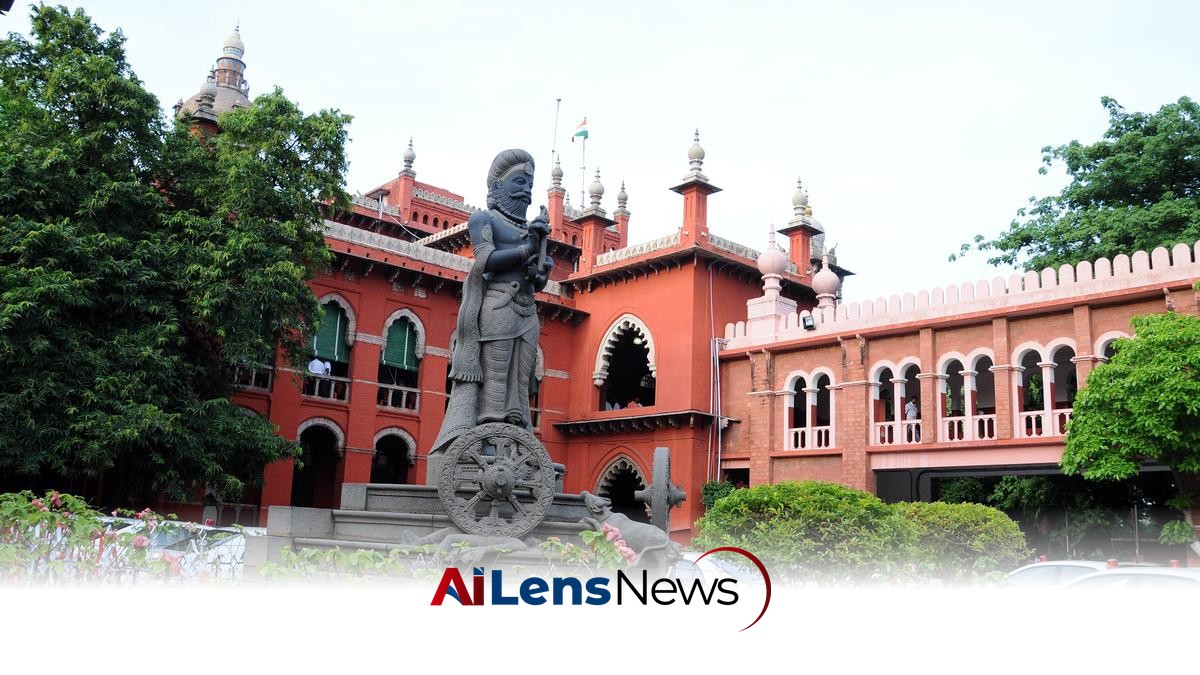


Two individuals arrested in connection with an alleged bribery attempt involving TVK MLAs seek bail from the Madras High Court after their initial plea was denied.
Chennai, India Jul 26, 2026 ALN: The Madras High Court is poised to hear a significant bail plea concerning two individuals implicated in an alleged bribery scheme involving ruling party MLAs from the Vettri Kazhagam (TVK). The case has garnered attention not only for its political implications but also for the serious allegations of corruption and bribery that have surfaced. This situation underscores the intricate relationship between politics and law enforcement in India, especially in a landscape where political rivalries often lead to allegations of misconduct.
The background of this case dates back to the ongoing political tensions in , where the TVK, a regional party, has been accused of attempting to destabilize the ruling government through financial inducements. The political climate in has historically been charged, with various parties vying for power and influence. The Vettri Kazhagam, in particular, has been at the center of several controversies, and this case is no exception. The allegations of bribery extend beyond mere financial transactions; they suggest a broader strategy aimed at weakening the current administration by enticing its members to defect.
On July 17, 2026, the principal district and sessions court in Chennai denied bail to the accused, S. Karthik from Tiruppur and T. Ramesh from Karur, primarily due to the ongoing investigation, which was deemed to be at a critical stage. The court highlighted the substantial Hawala transactions involved, which are often associated with money laundering and other forms of financial crime. Hawala is a traditional method of transferring money without the physical movement of cash, often used to circumvent regulatory frameworks. The involvement of such transactions raises serious concerns about the integrity of the investigation and the potential for further illicit activities, as they can be used to obscure the source and destination of funds.
The judge assigned to hear the bail petition, Justice G.K. Ilanthiraiyan, oversees cases related to Members of Parliament and Members of Legislative Assemblies (MP/MLA), indicating the political sensitivity of the case. The involvement of high-profile figures, including former DMK Minister and current Coimbatore South MLA V. Senthilbalaji, adds another layer of complexity. Senthilbalaji is accused of orchestrating a scheme to offer a bribe of ₹35 crore to each TVK MLA, along with a commission of ₹5 crore to intermediaries who could successfully entice these legislators away from their party. This alleged scheme not only raises ethical questions but also points to the lengths to which political actors may go to secure their power and influence.
The allegations are serious, as they suggest a deliberate attempt to undermine the political stability of the ruling party by poaching its members through financial inducements. This situation raises questions about the ethical conduct of politicians and the lengths to which some may go to maintain or enhance their power. The implications of such actions can be far-reaching, potentially destabilizing the political landscape and eroding public trust in elected officials.
The petitioners, Karthik and Ramesh, have positioned themselves as victims of a flawed investigation. They argue that their names were not included in the First Information Report (FIR) initially filed by the Triplicane police on June 30, based on a complaint from N. Elaiyaraja, the TVK MLA from Uthangarai. This omission, they contend, underscores their claim that their arrests were not based on solid evidence but rather on speculative police investigations. The legal principle of fair trial and due process is central to their argument, emphasizing the need for a thorough and unbiased investigation.
In their appeal, the petitioners also highlighted procedural violations, claiming that the police did not adhere to proper protocols as outlined in Section 35(3) of the Bharatiya Nagarik Surasksha Sanhita, which mandates that individuals arrested must be presented before a judicial magistrate within 24 hours. They assert that their detention was unlawful and that their rights were compromised during the arrest process. Such claims, if substantiated, could have significant implications for the legitimacy of the police investigation and the credibility of the evidence presented against them.
Moreover, Karthik and Ramesh allege that the police coerced them into making confessions that implicated Senthilbalaji and his brother, R.V. Ashok Kumar, in the bribery scheme. They maintain that their relationship with the brothers was merely social, lacking any financial or political entanglements that would warrant such accusations. This claim of coercion raises significant concerns about the methods employed by law enforcement in high-pressure investigations, particularly in politically charged cases. The integrity of confessions obtained under duress is a critical issue in the legal system, as it can lead to wrongful convictions and undermine public confidence in the justice system.
On the other hand, the prosecution has presented a robust argument against granting bail. They assert that Karthik and Ramesh were not mere bystanders but active participants in a conspiracy aimed at destabilizing the government. The prosecution alleges that the accused were involved in various meetings across Chennai, where they allegedly engaged in discussions about the bribery scheme and facilitated Hawala transactions—an illegal method of transferring money that often circumvents traditional banking channels. This characterization of the accused as active participants rather than innocent bystanders is crucial to the prosecution's case.
Furthermore, the prosecution claims to have recovered substantial amounts of cash from the residences of other accused individuals, indicating a broader network of financial misconduct. This evidence, they argue, substantiates the claim that the accused were deeply entrenched in the conspiracy and that releasing them on bail could jeopardize the ongoing investigation. Concerns were raised about potential evidence tampering, which could severely undermine the prosecution's case. The ability of the prosecution to present concrete evidence of wrongdoing will play a pivotal role in the proceedings, as the court evaluates the merits of the bail application.
After weighing the arguments from both sides, Sessions Judge S. Karthikeyan dismissed the bail plea, leading the petitioners to escalate their case to the Madras High Court. The decision to approach a higher court reflects the gravity of the situation and the petitioners' determination to contest their arrests and the charges against them. The escalation to the High Court is a significant step, as it allows for a broader examination of the legal issues at play and the potential for a more favorable outcome for the petitioners.
The implications of this case extend beyond the individuals involved. It highlights the pervasive issue of corruption within political systems and raises questions about accountability and governance. As the High Court prepares to hear the bail petition, the outcome could have far-reaching effects on the political landscape in and potentially set precedents for how similar cases are handled in the future. The legal principles established in this case may influence future investigations and prosecutions involving political figures, particularly in cases involving allegations of bribery and corruption.
In addition, this case could influence public perception of the political parties involved, particularly the ruling party and the DMK, as they grapple with allegations of corruption and misconduct. The political ramifications could be significant, especially in light of upcoming elections, where issues of integrity and governance are likely to be at the forefront of voter concerns. Public trust in political institutions is crucial for a functioning democracy, and ongoing allegations of corruption can have detrimental effects on voter turnout and political engagement.
As the legal proceedings unfold, the Madras High Court's decision will be closely monitored, not only for its immediate consequences for the accused but also for its broader implications on the fight against corruption and the integrity of the political system in . The case serves as a reminder of the ongoing challenges faced by law enforcement and the judiciary in addressing corruption, as well as the need for transparency and accountability in political processes. The outcome of this case may ultimately shape the future of political conduct in the region and influence the strategies employed by political parties in their quest for power.
To learn more about the latest developments in Political Controversies, stay updated with our exclusive reports and analyses on AiLensNews.

