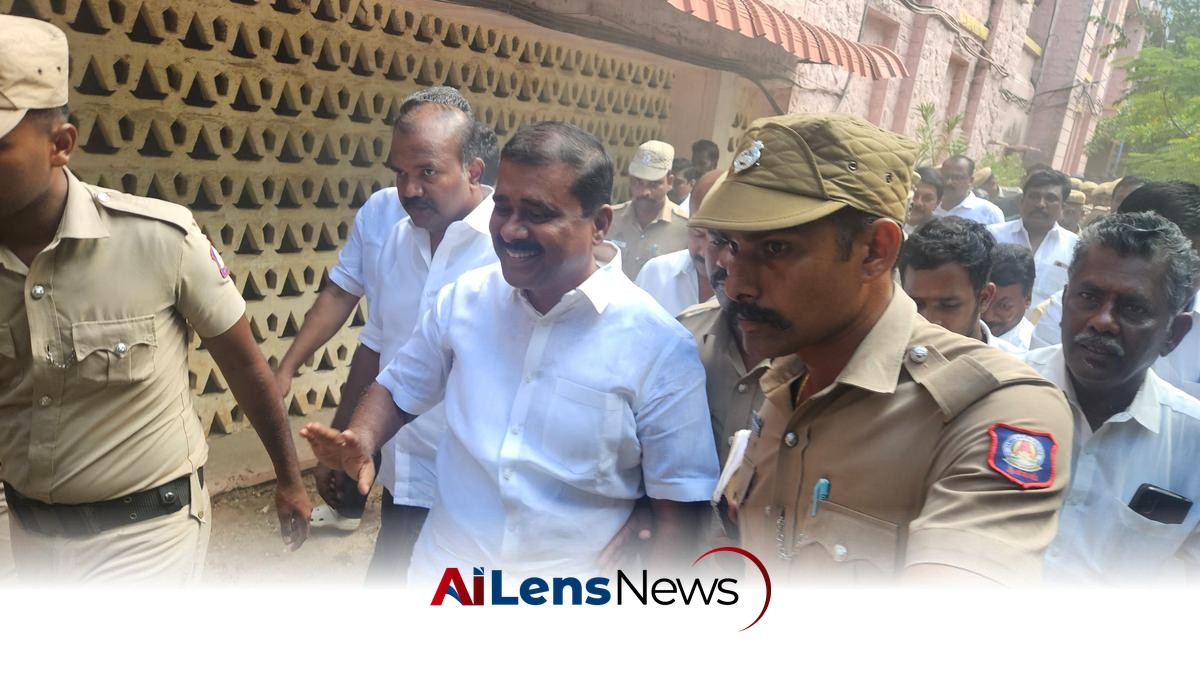


The bail petition of Vilathikulam MLA G. V. Markandayan was dismissed by a court following serious threats made against Chief Minister C. Joseph Vijay.
Chennai, India Jul 22, 2026 ALN: A court here on Wednesday dismissed the bail petition of Vilathikulam MLA G. V. Markandayan, who was arrested for his alleged derogatory and threatening remarks against Chief Minister C. Joseph Vijay at a public meeting held at Kovilpatti in the district recently. This decision has raised significant concerns regarding political discourse and the limits of free speech in the region.
The Judicial Magistrate – I, Sumathi also rejected the police’s plea seeking custody for questioning of Mr. Markandayan, who has been lodged in Palayamkottai Central Prison after being remanded in judicial custody on Monday. The refusal of bail and police custody highlights the seriousness with which the legal system is treating the allegations against Mr. Markandayan, reflecting the broader implications of political rhetoric in a democracy.
When his bail petition came up for hearing on Wednesday, the prosecution opposed it, stating that the bail petition should be rejected as the accused had issued serious threats to the Chief Minister. This case is not merely about the individual actions of Mr. Markandayan; it also touches upon the responsibilities of elected officials and the potential consequences of inflammatory speech in a politically charged environment.
The petitioner’s counsel, after seeking the bail, argued that there was no need for granting police custody for questioning Mr. Markandayan, who had already been interrogated for nearly 11 hours after he was picked up on Monday morning. This assertion raises questions about the fairness of the interrogation process and whether adequate legal protections were afforded to Mr. Markandayan during this time. The legal framework in such cases often comes under scrutiny, especially when the accused is a public figure.
As Ms. Sumathi dismissed both petitions, Mr. Markandayan, who had been brought to the court, was taken back to Palayamkottai Central Prison. The implications of this ruling extend beyond the immediate legal ramifications for Mr. Markandayan; they also signal to other politicians the potential risks associated with aggressive political speech.
While addressing a public meeting in Kovilpatti last Saturday, Mr. Markandayan allegedly issued threats to Mr. Vijay. Registering a case against Mr. Markandayan, the District Crime Branch police stated that the DMK MLA had threatened at the public meeting to break the bones of the Chief Minister, leading to his arrest and subsequent judicial custody until August 3. Such statements, if proven, could be seen as an incitement to violence, which is a serious charge in any legal system, particularly in a democratic society where the rule of law is paramount.
The political context surrounding this incident is critical to understanding its implications. The Dravida Munnetra Kazhagam (DMK) party, to which Mr. Markandayan belongs, has a long history in politics, often characterized by its strong rhetoric and confrontational style. The party's relationship with the ruling government and its leaders has been fraught with tension, and incidents like this can exacerbate existing divisions.
This case also raises broader questions about the safety of political leaders in India, where political violence has been a concern in various states. The threats made by Mr. Markandayan, if taken seriously, could contribute to an atmosphere of fear and intimidation among public officials, potentially stifling political debate and engagement.
Furthermore, the incident underscores the challenges faced by law enforcement in managing political tensions. The police's decision to arrest Mr. Markandayan and seek judicial custody reflects a proactive approach to maintaining order, but it also opens up discussions about the balance between free speech and public safety. The legal definitions of what constitutes a threat can be ambiguous, leading to differing interpretations by law enforcement and the judiciary.
As the case progresses, it will be important to monitor how the judicial system handles allegations of this nature, particularly in light of the political climate in the region. The outcome may set precedents for how similar cases are treated in the future and could influence the behavior of politicians in their public engagements.
In conclusion, the denial of bail to G. V. Markandayan is a significant development in the political landscape. It raises critical issues regarding the boundaries of political speech, the responsibilities of public officials, and the role of the judiciary in maintaining order amidst political discord. As this case unfolds, it will be essential for all stakeholders to reflect on the implications of their words and actions within the vibrant tapestry of Indian democracy.
Political speech in India, particularly among elected officials, is often a double-edged sword. On one hand, it is an essential component of democratic engagement, allowing for robust debate and the exchange of ideas. On the other hand, when rhetoric turns threatening or inflammatory, it can lead to unrest and violence, challenging the very fabric of democratic society. The case of G. V. Markandayan serves as a reminder of this delicate balance.
The DMK, which has historically been a significant player in politics, has often employed strong language as a tool for mobilization and expressing dissent against the ruling party. However, as political climates evolve, the consequences of such rhetoric are coming under increased scrutiny. The party's leadership may need to reflect on how its members communicate, especially in a time when political polarization is at an all-time high.
This incident also shines a light on the role of the judiciary in mediating political disputes. Courts are increasingly seen as arbiters of political conduct, and their decisions can either reinforce or challenge the status quo. The judicial response to Mr. Markandayan's threats may set a precedent for future cases, influencing how politicians communicate and interact with one another.
Moreover, the public's reaction to such incidents is crucial. Many citizens may feel that political leaders should be held to a higher standard, expecting them to engage in civil discourse rather than resorting to threats or intimidation. The societal expectations placed on politicians can shape the political landscape, ultimately influencing electoral outcomes and governance.
In the context of this case, there is a broader societal implication regarding the normalization of aggressive political speech. As political leaders engage in increasingly confrontational rhetoric, it raises the question of whether such behavior will be tolerated or condemned by the electorate. The response from the public and other political leaders will be instrumental in determining the future of political discourse in the region.
As the situation develops, it will be important for political leaders across the spectrum to engage in a dialogue about the standards of political communication. This dialogue could lead to a more respectful political environment, where differences are debated without resorting to threats or violence. The stakes are high, as the health of democracy often hinges on the ability of its leaders to engage constructively with one another.
In summary, the case of G. V. Markandayan not only raises legal questions but also invites a broader reflection on the state of political rhetoric in India. It serves as a pivotal moment for politicians, the judiciary, and the public to consider the implications of their words and actions in the pursuit of a more democratic and respectful political culture.
To learn more about the latest developments in Political Controversies, stay updated with our exclusive reports and analyses on AiLensNews.

