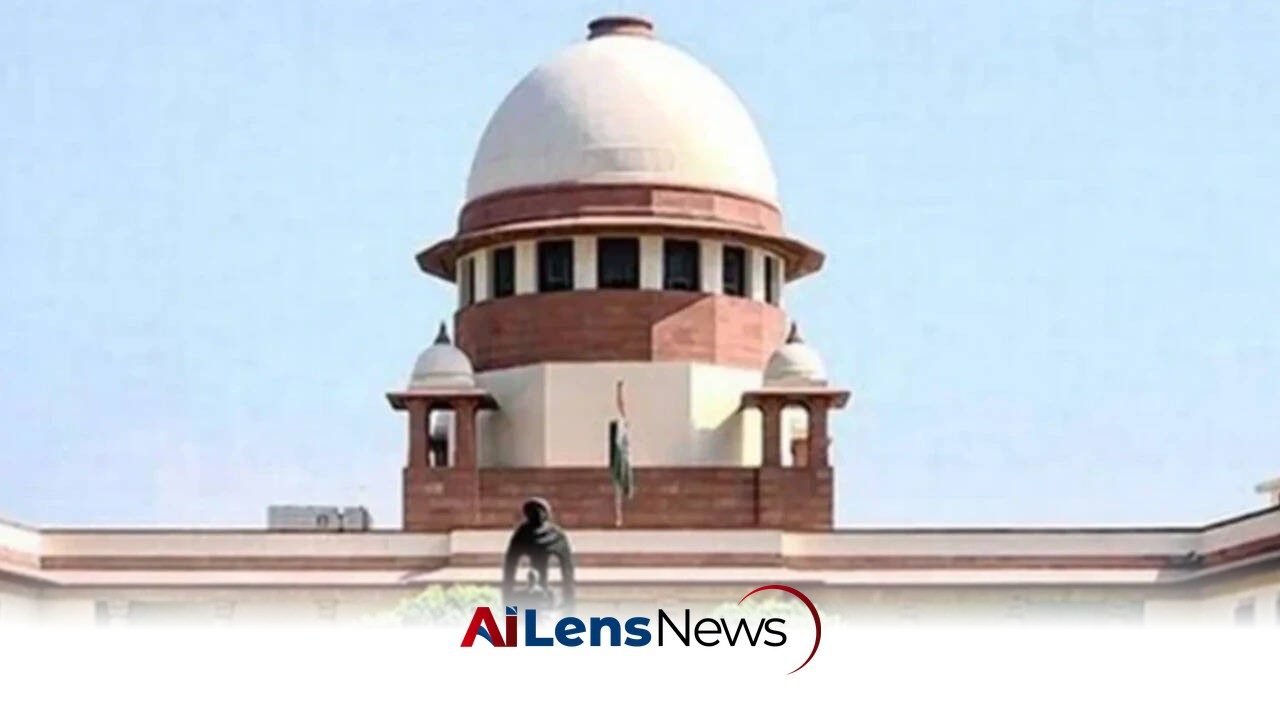


The Supreme Court has directed the Union ministries to establish a judicially supervised mechanism to shield citizens from unlawful digital content.
New Delhi, India Aug 12, 2026 ALN: In a significant ruling on Tuesday, the Supreme Court urged the Union ministries of home affairs and electronics and information technology to take immediate action to safeguard citizens from unlawful digital content. The court emphasized the necessity of creating a URL-specific and judicially supervised emergency mechanism. This ruling marks a pivotal moment in the ongoing discourse surrounding digital rights and the responsibilities of both the government and private entities in regulating online content.
The Supreme Court's directive comes in response to growing concerns about the proliferation of harmful and illegal content online. The justices highlighted the urgent need for a structured approach to address this issue, which poses serious risks to public safety and individual rights. With the advent of the internet and social media, the ease of access to information has been both a boon and a bane. While it has democratized information sharing, it has also led to the spread of misinformation, hate speech, and other forms of unlawful content that can incite violence or discrimination.
Recent studies have shown that exposure to harmful digital content can have severe psychological and societal implications. For instance, the rise of cyberbullying and online harassment has been linked to mental health issues among young people. Moreover, the spread of false information regarding health issues, particularly during crises like the COVID-19 pandemic, has led to public confusion and mistrust. The Supreme Court's ruling acknowledges these realities and calls for an immediate and systematic response.
One of the key aspects of the court's order is the requirement for judicial oversight in the proposed mechanism. This oversight aims to ensure that the measures taken to block or remove unlawful content are not only effective but also respect the legal rights of individuals. The court stressed that any action taken must be transparent and accountable. This is particularly important in a democratic society where the protection of civil liberties is paramount.
The inclusion of judicial oversight also addresses concerns about potential overreach by the government or private companies in censoring content. By requiring a judicial review, the Supreme Court aims to establish a balance between the need for security and the preservation of freedom of expression. This is a critical issue, as many individuals and organizations have raised alarms about the potential for abuse in content moderation practices, which can lead to unjust censorship of legitimate speech.
This ruling has significant implications for digital governance in the country. It signals a shift towards more proactive measures by the government in regulating online content. The Supreme Court's intervention underscores the judiciary's role in protecting citizens from the dangers of the digital landscape. As technology continues to evolve at a rapid pace, the legal frameworks that govern digital interactions must also adapt.
The court's ruling may lead to the establishment of new policies and regulations that define what constitutes unlawful digital content more clearly. This could include specific guidelines on hate speech, misinformation, and other harmful content. Furthermore, it may prompt the government to invest in technological solutions that can aid in the identification and removal of such content, including the use of artificial intelligence and machine learning algorithms.
In light of the court's directive, the Union ministries are expected to collaborate closely to develop the proposed mechanism. This will likely involve consultations with various stakeholders, including technology companies, legal experts, and civil society organizations, to create a comprehensive framework for addressing unlawful digital content. The involvement of diverse stakeholders is crucial to ensure that the resulting policies are well-rounded and consider the perspectives of all affected parties.
Moreover, the government may need to conduct public awareness campaigns to educate citizens about the new mechanisms and their rights concerning digital content. This could empower individuals to report unlawful content more effectively and understand the processes in place to protect them from digital harm.
The Supreme Court's call for action represents a crucial step towards enhancing digital safety for citizens in the country. As the government moves forward with implementing these measures, the focus will remain on balancing the need for security with the protection of individual rights. The challenge will be to create a system that effectively addresses the risks posed by unlawful digital content while safeguarding the fundamental principles of free speech and expression.
This ruling is not merely a legal directive; it reflects a broader societal recognition of the challenges posed by the digital age. As citizens increasingly engage with digital platforms, the need for a safe and responsible online environment becomes ever more critical. The Supreme Court's intervention serves as a reminder that the protection of citizens' rights must evolve alongside technological advancements, ensuring that the digital landscape remains a space for free expression, innovation, and safety.
The Supreme Court’s ruling also fits into a larger global conversation about digital rights and governance. Many countries are grappling with how to effectively regulate online content without infringing on civil liberties. The balance between security and freedom of expression has emerged as a central theme in discussions about digital governance worldwide. Various nations have implemented different models for content moderation, with some opting for stricter controls and others advocating for minimal intervention.
In recent years, there has been increasing scrutiny over the role of major technology companies in content moderation. Platforms like Facebook, Twitter, and YouTube have faced backlash for their handling of harmful content, often criticized for being either too lenient or too harsh in their policies. This has led to calls for greater accountability and transparency in how these companies operate. The Supreme Court's emphasis on judicial oversight in its ruling may reflect a growing sentiment that government involvement is necessary to ensure that private companies do not overstep their bounds in content moderation.
As the digital landscape continues to evolve, so too do the technologies used to monitor and manage online content. Artificial intelligence (AI) and machine learning (ML) are increasingly being employed to detect and remove unlawful content. These technologies can analyze vast amounts of data and identify patterns that may indicate harmful behavior. However, they are not without their challenges. AI systems can be prone to bias, and there are concerns about their ability to accurately assess context, which is crucial in determining whether content is indeed unlawful.
The Supreme Court's ruling may encourage the government to invest in developing more sophisticated technological solutions that are not only effective but also ethical. This could involve collaborating with tech companies to create tools that enhance the ability to identify and respond to harmful content while upholding the principles of free speech and expression.
Internationally, different countries have adopted various approaches to managing digital content. For example, the European Union has implemented stringent regulations around data protection and privacy, notably through the General Data Protection Regulation (GDPR). This framework aims to protect citizens' personal data while holding companies accountable for how they handle that data. In contrast, some countries have taken a more authoritarian approach, employing censorship and surveillance to control online discourse.
The Supreme Court's ruling could position the country as a leader in the global conversation about digital rights, particularly if it results in a balanced approach that prioritizes both security and individual freedoms. As nations look to one another for best practices and effective strategies, the outcome of this ruling could influence how other governments approach the regulation of digital content.
While the Supreme Court's ruling is a significant step forward, it will not be without its challenges. The implementation of a URL-specific, judicially supervised mechanism will require careful planning and execution. Questions about funding, resources, and the technical capabilities of government agencies will need to be addressed. Furthermore, there will likely be pushback from various stakeholders who may view the new measures as an infringement on free speech.
Additionally, as technology continues to advance rapidly, the legal frameworks governing digital content will need to be agile and adaptable. The landscape of online communication is constantly changing, and what may be considered unlawful today could evolve as new forms of digital interaction emerge. The government will need to remain vigilant and responsive to these changes to ensure that its regulatory framework remains relevant and effective.
In conclusion, the Supreme Court's ruling represents a crucial juncture in the ongoing discourse surrounding digital rights and governance. As the government moves to implement the necessary measures, it will be essential to strike a balance between protecting citizens from unlawful content and preserving the fundamental rights of free speech and expression. The outcome of this initiative could have far-reaching implications for the future of digital governance in the country and beyond.
To learn more about the latest developments in Political Controversies, stay updated with our exclusive reports and analyses on AiLensNews.

