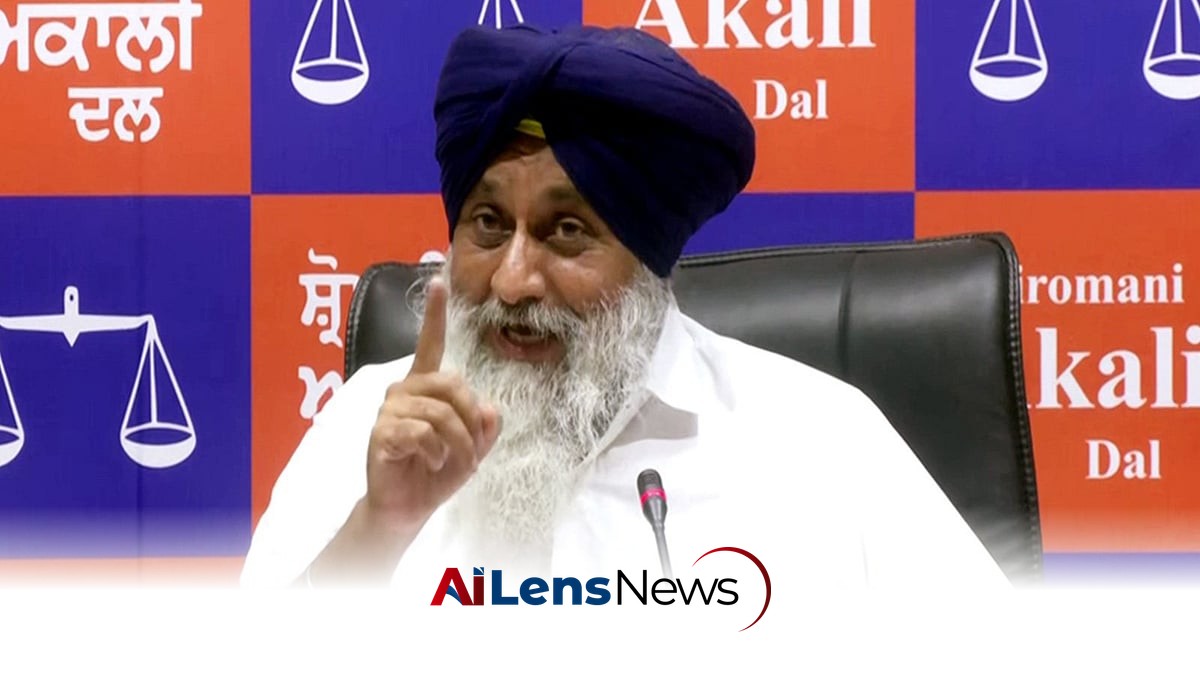


The Special Investigation Team has summoned former Punjab Deputy CM Sukhbir Singh Badal for questioning regarding the 2015 Behbal Kalan and Kotkapura police firing incidents.
New Delhi, India Jul 16, 2026 ALN: The Special Investigation Team (SIT) probing the 2015 Behbal Kalan and Kotkapura police firing incidents has summoned former Punjab Deputy Chief Minister and Shiromani Akali Dal president Sukhbir Singh Badal for questioning. He has been directed to appear before the investigation team on Monday.
The summons come with less than six months left for the 2027 Punjab Assembly elections, bringing the politically sensitive sacrilege issue back to the centre of political discourse amid continuing debates over accountability in the decade-old case. The police firing incidents, which resulted in the deaths of two Sikh protesters and injuries to many others, have remained a focal point for political parties in Punjab, often serving as a rallying point for various narratives surrounding governance, law enforcement, and community relations.
Sources said that the SIT has directed Badal to appear before the investigation team on Monday, marking a significant development in the long-running probe. This inquiry has been characterized by a series of twists and turns, as various political figures have been called to provide their accounts of the events leading up to the tragic incidents. The decision to summon Sukhbir Singh Badal follows a statement recorded by senior BJP leader and former Union minister Vijay Sampla before the SIT.
During his deposition, Sampla reportedly denied signing a memorandum that had been submitted to the Punjab Governor along with Sukhbir Singh Badal regarding the sacrilege incidents. This denial has raised questions about the authenticity and the circumstances surrounding the creation of the memorandum, which is believed to contain crucial information regarding the political dynamics at play during the protests.
Following this development, the investigation team decided to seek further clarification from Badal regarding the circumstances surrounding the memorandum. The inquiry has been complicated by conflicting testimonies and the political ramifications that have emerged in the wake of the incidents. Sampla, however, told the media after his questioning last week that he had asked the police to show him the original copy of the memorandum so that he could confirm or deny his signature. This request underscores the importance of documentary evidence in establishing a clear timeline and accountability for decisions made during the protests.
Sources privy to the probe said the SIT has also been examining the sequence of events preceding the police action against protesters in October 2015. The investigation has focused on the decisions made by government officials and police leadership, as well as the communication that transpired in the lead-up to the use of force against demonstrators. Earlier, former SAD MLA Mantar Singh Brar reportedly told the SIT that discussions had taken place with the then Chief Minister, the Home Minister, and the Director General of Police (DGP) before the police crackdown on protesters. This testimony indicates that the decision to employ force may have been a coordinated effort among top officials, raising questions about the accountability of those in power.
Adding another layer to the probe, the Officer on Special Duty (OSD) to then Chief Minister Parkash Singh Badal has also confirmed to the SIT that the order to remove the protesters was given during the night, sources said. This detail is significant for investigators piecing together who authorised the use of force and when the decision was actually taken. The timing of the order is particularly relevant, as it suggests a level of premeditation that could have implications for legal accountability and public trust in law enforcement.
Reacting to the summons issued to him, Badal said that he will definitely go. "For the past 10 years, the sacrilege incidents have been used for political gains. Now, with elections approaching, the AAP-led government has once again started its drama. I have cooperated with every investigation in the past, and I will continue to appear wherever I am called. I make one promise: if the Shiromani Akali Dal forms the government in 2027, we will ensure that those responsible are given exemplary punishment,’’ he said. His comments reflect a broader political strategy, as he seeks to position himself and his party as advocates for justice while simultaneously deflecting criticism aimed at his previous administration's handling of the situation.
The Behbal Kalan and Kotkapura firing case dates back to October 2015, when Sikh devotees staged peaceful protests in Faridkot district following incidents of alleged sacrilege of Sri Guru Granth Sahib. The protests were a response to a series of incidents that had deeply hurt the sentiments of the Sikh community, leading to widespread unrest. During the protests, police had opened fire on demonstrators. Two Sikh protesters were killed in the firing at Behbal Kalan, while several others sustained serious injuries. The brutality of the police response shocked the community and led to widespread condemnation, not only from local leaders but also from national figures and human rights organizations.
The SIT continues to intensify its investigation to establish accountability in the case. The ongoing inquiry has been marked by public interest and media scrutiny, as the events surrounding the police firing have become emblematic of the broader issues of governance and accountability in Punjab. At the centre of the sacrilege controversy is Sirsa-based Dera Sacha Sauda, which held considerable sway over a large section of the marginalized classes in the Malwa region of Punjab. Both the Congress and the Shiromani Akali Dal (SAD) tried to curry favor with it, recognizing its influence on local voters.
The reason the Malwa region of the state has nearly half of the 117 Assembly seats, with the Majha and Doaba regions making up the rest, is significant in understanding the political landscape of Punjab. The region's demographics and socio-economic conditions have made it a battleground for political parties vying for support from various communities. The sacrilege incidents and subsequent police action have highlighted the complexities of these relationships, as well as the challenges faced by political leaders in addressing the concerns of their constituents.
As the investigation unfolds and the political climate becomes increasingly charged with the approach of the 2027 elections, the implications of the SIT's findings could have far-reaching consequences for the parties involved. The outcome of this inquiry may not only impact the political fortunes of Sukhbir Singh Badal and the Shiromani Akali Dal but could also influence the broader discourse on law enforcement, accountability, and communal relations in Punjab. The handling of the sacrilege issue and the police firing incidents will likely remain a pivotal topic in the lead-up to the elections, shaping the narratives that political parties will adopt in their campaigns.
To learn more about the latest developments in Political Controversies, stay updated with our exclusive reports and analyses on AiLensNews.

