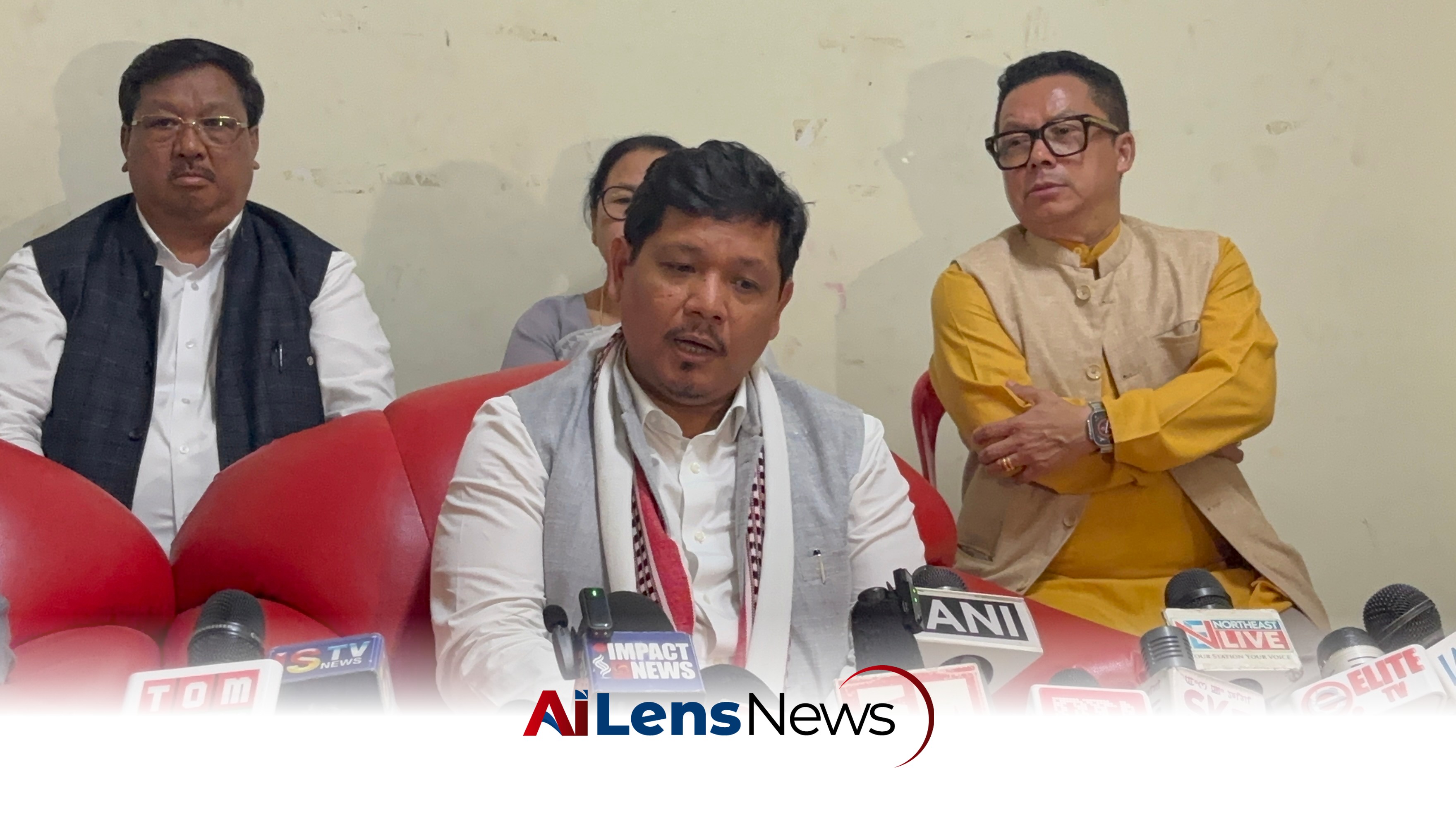


Meghalaya CM Conrad Sangma emphasizes the need for a political platform in Manipur that addresses local concerns, following unrest and community discontent.
Gangtok, India Jul 25, 2026 ALN: Imphal: Meghalaya Chief Minister and National People’s Party (NPP) president Conrad Sangma on Saturday highlighted a significant political vacuum in Manipur's landscape, emphasizing the need for a platform that truly resonates with the concerns and aspirations of the local populace. This assertion comes at a time when the state is grappling with ongoing unrest and political instability, creating an environment where many citizens feel disillusioned with the current political framework.
During a press conference following his attendance at the NPP’s annual convention at the Manipur State Film Development Society (MSFDS), Sangma shared insights gathered from interactions with residents over his two-day visit. He noted that there is a palpable sense of exhaustion among the people, who have endured a prolonged crisis affecting their daily lives and overall well-being. The political vacuum he refers to suggests a disconnect between the governing bodies and the grassroots, where individuals feel their voices are not being heard or adequately represented.
The National People’s Party, which has emerged as the largest regional party from the Northeast, is positioning itself as a potential solution to this political void. Sangma expressed confidence in the NPP's capability to bridge this gap, citing the party’s understanding of the region's diverse communities and their unique challenges. However, he also recognized that there is still much work ahead in comprehensively grasping the complex local issues that have contributed to the current state of unrest.
As part of his visit, Sangma engaged in a series of organizational meetings aimed at reinforcing the party's presence in the state. The inauguration of the NPP's new office at Mantripukhri in Imphal is a strategic move in preparation for the upcoming Assembly elections. Additionally, he met with Chief Minister Yumnam Khemchand Singh and later consulted with the Governor to discuss the prevailing situation in Manipur, underscoring the importance of political dialogue in addressing the crisis.
Sangma's remarks regarding the ongoing unrest in Manipur reflect a broader concern about community relations within the state. He emphasized that rebuilding trust among different communities is essential for moving forward. The emphasis on sustained dialogue and engagement with community leaders highlights a recognition that meaningful progress cannot be achieved without addressing the underlying tensions that have led to the current strife. This approach suggests a shift toward more inclusive governance, which is critical in a state where ethnic and communal identities often play a significant role in political dynamics.
In discussing the government's role in restoring normalcy, Sangma stressed the necessity of a robust law-and-order system to maintain peace and harmony. This call for firm action against those responsible for creating unrest indicates a proactive stance that seeks to deter further violence. It also raises questions about the balance between maintaining order and respecting civil liberties, a challenge that many governments face in times of crisis.
The economic implications of the ongoing conflict cannot be overstated. Sangma pointed out that livelihoods and economic activities in Manipur have been severely impacted by the unrest. This has profound implications not only for individual families but also for the state's overall economic health. The emphasis on economic revival through employment generation and improved livelihood opportunities is crucial, as economic stability is often a precursor to lasting peace. The acknowledgment of these factors indicates an understanding that political solutions must be accompanied by economic strategies to foster a more resilient society.
Looking ahead to the electoral landscape, Sangma noted that the NPP has seen a significant increase in public support since 2017. This growth in popularity could be indicative of a broader shift in political sentiment among the electorate, particularly in light of the current political climate. However, he clarified that the decision regarding the party's participation in the 2027 Manipur Assembly elections—specifically whether to contest all 60 constituencies—will ultimately be determined by the party's election committee. This level of internal deliberation suggests a strategic approach to electoral politics, acknowledging the complexities of the state's political environment.
On the subject of alliances, Sangma made it clear that the NPP will not pursue any pre-poll alliances for the upcoming elections. This decision underscores a commitment to seeking an independent mandate from the electorate, which may resonate with voters who are increasingly wary of political coalitions that can dilute accountability. However, Sangma also indicated that any decisions regarding post-poll alliances would be contingent on the electoral outcomes, reflecting a pragmatic approach to coalition-building in the ever-evolving political landscape of Manipur.
In conclusion, Conrad Sangma's visit to Manipur and his subsequent statements highlight not only the current challenges facing the state but also the potential pathways toward political renewal and economic recovery. The emphasis on rebuilding trust, fostering dialogue, and addressing economic concerns presents a multifaceted approach to the ongoing crisis. As the NPP prepares for future elections, the effectiveness of its strategies in navigating the complexities of Manipur's political and social fabric will be critical in shaping the state's future trajectory.
To further understand the context of Sangma's remarks, it is essential to consider the historical and socio-political background of Manipur. The state has a long history of ethnic tensions, with various communities often vying for political representation and resources. This has led to a series of conflicts, particularly between the majority Meitei community and the various tribal groups in the hills. Such divisions have been exacerbated by issues related to land rights, economic development, and the demand for greater autonomy.
The recent unrest in Manipur has roots in these deep-seated grievances, coupled with political mismanagement and the failure of previous administrations to address the needs of all communities equitably. The NPP's emergence as a significant player in this landscape signifies a potential shift towards more inclusive governance, as the party seeks to represent the diverse voices of Manipur's population.
Moreover, the role of the central government and its policies also plays a crucial part in the dynamics of Manipur's politics. The relationship between the state and the central government has often been strained, with local leaders accusing the latter of neglecting the unique challenges faced by northeastern states. This has led to calls for greater autonomy and self-governance, reflecting a broader trend across the region where local parties are gaining traction as they advocate for regional interests.
As the NPP prepares for the upcoming elections, the party's ability to connect with the electorate and address the pressing issues of governance, development, and community relations will be put to the test. The electoral outcome will not only determine the political landscape of Manipur but also set the tone for how the state navigates its complex socio-political challenges in the future.
In summary, Sangma's visit to Manipur serves as a critical moment in the ongoing discourse surrounding the state's political vacuum and the urgent need for effective governance. His emphasis on rebuilding trust, fostering dialogue, and addressing economic concerns highlights a comprehensive approach to the multifaceted crisis facing the region. As the NPP seeks to position itself as a viable alternative in the upcoming elections, the implications of its strategies will undoubtedly shape the future of Manipur's political and social fabric.
To learn more about the latest developments in Political Controversies, stay updated with our exclusive reports and analyses on AiLensNews.

