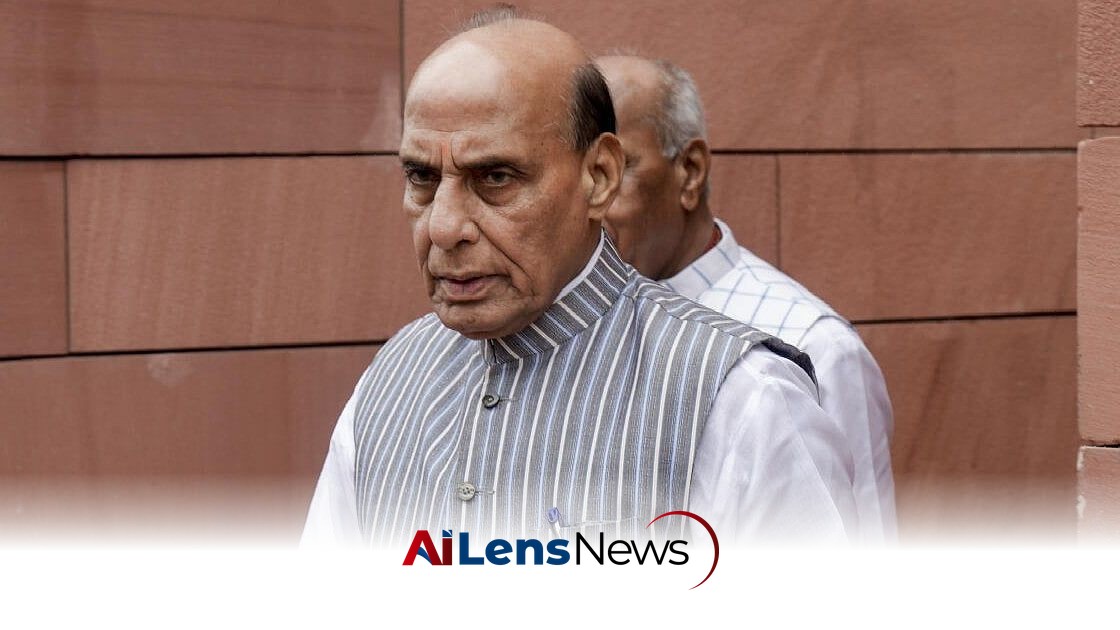


Defence Minister Rajnath Singh criticized the opposition for using student protests in Delhi as a political tool, urging them to address issues in Parliament instead.
New Delhi, India Jul 22, 2026 ALN: New Delhi: Defence Minister Rajnath Singh on Wednesday expressed serious concern over the ongoing students' protest in Delhi and accused the opposition of attempting to use it as a "political tool" to fulfil its political interests. The protests, which have garnered significant attention and support, have raised questions about the role of political parties in addressing student grievances and the appropriate avenues for such expressions of dissent.
Singh urged the opposition to raise issues in Parliament instead of on the streets, emphasizing the importance of maintaining decorum and order in democratic processes. His remarks came as protests led by the Cockroach Janta Party (CJP) at Jantar Mantar entered the second month, with more supporters joining the agitation. The CJP, a relatively newer political entity, has positioned itself as a voice for student rights and has gained traction among youth disillusioned with traditional political parties.
Additionally, leaders of several opposition parties, wearing black clothes, held a demonstration outside Parliament on Wednesday to express solidarity with students protesting against the NEET paper leak issue. The National Eligibility cum Entrance Test (NEET) is a crucial examination for aspiring medical students in India, and any allegations of malpractice can have significant implications for students' futures. The protests have highlighted concerns over transparency and integrity in the examination process, which many believe is vital for maintaining the quality of medical education in the country.
"It is extremely unfortunate that some people are attempting to use the students and youth of our country as a political tool to fulfil their political interests," Singh said in a post on X. This statement reflects a broader concern among ruling party members regarding the politicization of student movements, which have historically been a platform for voicing legitimate grievances but can also be co-opted for political advantage.
Singh reiterated that the Narendra Modi government is committed to fulfilling the aspirations of students and ensuring that no injustice is done to them. He stated, "It is our responsibility to listen to every concern of our students and resolve it. I am fully confident that India's aware, mature and sensible youth fully understand such deceptive attempts and will choose the path of progress, development and nation-building." This assertion underscores the government's commitment to addressing student issues while also attempting to frame the narrative around youth engagement in a positive light.
The defence minister alleged that some opposition leaders are displaying a "manufactured sense of anger" to confuse and mislead people, especially the youth. This accusation points to a growing trend in political discourse where emotional appeals are often used to galvanize support, sometimes at the expense of constructive dialogue. Singh's comments suggest a belief that genuine grievances should be addressed through established political forums rather than through public protests.
"We are fully sensitive to the sentiments and concerns of the youth. Parliament is in session and the government has also stated its willingness to have meaningful debates on every issue," Singh said. His remarks highlight the importance of parliamentary democracy and the role of elected representatives in addressing public concerns. The Monsoon session of Parliament is typically a critical time for legislative business, and the government is keen to ensure that it proceeds without disruption.
He further accused the opposition of making an "inappropriate attempt" to resolve issues not in Parliament but on the streets. This statement reflects a broader concern about the erosion of parliamentary norms and the increasing tendency for political disputes to be played out in public demonstrations rather than in legislative debates.
Congress leaders, led by Leader of Opposition in Lok Sabha Rahul Gandhi and party president Mallikarjun Kharge, held a dharna outside the prime minister's residence on Tuesday, demanding Modi's resignation over the police action against students protesting the alleged NEET paper leak issue. This incident has raised questions about the government's response to dissent and the balance between maintaining public order and respecting the right to protest.
Besides Rahul Gandhi, Congress MP Priyanka Gandhi Vadra, Samajwadi Party chief Akhilesh Yadav and other opposition leaders were later detained by the police. Such actions have sparked debates about the appropriateness of police responses to political protests and the implications for civil liberties in India. Critics argue that detaining political leaders can exacerbate tensions and further alienate segments of the population who feel their voices are not being heard.
The defence minister said Parliament is the appropriate forum for discussions in a democracy and the opposition should allow the smooth functioning of the ongoing Monsoon session if it is serious about raising public issues. This statement reiterates the importance of parliamentary procedures and the need for opposition parties to engage constructively with the government rather than resorting to disruptive tactics.
"In a democracy, Parliament House is the place for discussion on issues, where the opposition is free to express its views. Therefore, if the opposition is serious, it should not disrupt the smooth functioning of the ongoing Monsoon session and should draw the country's attention to all issues within Parliament," he said. This call for decorum in parliamentary proceedings reflects a desire for a more collaborative approach to governance, where all parties can contribute to the legislative process without resorting to public demonstrations.
The ongoing protests and the political responses to them highlight a significant moment in India's political landscape, where student activism is once again at the forefront of national discourse. As the government and opposition navigate these tensions, the implications for future student movements, political engagement, and the overall health of India's democracy will be closely watched by both supporters and critics alike.
In conclusion, the current situation surrounding the student protests in Delhi serves as a reminder of the complex interplay between politics, youth activism, and the mechanisms of democratic governance. As the situation develops, it will be essential for all stakeholders to engage in meaningful dialogue and seek resolutions that prioritize the concerns of students while respecting the democratic processes that underpin the nation.
To learn more about the latest developments in Political Controversies, stay updated with our exclusive reports and analyses on AiLensNews.

