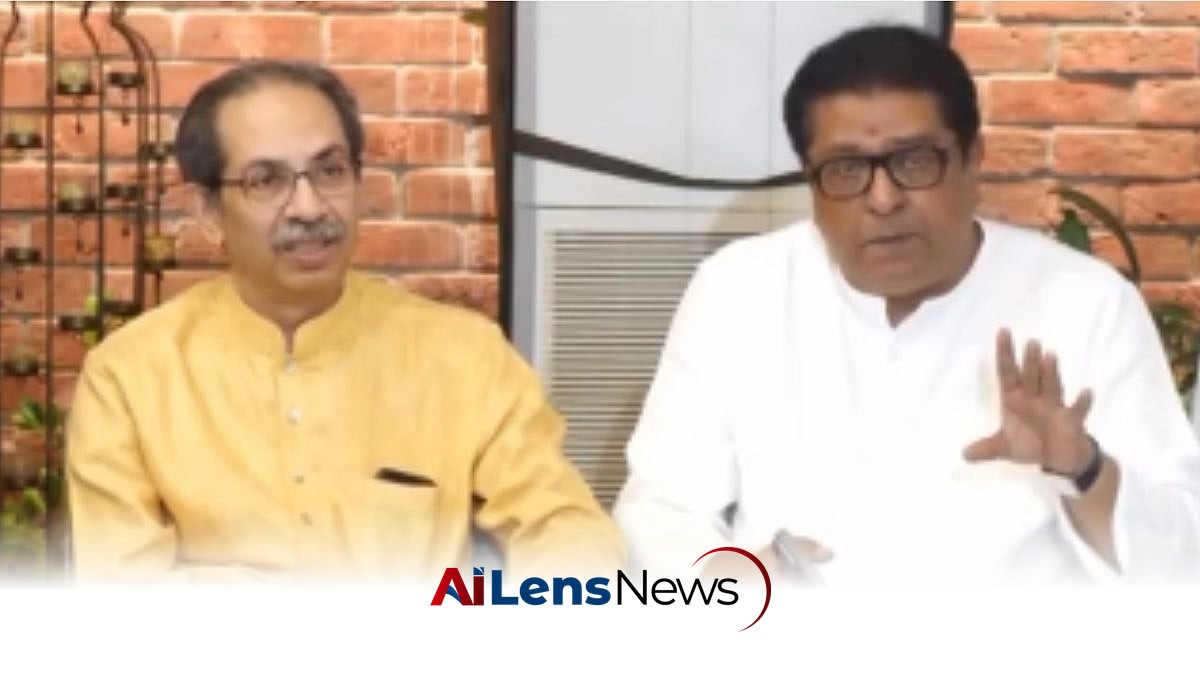


Raj Thackeray has firmly warned against any disruptions during the upcoming protest in Mumbai, supporting students protesting the NEET paper leak.
New Delhi, India Jul 23, 2026 ALN: Mumbai: Maharashtra Navnirman Sena (MNS) president Raj Thackeray, along with Shiv Sena (UBT) chief Uddhav Thackeray, during a joint press conference on Thursday, stated that if any goons try to disrupt the July 26 morcha as they allegedly did in Delhi, "We won't tolerate that. We will beat them up and throw them out of the protest." This statement reflects the Thackeray brothers' determination to maintain order during the upcoming protest, which is expected to draw a significant number of participants in support of students agitating against the alleged NEET paper leak and the police action on protesters at Jantar Mantar earlier in the week.
The National Eligibility cum Entrance Test (NEET) is a highly competitive examination in India that serves as the gateway for students aspiring to enter medical and dental colleges. The examination has been a focal point of contention and debate among students, parents, and educational authorities. The alleged leak of the NEET exam paper has sparked widespread outrage among students and their families, leading to protests across the country. This incident is not isolated; it reflects a growing concern regarding the integrity of examination processes in India. The situation escalated when police reportedly used force against demonstrators in Delhi, further fueling public anger and prompting calls for accountability from the government. Such incidents raise questions about the relationship between state authority and civil rights, especially in the context of student activism.
Addressing the media, Raj Thackeray asserted, "If any goons infiltrate the protest on 26th July, we will beat them up, just like we did in Delhi. So, such people should stay away from my protest. The government should have initiated the discussion on this. Today, the protests have increased, so the government is scared." This rhetoric underscores the Thackeray brothers' position as defenders of student rights and their willingness to confront perceived threats to the protest's integrity. Their statements reflect a broader sentiment among many political leaders who see themselves as champions of the youth, particularly in times of crisis.
Raj lashes at Surya Kant
In a notable development during the press conference, Raj Thackeray directed sharp criticism towards Chief Justice of India (CJI) Surya Kant, saying, "The CJI is the father of the protesters, so shouldn't he pay attention to the babies after giving birth?" This comment appears to be a reaction to remarks made by CJI Surya Kant during a recent court hearing, where he reportedly referred to Indian youth as "cockroaches." Such language has been met with outrage from various quarters, leading to the formation of a satirical political party called the Cockroach Janta Party (CJP) by activist Abhijeet Dipke, which aims to highlight the perceived disconnect between the judiciary and the youth of India. This incident illustrates the growing tensions between the judiciary and the public, particularly among younger generations who feel marginalized by established institutions.
The Thackeray brothers' decision to organize the July 26 morcha is not just a reaction to the NEET controversy but also a broader statement against what they perceive as governmental apathy towards the grievances of students and the general public. Their call for the resignation of Union Education Minister Dharmendra Pradhan signals a growing frustration with the central government's handling of educational issues, particularly in the wake of the NEET paper leak. Raj Thackeray emphasized the importance of public sentiment, stating, "We have decided to hold a show of strength with these students on July 26. Students from across Mumbai are coming together to express their anger. The Centre must understand the public sentiment." This call to action resonates with many who believe that the government needs to be more responsive to the concerns of the youth, especially in critical areas such as education and employment.
The planned march will begin at Shivaji Park, a historic site in Mumbai known for its significance in various political movements, and conclude at the Siddhivinayak Temple, a prominent religious site. This choice of route not only symbolizes the cultural and historical importance of the locations involved but also aims to attract a diverse range of participants, including students, activists, and concerned citizens. Uddhav Thackeray remarked, "We will pray to God to give wisdom to the government," indicating a spiritual dimension to the protest that seeks to invoke a sense of collective purpose among participants. The use of religious symbolism in political protests is a common strategy in India, often aimed at uniting people across different backgrounds and beliefs.
The implications of this protest extend beyond the immediate concerns surrounding the NEET examination. It reflects a growing trend of youth activism in India, where students are increasingly vocal about their rights and expectations from the government. The response to the NEET paper leak and the subsequent police action is indicative of a larger discontent with systemic issues within the education sector, including access to quality education, transparency in examination processes, and the accountability of educational authorities. The protests can also be seen as a reaction to the broader socio-economic challenges faced by the youth, including high unemployment rates and increasing competition for limited opportunities.
Moreover, the Thackeray brothers' approach to the protest, particularly their warnings against potential disruptors, highlights a tension within political movements in India, where the line between legitimate dissent and disorder can often become blurred. Their commitment to maintaining order during the protest suggests an awareness of the potential for violence or chaos, which could undermine the legitimacy of the students' demands. In a country where protests can sometimes turn violent, the emphasis on a peaceful demonstration reflects a strategic approach to garnering support and maintaining public sympathy.
As the date of the protest approaches, it remains to be seen how the government will respond to these escalating tensions. The Thackeray brothers' mobilization of support for the students may serve as a litmus test for the current political climate in Maharashtra and beyond. The outcome of the July 26 morcha could influence future protests and political strategies, particularly as student issues continue to gain prominence in national discourse. The government may find itself under pressure to address the concerns raised by the protesters, which could lead to policy changes or reforms in the education system.
In conclusion, the July 26 protest organized by Raj and Uddhav Thackeray represents a critical moment for student activism in India. With the backdrop of the NEET controversy and the broader implications of governmental accountability, the event is poised to galvanize public opinion and potentially reshape the landscape of educational policy in the country. As students prepare to march, the eyes of the nation will undoubtedly be focused on Mumbai, where the voices of the youth will be heard loud and clear. This protest encapsulates not only the immediate grievances of students but also a larger call for systemic change within the educational framework, reflecting a pivotal moment in the ongoing struggle for educational justice in India.
To learn more about the latest developments in Political Controversies, stay updated with our exclusive reports and analyses on AiLensNews.

