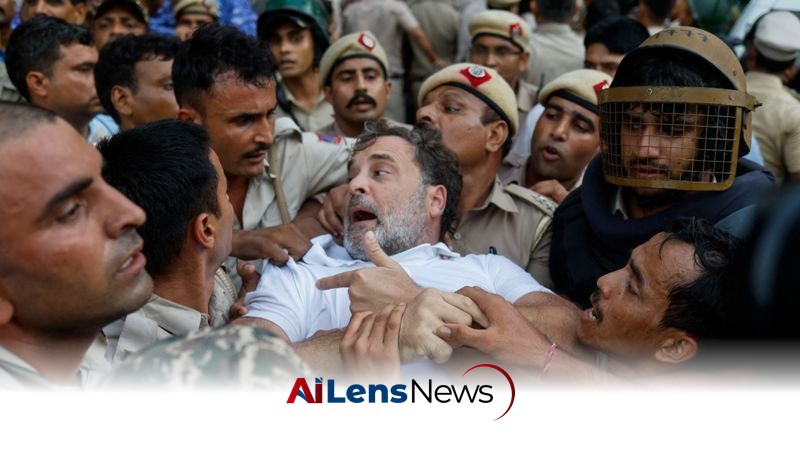


Congress leaders, including Rahul Gandhi, were forcibly removed from a sit-in outside Prime Minister Modi's residence, demanding accountability over police actions against NEET protestors.
New Delhi, India Jul 22, 2026 ALN: In a dramatic turn of events, Congress leaders Rahul Gandhi, Mallikarjun Kharge, and Priyanka Gandhi Vadra were forcibly removed from a sit-in protest outside Prime Minister Narendra Modi's residence on Tuesday. This protest was a direct response to the police's handling of recent demonstrations by students and activists regarding the NEET paper leak issue. The National Eligibility cum Entrance Test (NEET) is a highly competitive examination in India that enables students to gain admission to medical colleges across the country. The integrity and fairness of this examination are crucial for aspiring medical students, and any allegations of malpractice can lead to significant unrest among the student community.
The protest comes just a day after a march led by the Cockroach Janta Party to Parliament, highlighting the growing unrest among students over the alleged mishandling of the NEET examination process. The Congress party has been vocal in its criticism of the government's approach to student issues, particularly regarding the NEET paper leak that has left many students feeling disenfranchised. This feeling of disenfranchisement is not just limited to the NEET issue; it reflects a broader sentiment among students regarding the perceived inadequacies and failures of the current administration to address their concerns effectively.
The NEET examination is particularly significant as it serves as a gateway for students aspiring to enter the medical field in India. The exam's integrity is paramount, and any allegations of irregularities can undermine public trust in the examination process. The recent paper leak allegations have raised serious questions about the transparency and fairness of the examination system, leading to widespread protests from students who feel that their future is at stake. The protests have highlighted a growing discontent among the youth, who are increasingly vocal about their grievances against the government’s handling of educational issues.
During the protest, Rahul Gandhi and his colleagues demanded the Prime Minister's resignation, citing the police's aggressive tactics against peaceful demonstrators. Eyewitness accounts describe a tense atmosphere as police clashed with protestors, leading to the detention of several individuals. The aggressive police response has raised questions about the government's commitment to upholding democratic rights, particularly the right to peaceful assembly and protest, which is enshrined in the Indian Constitution. The heavy-handed tactics employed by law enforcement have been a point of contention in many protests across the country, with critics arguing that such actions stifle dissent and curtail free speech.
The Congress leaders were seen struggling against the police as they attempted to maintain their position outside the Prime Minister's residence. Video footage captured the moment when Rahul Gandhi was dragged away by officers, highlighting the escalating tensions between the opposition and the ruling government. This incident has not only drawn media attention but has also ignited discussions on social media platforms, with many users expressing their outrage over the treatment of political leaders and activists advocating for student rights.
This incident has sparked widespread outrage among Congress supporters and has drawn attention to the ongoing issues surrounding the NEET examination and the government's response to student protests. The Congress party has vowed to continue its fight for justice and accountability, urging students and citizens to stand in solidarity against what they describe as government oppression. The involvement of prominent leaders like Rahul Gandhi and Priyanka Gandhi Vadra is significant, as their presence lends visibility and legitimacy to the cause, potentially mobilizing more individuals to join the movement.
As the political landscape continues to shift, the Congress party's actions may resonate with a broader audience of students and activists who feel their voices are not being heard. The NEET paper leak incident is emblematic of larger systemic issues within the education sector, including access to quality education, transparency in examination processes, and the need for reforms that prioritize student welfare. The situation remains fluid, with further protests anticipated in the coming days as the demand for transparency and justice grows. The Congress party's strategy appears to be focused on galvanizing public sentiment around these issues, which could be pivotal in the context of upcoming elections.
The political implications of this protest extend beyond the immediate context of the NEET examination. The Congress party's mobilization around student issues could serve as a rallying point for a larger coalition of opposition parties, uniting various factions that are dissatisfied with the current government's policies. The youth vote is particularly crucial in Indian elections, and the Congress party's engagement with student issues may help them regain support among younger voters who are increasingly disillusioned with the ruling party.
In conclusion, the events outside PM Modi's residence serve as a reminder of the ongoing struggle between the government and its critics, particularly in matters affecting the youth and education. The Congress party's determination to challenge the government's policies may play a significant role in shaping the political discourse in the lead-up to future elections. As students and activists continue to voice their frustrations, the government's response will be crucial in determining whether this unrest will translate into significant political consequences. The implications of this protest extend beyond the immediate context, potentially influencing future policies on education and civil rights in India.
Moreover, the government's handling of such protests could set a precedent for how dissent is treated in the future. If the authorities continue to respond with force and aggression, it may further alienate young voters and amplify calls for reform within the educational system. Conversely, a more conciliatory approach could open avenues for dialogue and policy changes that address the genuine concerns of students and activists. The balance struck by the government in the coming days will be critical in shaping the political landscape and determining the trajectory of student activism in India.
To learn more about the latest developments in Political Controversies, stay updated with our exclusive reports and analyses on AiLensNews.

