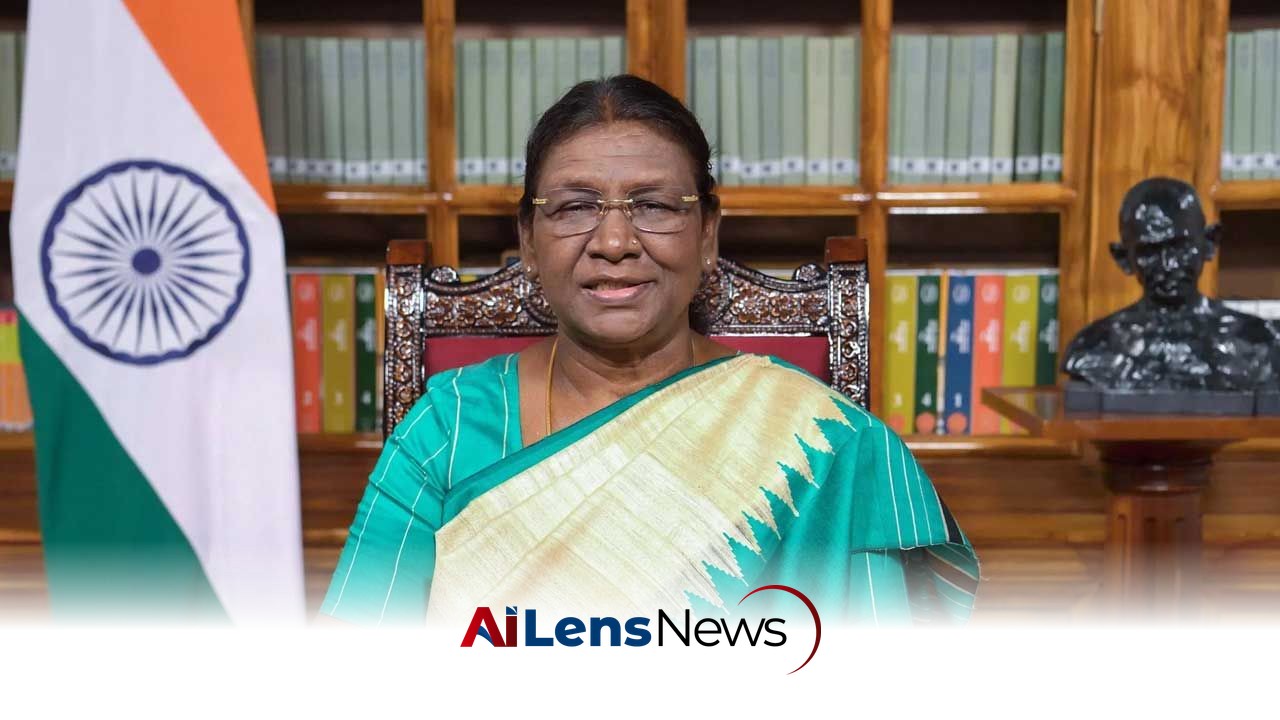


President Droupadi Murmu will visit Moldova, North Macedonia, and Romania from July 19-25, marking significant diplomatic milestones for India in Eastern Europe.
New Delhi, India Jul 17, 2026 ALN: New Delhi: The Ministry of External Affairs (MEA) announced on Friday that President Droupadi Murmu will undertake state visits to Moldova, North Macedonia, and Romania from July 19-25, aiming to boost bilateral ties with these countries. This initiative underscores India's commitment to enhancing its diplomatic relationships in Eastern Europe, a region that has gained increasing geopolitical importance in recent years.
Murmu’s three-nation visit complements India’s broader engagement with Europe and the strategic partnership with the European Union, the MEA stated. This is particularly significant as India seeks to diversify its international partnerships and strengthen its presence in global forums, especially in light of changing geopolitical dynamics.
Interacting with reporters here, MEA Secretary (West) Sibi George emphasized the historic significance of this visit, stating, “The three-nation visit is of considerable historic significance, as it marks the first-ever bilateral visits by an Indian president to the Republic of Moldova and the Republic of North Macedonia.” Additionally, Murmu’s visit to Romania will be the first state visit to the country by an Indian president in over three decades. The previous such visit had been undertaken in 1994, the MEA said.
This three-nation tour is not merely ceremonial; it reflects India's strategic interest in deepening its ties with Central and Eastern Europe. The MEA highlighted that the visit is a testament to India’s growing engagement with these regions, reaffirming its commitment to strengthening partnerships with countries that have historical and cultural ties with India.
President Murmu will visit Moldova on July 20 at the invitation of Moldovan President Maia Sandu. This is the first-ever visit by an Indian president to Moldova, marking a notable milestone in diplomatic relations. During her visit, President Murmu will meet and hold delegation-level talks with her counterpart. She will also meet the President of the Parliament of the Republic of Moldova, Igor Grosu. Additionally, President Murmu will interact with members of the Moldova-India Parliamentary Friendship Group, address a business forum, and speak with members of the Indian community in that country, the MEA said.
India and Moldova enjoy warm and friendly relations, and this visit would mark a significant and historical milestone, elevating bilateral ties to a “broad-based partnership.” There is considerable scope for mutually beneficial cooperation in areas such as agriculture, healthcare and pharmaceuticals, information technology (IT), and education, as noted by the MEA. These sectors are critical not only for economic growth but also for addressing key developmental challenges faced by both nations.
Moldova, a country that has been navigating its path towards European integration, sees India as a potential partner in various sectors. The Indian government has been keen on expanding its influence and cooperation in Eastern Europe, where there is a growing demand for investment and collaboration in technology and education.
At the invitation of the President of North Macedonia, Gordana Siljanovska-Davkova, President Murmu will visit North Macedonia from July 21-22. This visit is particularly significant as North Macedonia has been working towards strengthening its economic ties and political stability within the region.
During her time in North Macedonia, President Murmu will hold bilateral talks with President Siljanovska-Davkova, meet Prime Minister Hristijan Mickoski, and the President of the Assembly. She is also scheduled to address the Assembly of North Macedonia and the India-North Macedonia Business Forum. The MEA indicated that both sides have a keen interest in deepening economic ties in priority sectors such as agriculture, pharmaceuticals, science and technology, IT, and IT-enabled services (ITES).
This engagement is expected to pave the way for enhanced trade and investment opportunities, as well as cultural exchanges that could foster a deeper understanding between the two nations. North Macedonia’s strategic location in the Balkans makes it a valuable partner for India as it seeks to expand its footprint in the region.
Following her visit to North Macedonia, President Murmu will travel to Romania from July 23-25 at the invitation of Nicusor Dan, President of Romania. This visit is particularly noteworthy as it marks the first visit by an Indian president to Romania after a gap of over three decades, highlighting the need for renewed engagement between the two countries.
During her visit to Romania, President Murmu will meet the Romanian president, interim Prime Minister of Romania Ilie Bolojan; President of the Senate Mircea Abrudean; and President of the Chamber of Deputies Sorin Grindeanu, as well as members of the Romania-India Parliamentary Friendship Group. Such high-level interactions are essential for fostering bilateral cooperation and addressing mutual interests.
President Murmu will also address the India-Romania Business Forum and engage with members of the Indian community in Romania. Romania is considered a valuable partner in the European Union, and with the conclusion of the India-EU Free Trade Agreement, the bilateral economic partnership is expected to strengthen further in the coming years. This agreement is anticipated to facilitate trade and investment between India and EU member states, including Romania, thereby enhancing economic cooperation.
President Murmu’s three-nation tour reflects the importance India attaches to strengthening its bilateral ties with these countries, as well as its engagement with the broader Eastern European region. The visits are expected to open new avenues for collaboration in various sectors, ultimately contributing to the economic growth and development of both India and its Eastern European partners.
The implications of these visits extend beyond mere diplomacy; they signify India's strategic pivot towards a more engaged presence in Europe, responding to the evolving geopolitical landscape. As countries in Eastern Europe seek to diversify their partnerships, India's proactive approach could position it as a key player in the region, fostering stability and cooperation amidst global uncertainties.
To learn more about the latest developments in Elections, stay updated with our exclusive reports and analyses on AiLensNews.

