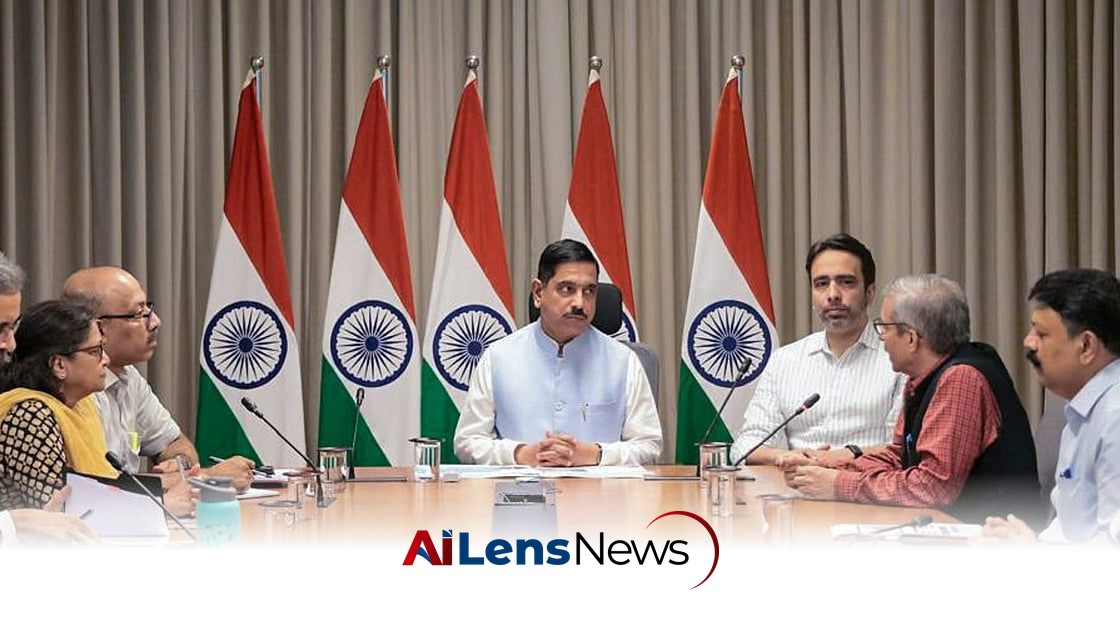


Pralhad Joshi has assumed the role of Education Minister, succeeding Dharmendra Pradhan, and is addressing key challenges following student protests over the NEET exam.
New Delhi, India Jul 27, 2026 ALN: New Delhi: Union Minister Pralhad Joshi assumed charge as the new education minister on Sunday, a day after his predecessor Dharmendra Pradhan resigned amid massive student protests over the NEET question paper leak. This transition in leadership comes at a critical time for the education sector in India, which has been grappling with various challenges, including allegations of examination malpractices and the need for reforms in educational policies.
Joshi, who also holds the Food and Consumer Affairs portfolio, reached Kartavya Bhawan around 11.30 am and immediately plunged into work. His swift engagement with ministry officials underscores the urgency surrounding the current issues, particularly those related to the National Eligibility cum Entrance Test (NEET), which has faced scrutiny following the recent leak of question papers. The NEET examination is a crucial gateway for students aspiring to enter medical colleges across the country, and any controversy surrounding it can have far-reaching implications for students' futures.
Upon his arrival, Joshi held detailed review meetings with top ministry officials, including a separate evening meeting with senior National Testing Agency (NTA) officials at his residence to assess the conduct of NEET, UGC NET, CUET, and other key exams. The NTA is responsible for managing various entrance examinations in India, and its credibility is vital for maintaining public trust in the examination process. Minister of state Jayant Chaudhary was present during the meetings, while the other MoS, Sukanta Majumdar, remained absent due to prior commitments.
Speaking to the media after taking charge, Joshi expressed gratitude to Prime Minister Narendra Modi. “Today, I assumed charge as the Union Minister for Education. I am grateful to Hon’ble Prime Minister Narendra Modi for placing his faith in me. I accept it with humility and a deep sense of duty,” he said. His acknowledgment of the Prime Minister's trust indicates the political weight and expectations associated with this role, especially in light of the ongoing controversies.
Joshi, who arrived from Karnataka the previous night, admitted that the education sector was a new domain for him. “I have been gathering information and trying to understand the functioning of the entire ministry. We had continuous meetings today. It is a very big department, so I will speak to you in detail after I have understood it completely,” he added. This candid admission reflects the complexity of the education system in India, which encompasses a vast range of issues from primary education to higher education and vocational training.
The newly appointed School Education Secretary, T K Anil Kumar, and outgoing Higher Education Secretary Vineet Joshi, who was removed following the NEET controversy, briefed the minister with separate presentations on ongoing schemes and programmes. The removal of Vineet Joshi highlights the accountability measures being taken in response to the NEET issue, as the government seeks to restore confidence among students and parents regarding the integrity of the examination process.
Sources said Joshi flagged concerns over delays in supplying basic school items such as uniforms. This issue is emblematic of broader challenges faced by the education sector, particularly in ensuring that students have access to essential resources that support their learning. The timely provision of uniforms and other materials is crucial for fostering an environment conducive to education, especially in underprivileged areas.
Parl questions
With Parliament set to resume on Monday, Joshi faces 41 questions listed for the Education Ministry, including three starred questions that require oral responses. He, along with his two ministers of state, will be present in the Lok Sabha to reply during Question Hour. This upcoming session is significant as it provides an opportunity for Joshi to address pressing concerns and outline his vision for the education sector moving forward.
Though no direct questions on NEET are listed, two YSRCP MPs have raised issues regarding alleged irregularities in Andhra Pradesh’s Mega DSC teacher recruitment exam, including question paper security and recruitment procedures. These allegations further underline the need for robust mechanisms to ensure the integrity of examinations and recruitment processes in the education sector. The scrutiny of such issues is imperative for maintaining public confidence and ensuring that the educational framework operates fairly and transparently.
The NEET controversy, in particular, has sparked widespread protests among students, who are demanding accountability and transparency in the examination process. The implications of this situation extend beyond immediate administrative challenges; they reflect broader societal concerns about the accessibility and fairness of education in India. The protests highlight the frustrations of students who feel that their futures are jeopardized by systemic failures and mismanagement.
As the new Education Minister, Joshi will need to navigate these challenges while also implementing the National Education Policy (NEP) 2020, which aims to overhaul the educational landscape in India. The NEP emphasizes holistic education, critical thinking, and the integration of technology in learning. However, the successful implementation of these reforms requires not only legislative support but also a commitment to addressing the existing issues that plague the education system.
Moreover, Joshi's leadership will be closely watched as he seeks to rebuild trust in the NTA and the examination processes it oversees. This involves not only addressing the immediate concerns surrounding NEET but also ensuring that policies are in place to prevent future controversies. A transparent and accountable examination process is essential for fostering a sense of fairness and equity among students from diverse backgrounds.
In conclusion, Pralhad Joshi's appointment as the new Education Minister comes at a pivotal moment for India's education system. The challenges he faces are significant, encompassing immediate crises such as the NEET controversy and broader systemic issues that require long-term solutions. His ability to effectively address these challenges will be crucial in shaping the future of education in India and restoring confidence among students, parents, and educators alike.
To learn more about the latest developments in Elections, stay updated with our exclusive reports and analyses on AiLensNews.

