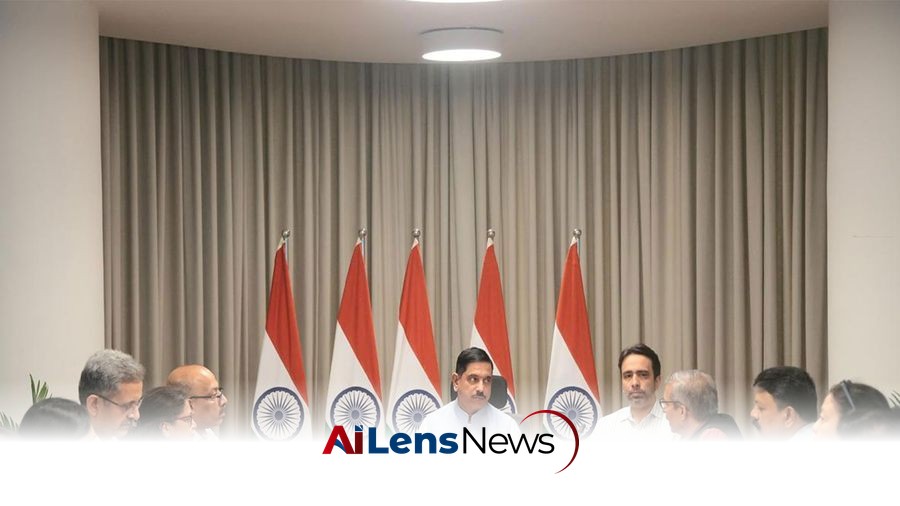


Prahlad Joshi takes charge as Union Education Minister following student protests over NEET paper leak, succeeding Dharmendra Pradhan.
New Delhi, India Jul 26, 2026 ALN: New Delhi [India], July 26: Newly appointed Union Minister Prahlad Joshi took charge as the Union Education Minister on Sunday, following widespread student-led protests across the nation concerning the NEET paper leak. The NEET, or National Eligibility cum Entrance Test, is a significant examination in India that determines admission to undergraduate medical programs. The recent allegations of a paper leak raised serious concerns about the integrity of the examination process, leading to a wave of protests from students across various states.
On Saturday, Joshi was assigned the charge of the Ministry of Education after President Droupadi Murmu accepted the resignation of Dharmendra Pradhan from the Union Council of Ministers. Pradhan's resignation was accepted with immediate effect, and Joshi will continue to hold his existing portfolio along with the Education Ministry charge. This dual responsibility places Joshi in a pivotal position to address the pressing issues that have emerged in the education sector.
The official release from Rashtrapati Bhavan stated, "The President of India, as advised by the Prime Minister, has accepted the resignation of Shri Dharmendra Pradhan from the Union Council of Ministers, with immediate effect, under clause (2) of Article 75 of the Constitution of India. Further, as advised by the Prime Minister, the President has directed that Shri Pralhad Joshi, Cabinet Minister, be assigned the charge of the Ministry of Education, in addition to his existing portfolio." This transition underscores the government's responsiveness to the ongoing unrest and the need for a leader who can navigate the complexities of educational reform.
Prahlad Joshi, a Lok Sabha Member of Parliament from the Dharwad constituency in Karnataka, is already responsible for the Ministries of Consumer Affairs, Food and Public Distribution, and New and Renewable Energy. His prior experience as the Minister for Coal, Mines, and Parliamentary Affairs has equipped him with a diverse set of skills that may be beneficial as he tackles the challenges in the education sector. Joshi's political background and understanding of governmental processes will be critical as he works to restore trust in the examination system and address student grievances.
Dharmendra Pradhan's resignation came after he announced that he had submitted it to Prime Minister Narendra Modi in the interest of students and to ensure that the ongoing protests over examination irregularities were not exploited by "anti-national forces." This statement highlights the government's concern over the potential politicization of the protests, which could undermine the legitimate demands of students for accountability and reform in the examination process.
The resignation follows weeks of nationwide protests over alleged irregularities in competitive examinations, with students demanding greater transparency, accountability, and reforms in the examination system. The protests have been characterized by students gathering in significant numbers in various cities, holding placards, and chanting slogans calling for justice and reform. Many students expressed their frustration over the perceived lack of action from the government regarding the examination process, citing instances of mismanagement and corruption.
In response to the growing unrest, student organizations and advocacy groups have been vocal about their demands. They have called for a comprehensive review of the examination protocols, the establishment of an independent body to oversee the examination process, and the implementation of stringent measures to prevent future irregularities. The students' determination to seek reforms reflects a broader desire for a more equitable and transparent education system in India.
Meanwhile, the CJP (Committee for Justice and Peace) announced that it has withdrawn the 37-day-long agitation at Jantar Mantar in "good faith" after Education Minister Dharmendra Pradhan stepped down from the Council of Ministers. The group received assurances on other demands from the government, indicating a willingness to engage in dialogue and seek resolutions to the ongoing issues. The withdrawal of the agitation may signal a potential thaw in relations between student groups and the government, but it also places significant pressure on Joshi to deliver on the promises made to the students.
The implications of these developments are significant for the future of educational policy in India. Prahlad Joshi's appointment as Union Education Minister comes at a critical juncture, where the need for reform is more pressing than ever. The government's response to the protests and the steps taken under Joshi's leadership will be closely monitored by students, educators, and policymakers alike.
As Joshi assumes his new role, he faces the challenge of not only addressing the immediate concerns surrounding the NEET paper leak but also implementing long-term reforms that can restore faith in the educational system. This may involve engaging with student representatives, educational experts, and other stakeholders to develop a comprehensive strategy that addresses the root causes of the issues raised during the protests.
The student protests have highlighted the importance of transparency and accountability in the examination process, and it is imperative that the government takes these concerns seriously. The future of countless students hangs in the balance, and any missteps in addressing these issues could lead to further unrest and dissatisfaction among the student populace.
In conclusion, Prahlad Joshi's new role as Union Education Minister comes with significant responsibilities, particularly in light of the recent protests over examination irregularities. His ability to navigate these challenges and implement meaningful reforms will be crucial in shaping the future of education in India. The eyes of the nation will be on him as he embarks on this critical journey to restore trust and integrity in the education system.
To learn more about the latest developments in Elections, stay updated with our exclusive reports and analyses on AiLensNews.

