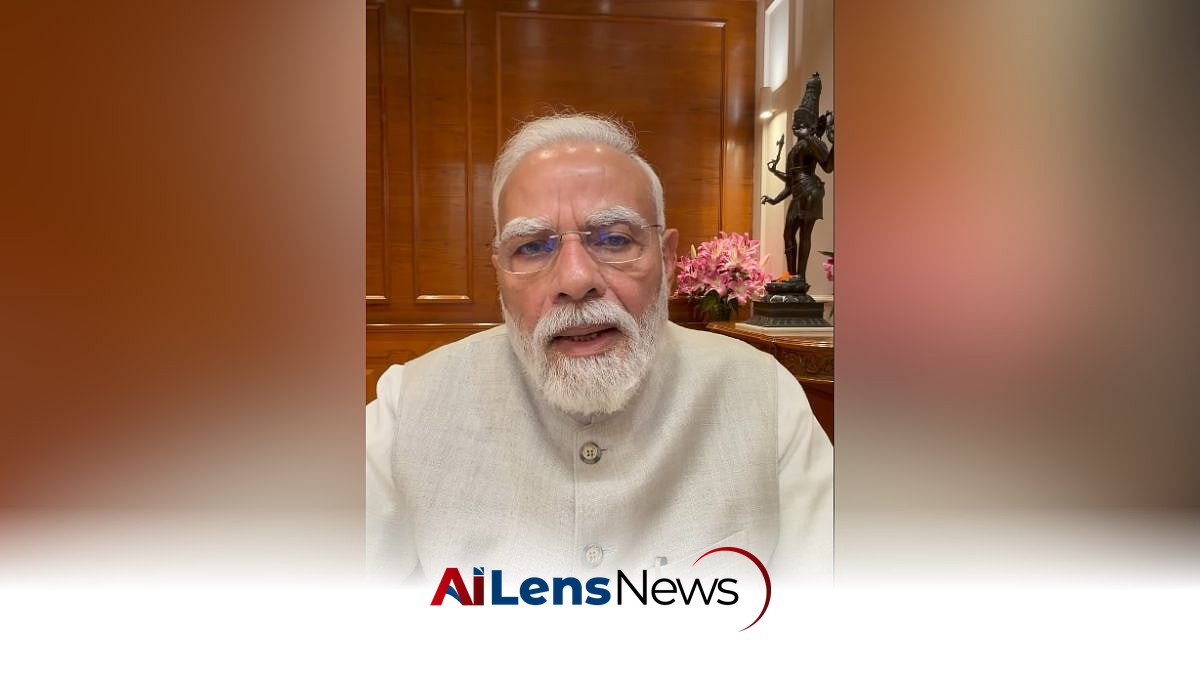


In a heartfelt video, PM Modi calls for compassion towards children who used abusive language against him and his late mother during a protest, emphasizing guidance over punishment.
New Delhi, India Aug 1, 2026 ALN: Prime Minister Narendra Modi's recent video message, shared on his official Instagram account, has sparked a significant discussion on the themes of compassion, forgiveness, and societal responsibility. In this late-night address, Modi addressed a troubling incident that occurred during a protest at Jantar Mantar, where a group of children directed abusive language towards him and his late mother, Heeraben Modi, who passed away in December 2022. The Prime Minister's call for compassion rather than punishment highlights a broader societal issue regarding the behavior and treatment of youth in the context of political dissent and public expression.
In his video, Modi expressed his understanding of the anger that exists within society, particularly among the youth. He emphasized the importance of guiding children who make mistakes rather than resorting to punitive measures. By stating, "Abuses never solve anything. Let’s guide the misguided," he urged the public to approach such incidents with empathy. This message resonates deeply in a society where young individuals are often caught in the crossfire of political protests and public outcry.
The protest at Jantar Mantar, which was part of a larger demonstration against alleged irregularities in the National Eligibility cum Entrance Test for Undergraduate (NEET-UG), saw young protesters expressing their frustrations in a manner that many found unacceptable. The use of abusive language, particularly directed at a figure like the Prime Minister and his late mother, raised questions about the moral compass of the youth and the influences that shape their behavior. Modi's response can be seen as an attempt to redirect the narrative from condemnation to understanding, highlighting the need for societal introspection regarding how children are raised and educated about respect and civil discourse.
Modi's analogy comparing the relationship between a child and their mistakes to that of a tongue and teeth is particularly poignant. He stated, "Sometimes our tongue comes under our teeth. Blood comes out. But we don't break our teeth because our teeth are ours. Our tongue is also ours. Our children are also ours." This metaphor serves to illustrate the intrinsic connection between society and its youth, suggesting that rather than casting them aside in moments of failure, it is crucial to nurture and guide them back to the right path.
The Prime Minister's message comes at a time when incidents of youth involvement in protests are increasingly common, often fueled by social media and a growing awareness of political issues. The NEET-UG examination, which is a critical gateway for medical education in India, has been marred by allegations of corruption and mismanagement, prompting students to voice their discontent. However, the manner in which this discontent is expressed—particularly when it involves abusive language—poses a challenge for society. It raises questions about the effectiveness of current educational systems in instilling values of respect and constructive dialogue.
Following the incident at Jantar Mantar, police actions were initiated against those identified as having participated in the abusive behavior. This included the registration of First Information Reports (FIRs) against individuals who were seen shouting slogans during the protest. The swift response from law enforcement indicates a desire to maintain public decorum and accountability. However, it also raises concerns about the potential for overreach and the implications of criminalizing youth behavior, especially when it stems from a place of frustration and protest.
In the aftermath of the incident, several individuals involved took to social media to issue apologies, reflecting a recognition of the gravity of their actions. This response suggests a level of awareness among the youth about the repercussions of their behavior, yet it also highlights the need for better channels of expression for grievances. The balance between free speech and respectful discourse is delicate, particularly in a democracy where dissent is a fundamental right.
Modi's appeal for compassion and understanding also invites a broader conversation about the role of adults in guiding the youth. It poses a challenge to parents, educators, and community leaders to foster environments where young people feel heard and valued, rather than marginalized or ridiculed. This is essential in a rapidly changing society where young individuals are increasingly vocal about their beliefs and frustrations.
Moreover, the Prime Minister's message underscores the importance of collective responsibility in shaping the future of the nation. By calling for society to work together to guide the misguided, Modi is advocating for a collaborative approach to addressing the challenges faced by the youth. This includes not only listening to their concerns but also providing them with the tools and education necessary to articulate their thoughts in a constructive manner.
The implications of Modi's message extend beyond the immediate context of this incident. It serves as a reminder of the need for compassion in all areas of public discourse, particularly in a time when political polarization often leads to hostility and division. By fostering a culture of empathy and understanding, society can better support its youth in navigating their emotions and frustrations, ultimately contributing to a more harmonious and productive public dialogue.
In conclusion, Prime Minister Narendra Modi's call for compassion following the incident at Jantar Mantar reflects a deep understanding of the complexities surrounding youth behavior in the context of political dissent. His emphasis on guidance over punishment invites a critical reflection on how society can better support its younger generations in expressing their grievances while maintaining respect for all individuals. As the nation continues to grapple with various social and political challenges, the need for compassionate engagement and constructive dialogue becomes increasingly vital.
To learn more about the latest developments in Political Controversies, stay updated with our exclusive reports and analyses on AiLensNews.

