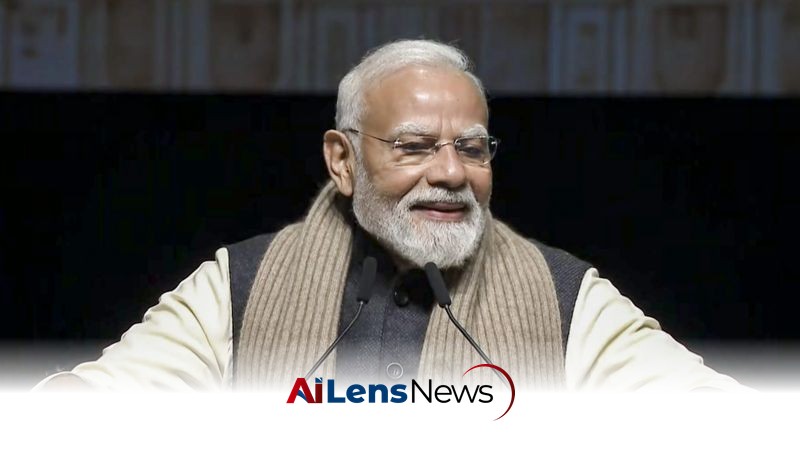


Prime Minister Narendra Modi has revealed plans for a new anti-paper leak law aimed at enhancing transparency and accountability in government examinations, set to be introduced in Parliament soon.
New Delhi, India Jul 24, 2026 ALN: In a significant move to address corruption in government examinations, Prime Minister Narendra Modi announced on Thursday night that the Centre will introduce a new, stricter anti-paper leak law. This announcement comes as part of the ongoing Monsoon Session of Parliament, following a proposal that will be considered by the Union Cabinet in its meeting scheduled for Friday.
The Prime Minister emphasized the need for stringent measures to curb the rampant issue of paper leaks that have plagued various competitive examinations in the country. He stated that the new law aims to ensure that the integrity of the examination process is maintained, thereby restoring public confidence in the system.
The announcement follows a series of incidents where examination papers were leaked, leading to widespread allegations of corruption and unfair practices. These leaks not only undermine the credibility of the examination process but also disadvantage honest candidates who aspire to secure government jobs through merit.
Corruption in competitive examinations has been an ongoing issue in India, with numerous high-profile cases surfacing in recent years. These incidents often involve collusion between examination officials, coaching centers, and candidates, resulting in unfair advantages being given to a select few. Such practices have not only eroded trust in the examination system but have also sparked public outcry and demands for reform.
For instance, in 2022, several states reported incidents where examination papers for various government jobs were leaked just hours before the scheduled tests. These revelations led to protests from candidates who felt cheated, as they had prepared diligently for these exams, only to be met with unfair competition. The public's frustration was palpable, leading to calls for the government to take decisive action to restore integrity in the recruitment process.
These features are designed not only to penalize those who engage in corrupt practices but also to create a more secure and fair environment for all candidates. The government aims to ensure that the examination process is transparent and that it operates without any malpractices.
During his announcement, PM Modi reiterated the government's commitment to transparency and fairness in the recruitment process. He highlighted that the introduction of this law is a step towards ensuring that only deserving candidates are selected for government positions, thereby promoting a merit-based system.
This commitment to transparency is part of a broader narrative that the Modi administration has been promoting since coming to power. The government has consistently emphasized the importance of integrity in public service and has rolled out various initiatives aimed at reducing corruption across different sectors. The introduction of the anti-paper leak law aligns with these efforts and reflects a proactive approach to addressing the concerns of the public.
Following the Cabinet's consideration of the proposal, the government plans to expedite the legislative process to ensure that the law is passed in Parliament without delay. This initiative is part of a broader strategy to enhance governance and tackle corruption across various sectors.
The urgency with which the government is approaching this issue indicates its recognition of the detrimental impact that corruption has on public trust and the effectiveness of government institutions. By prioritizing the passage of this law, the administration aims to send a strong message that it is serious about tackling corruption and ensuring fair play in public examinations.
As the country awaits further developments, the introduction of this anti-paper leak law is being viewed as a crucial step in safeguarding the integrity of public service examinations. The implications of this law could be far-reaching, potentially reshaping the landscape of government recruitment in India.
The introduction of stricter anti-paper leak laws could have several significant implications for the examination process in India. Firstly, it may lead to an increase in the overall credibility of competitive examinations. As public confidence in the system is restored, more candidates may be encouraged to participate, believing that they have a fair chance based on merit.
Secondly, the enhanced penalties and monitoring measures could deter potential offenders from engaging in corrupt practices. The fear of severe consequences may lead to a decline in the number of leaks and related scandals, contributing to a more transparent and equitable examination environment.
Furthermore, the establishment of accountability mechanisms could foster a culture of responsibility among examination officials. When officials know that they are being monitored and held accountable for their actions, they are more likely to adhere to ethical standards and conduct examinations fairly.
However, the success of this law will largely depend on its implementation. It will require a commitment from all stakeholders, including government officials, examination bodies, and law enforcement agencies, to work collaboratively in eradicating corruption. Training and capacity-building initiatives may also be necessary to ensure that those involved in the examination process are equipped with the skills and knowledge needed to uphold the law.
In conclusion, the proposed anti-paper leak law represents a significant step forward in the fight against corruption in government examinations. As the legislative process unfolds, all eyes will be on the government's actions to ensure that this law is not just a symbolic gesture, but a meaningful tool for reforming the examination system in India.
To learn more about the latest developments in Elections, stay updated with our exclusive reports and analyses on AiLensNews.

