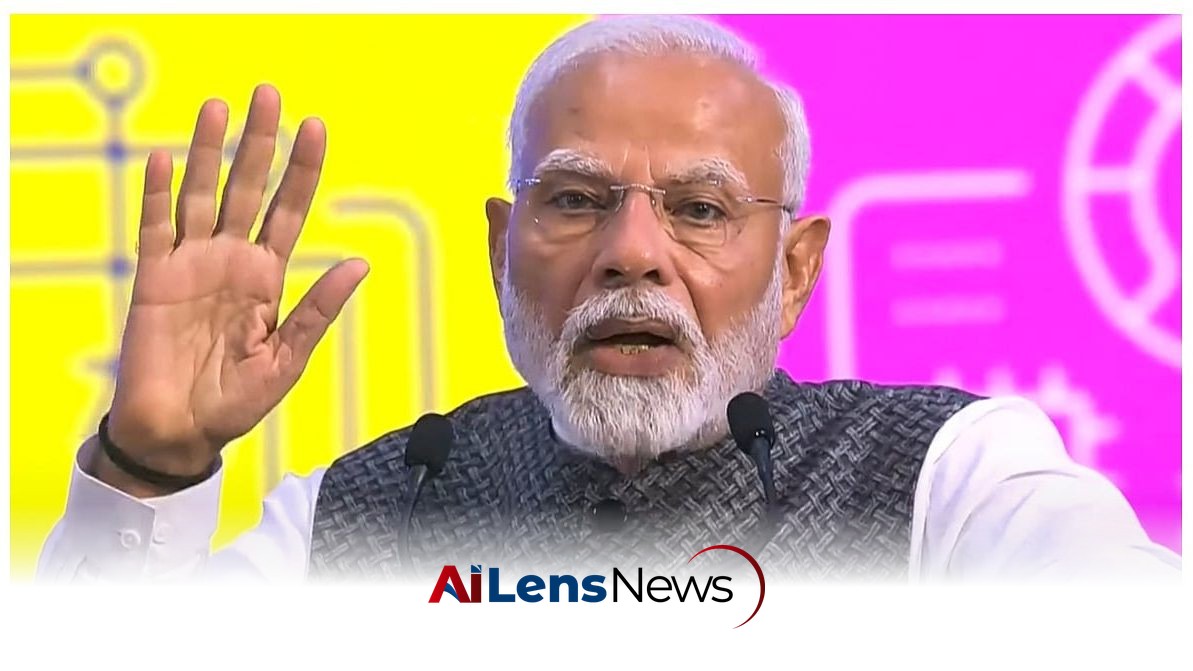


Prime Minister Modi reveals plans for a new law to expedite cases related to examination leaks, ensuring swift justice and protecting students' academic futures.
New Delhi, India Jul 24, 2026 ALN: Prime Minister Narendra Modi on Thursday announced that the Centre is taking stringent measures in response to the recent paper leak controversy. He stated that the government has already arrested those involved and is committed to ensuring that students do not lose an academic year due to these incidents.
The issue of examination leaks in India has been a persistent problem, undermining the credibility of educational assessments and causing significant distress among students and parents alike. Such leaks not only affect the immediate examination cycle but also have long-term implications on the educational system, leading to a general erosion of trust in academic institutions. The recent spike in reported cases has prompted widespread calls for reform, making Modi's announcement particularly timely.
In a significant move, Modi revealed that legislation will be prepared to fast-track cases related to examination leaks. This initiative aims to expedite the judicial process, ensuring that justice is served swiftly and effectively. Traditionally, legal proceedings in India can be protracted, often taking years to resolve. By proposing a fast-track system, the government seeks to address this issue head-on, ensuring that those responsible for such malpractices face consequences in a timely manner.
Modi emphasized the importance of maintaining the integrity of the examination system and protecting the interests of students across the nation. He reassured parents and students that the government is dedicated to creating a fair and transparent educational environment. The integrity of examinations is crucial not only for the students who take them but also for the broader educational framework, as it impacts the quality of education and the future prospects of young individuals entering the workforce.
The announcement comes as part of the government's broader efforts to tackle corruption and ensure that educational institutions remain credible and trustworthy. The proposed law is expected to be tabled in Parliament next week, marking a proactive step towards addressing the challenges posed by examination malpractices. This legislative move is anticipated to include stringent penalties for those found guilty of leaking examination papers, as well as measures to enhance security protocols during the examination process.
In recent years, examination leaks have not only been a source of frustration for students but have also sparked protests and demands for accountability from various student organizations and civil society groups. The government's response, as articulated by Modi, indicates a recognition of the urgent need for reform in this area. Stakeholders in the education sector, including teachers, administrators, and policy-makers, have long advocated for stronger measures to prevent such incidents, and the proposed legislation is seen as a step in the right direction.
As the government prepares to implement these changes, stakeholders in the education sector are hopeful that such measures will deter future incidents and restore confidence in the examination process. Educational institutions are expected to be more vigilant in their examination protocols, and there may be increased collaboration between various government agencies to monitor and address potential vulnerabilities in the system.
Moreover, the implications of this legislation extend beyond just the immediate context of examination integrity. By reinforcing the importance of a trustworthy examination system, the government aims to enhance the overall quality of education in India. A reliable examination process is essential for maintaining competitive standards, ensuring that students are assessed fairly based on their knowledge and skills, rather than on the unfair advantage provided by leaks.
This initiative also aligns with the government's broader educational reforms aimed at improving access to quality education and enhancing the learning experience for students. With a focus on transparency and accountability, the government hopes to foster an environment where students can pursue their academic goals without the fear of malpractices undermining their efforts.
The issue of examination leaks has historical roots in India, with incidents dating back several years. Various high-profile cases have emerged, often involving organized crime syndicates that exploit the examination system for profit. Such incidents have not only affected the credibility of specific examinations but have also raised questions about the overall integrity of the educational system in India. The government's proactive response under Modi's leadership signifies a commitment to tackling these entrenched issues head-on.
As the debate around educational integrity continues, it is crucial for all stakeholders to engage in constructive dialogue about the future of examinations in India. This includes exploring alternative assessment methods, such as continuous evaluation and project-based assessments, which may reduce the high-stakes nature of traditional examinations and minimize the potential for leaks. The educational landscape is evolving, and with the advent of technology, innovative assessment methods could play a pivotal role in shaping a more reliable examination framework.
In conclusion, Prime Minister Modi's announcement regarding fast-track legislation on examination leaks represents a significant step towards addressing a critical issue within the Indian educational system. By prioritizing the integrity of examinations and demonstrating a commitment to swift justice, the government aims to restore faith in the educational framework and ensure that students can pursue their academic aspirations in a fair and equitable environment. As the proposed legislation moves forward, it will be essential to monitor its implementation and effectiveness in curbing examination malpractices, ultimately contributing to a more robust and trustworthy education system in India.
Furthermore, the success of this initiative will depend on the collaboration between various stakeholders, including educational institutions, law enforcement agencies, and government bodies. A multi-faceted approach that includes training for examination officials, awareness campaigns for students and parents, and the establishment of reporting mechanisms for suspicious activities will be critical in creating a culture of integrity within the examination process. The government’s commitment to these reforms could pave the way for a new era in Indian education, where students can focus on learning and personal growth, free from the shadows of corruption and malpractice.
To learn more about the latest developments in Policies & Reforms, stay updated with our exclusive reports and analyses on AiLensNews.

