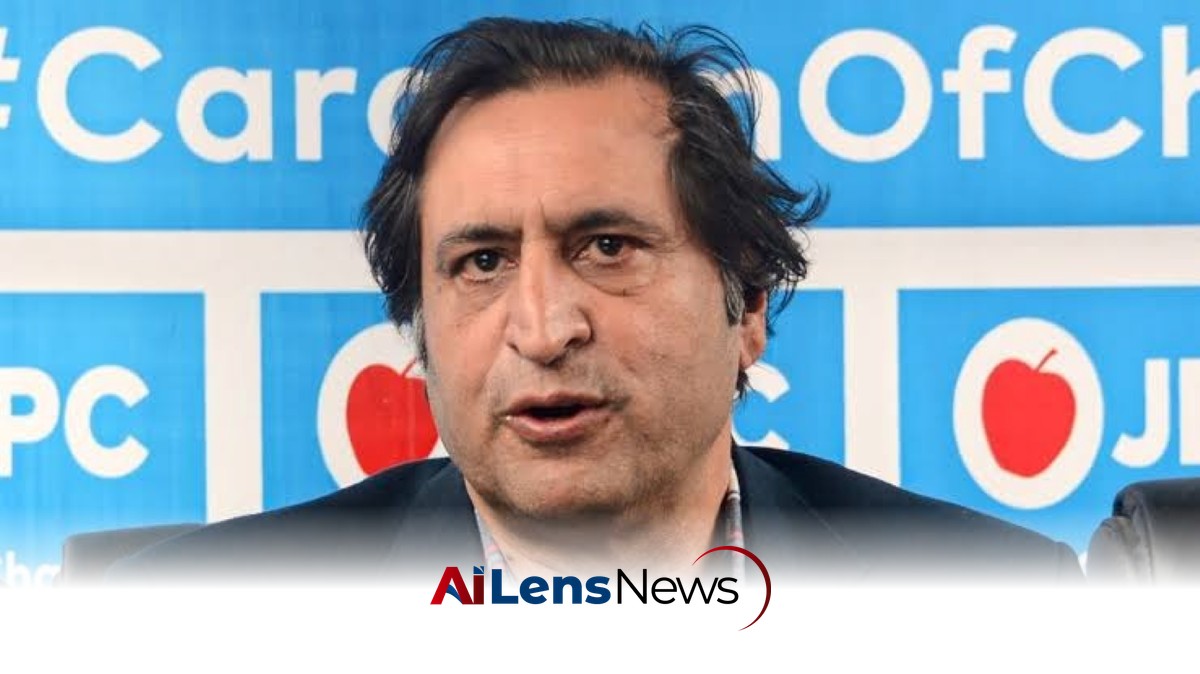


The Peoples Conference is set to announce its decision on participating in the National Conference's protest in New Delhi, aimed at restoring Jammu and Kashmir's statehood.
New Delhi, India Jul 16, 2026 ALN: The Peoples Conference (PC) announced on Thursday that it will make a final decision on Friday regarding its participation in the National Conference's proposed protest at Jantar Mantar in New Delhi. This decision is anticipated to have significant implications not only for the Peoples Conference but also for the broader political landscape in Jammu and Kashmir.
During a press briefing, People's Conference President Sajad Gani Lone confirmed that the National Conference has extended an invitation for his party to join the protest. The announcement regarding their participation will be made at a press conference in Srinagar on Friday. This moment marks a critical juncture for both parties, as the political climate in the region continues to evolve following the abrogation of Article 370 in August 2019, which stripped Jammu and Kashmir of its special status.
The National Conference has organized this protest for July 20, aiming to advocate for the restoration of Jammu and Kashmir's statehood. The call for restoration of statehood has been a significant demand among various political factions in Jammu and Kashmir since the central government's decision to reorganize the region into two Union Territories: Jammu & Kashmir and Ladakh. The protest aims to bring attention to this issue on a national platform, highlighting the concerns of the local populace regarding governance, representation, and autonomy.
In the lead-up to the protest, the National Conference has reached out to various political parties to encourage their involvement in this significant event. The participation of the Peoples Conference could bolster the credibility and visibility of the protest, as it would signify a united front among regional parties advocating for the same cause. The National Conference has historically been one of the key political players in Jammu and Kashmir, and its efforts to rally support from other parties reflect a strategic move to amplify their demands at the national level.
The political context surrounding this protest is crucial. Since the abrogation of Article 370, many political leaders and parties in Jammu and Kashmir have voiced their concerns regarding the central government's approach to governance in the region. The loss of statehood has led to apprehensions about local representation, with many residents feeling disconnected from the decision-making processes that affect their lives. The National Conference's initiative can be seen as a response to these sentiments, aiming to reclaim a sense of agency for the people of Jammu and Kashmir.
Moreover, the protest at Jantar Mantar is not merely a local issue; it has the potential to attract national attention. Political observers note that the involvement of multiple parties could bring together a diverse coalition that resonates with broader themes of regional autonomy and federalism in India. This could also set a precedent for how regional parties engage with national politics, particularly in the context of the upcoming elections and their implications for governance in Jammu and Kashmir.
The Peoples Conference, under the leadership of Sajad Gani Lone, has positioned itself as a significant player in the political dynamics of Jammu and Kashmir. Lone's party has often advocated for the rights and aspirations of the people in the region, emphasizing the need for dialogue and reconciliation. Their participation in the protest could reinforce their stance on these issues, potentially influencing their political capital and public perception.
As the political landscape continues to shift, the decision by the Peoples Conference to join or abstain from the protest will be closely monitored. It could signal their strategic positioning in relation to the National Conference and other regional parties, as well as their approach to engaging with the central government. This decision may also reflect broader trends regarding party alliances and the effectiveness of collective action in addressing the concerns of Jammu and Kashmir's residents.
The implications of this protest extend beyond the immediate demands for statehood. It represents a broader struggle for identity, representation, and the rights of the people of Jammu and Kashmir within the Indian Union. The outcome of the protest, along with the participation of various political parties, could influence the trajectory of political discourse in the region and shape future interactions between the local populace and the central government.
In conclusion, the Peoples Conference's upcoming decision regarding the protest at Jantar Mantar is a critical moment in the ongoing political narrative of Jammu and Kashmir. As parties navigate their roles in advocating for the restoration of statehood and addressing the concerns of their constituents, the outcomes of these efforts will likely resonate far beyond the immediate context, influencing the political landscape of the region for years to come. The July 20 protest stands as a testament to the resilience and determination of the people of Jammu and Kashmir to reclaim their voice and agency in the face of significant political changes.
The backdrop of this political mobilization can be traced back to the historical context of Jammu and Kashmir's relationship with the Indian Union. The region has long been a focal point of political contention, marked by its unique demographic composition and the historical promise of autonomy that has often been at odds with national policies. The abrogation of Article 370 not only altered the constitutional framework governing Jammu and Kashmir but also triggered a wave of political activism aimed at restoring the rights and privileges that many residents believe were unjustly stripped away.
Furthermore, the protest at Jantar Mantar is expected to draw attention to the broader implications of governance in Union Territories, especially concerning issues such as local representation, resource allocation, and the socio-economic development of the region. The National Conference's call for statehood is not just about political power; it also encompasses the aspirations of the people for better governance, accountability, and a voice in the political process. This sentiment is echoed by various civil society groups and activists who have been advocating for the rights of the residents of Jammu and Kashmir.
As the Peoples Conference deliberates its participation, it will also be weighing the potential political ramifications of its decision. Joining the protest could enhance its standing among constituents who are increasingly disillusioned with the central government's policies. Conversely, abstaining could be interpreted as a lack of commitment to the cause, potentially alienating voters who prioritize local representation and autonomy. The political calculus for the Peoples Conference is complex, as it navigates its identity and objectives in a rapidly changing landscape.
The protest is also significant in the context of upcoming elections, both at the national and regional levels. Political analysts suggest that the ability of regional parties to present a united front could play a critical role in shaping electoral outcomes. By collaborating on issues of statehood and representation, these parties could consolidate their voter bases and challenge the dominance of national parties in the region. The dynamics of coalition politics are particularly relevant in Jammu and Kashmir, where historical rivalries and alliances have often influenced electoral strategies.
In summary, the Peoples Conference's decision regarding the Jantar Mantar protest is emblematic of the ongoing struggle for political identity and representation in Jammu and Kashmir. As the region grapples with the aftermath of significant constitutional changes, the actions of political parties will be closely scrutinized by both local and national observers. The outcomes of the July 20 protest may not only impact the immediate demand for statehood but could also set the stage for a new chapter in the political history of Jammu and Kashmir, influencing how regional aspirations are articulated within the broader framework of Indian democracy.
To learn more about the latest developments in Political Controversies, stay updated with our exclusive reports and analyses on AiLensNews.

