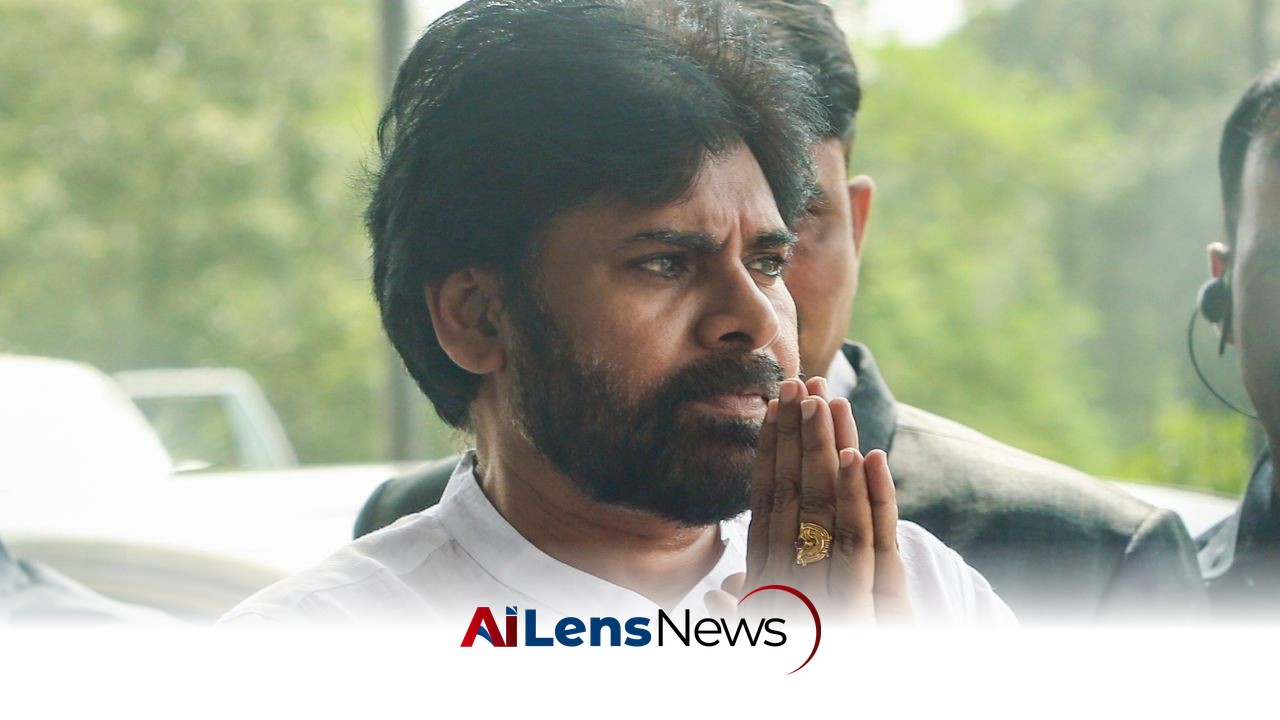


On Partition Horrors Remembrance Day, leaders including Pawan Kalyan and Kishan Reddy paid tribute to victims, stressing the importance of unity and resilience.
New Delhi, India Aug 14, 2026 ALN: Amaravati: On Partition Horrors Remembrance Day, Andhra Pradesh Deputy Chief Minister Pawan Kalyan emphasized that the memories of those who suffered should strengthen the commitment to unity and harmony. This day serves as a poignant reminder of the tragic consequences of the Partition of India in 1947, a historical event that not only reshaped the subcontinent but also left a lasting impact on millions of lives.
“On Partition Horrors Remembrance Day, we pause to remember the millions whose lives were profoundly changed by the Partition of 1947. Homes were left behind, families were separated, communities were displaced, and countless lives were marked by pain and uncertainty. Yet, through those darkest moments, people displayed extraordinary courage, resilience, and humanity,” the Jana Sena leader stated in a post on ‘X’. The Partition resulted in the creation of two independent dominions, India and Pakistan, and is often regarded as one of the largest mass migrations in human history. It is estimated that around 15 million people were displaced, and the communal violence that ensued led to the death of hundreds of thousands, if not millions, of individuals.
The Partition of India, a complex and multifaceted event, was not merely a political maneuver but a profound humanitarian crisis. The British colonial rule had left deep-seated divisions along religious lines, which were exploited during the process of partitioning the subcontinent. The hurried withdrawal of British forces and the lack of adequate planning for the mass migration led to widespread chaos, violence, and suffering. The scars left by this tumultuous period are still evident in the socio-political fabric of both India and Pakistan today.
“Remembering this chapter of our history is not about carrying its divisions forward. It is about carrying its lessons forward. Let the memories of those who suffered strengthen our commitment to unity, harmony, peace, and the shared spirit of Bharat. We remember the past with respect. We honor those who endured it. And we build tomorrow together,” he added. Kalyan's message underscores the importance of learning from history to foster a more inclusive and harmonious society. The events of 1947 serve as a cautionary tale about the dangers of division based on religion, ethnicity, or political ideologies. In this context, Kalyan's statements resonate deeply, urging society to reflect on the past while striving for a more united future.
Union Minister for Coal and Mines, G. Kishan Reddy, reiterated that India's strength lies in unity, peace, and brotherhood. “Millions uprooted. Families separated. Countless lives lost in the tragedy of Partition. Today, on Partition Horrors Remembrance Day, we pause to honor the untold sacrifices, silent tears, and extraordinary resilience of those who lived through the horrors of Partition. Their memory remains a solemn reminder that the strength of India lies in our unbreakable unity, peace, and brotherhood,” he said. Reddy's remarks highlight the ongoing relevance of the Partition's lessons, particularly in a contemporary context where communal tensions still exist in various forms across the country. His emphasis on unity echoes the sentiments of many leaders who advocate for a cohesive national identity amidst diversity.
Union Minister of State for Home Affairs, Bandi Sanjay Kumar, also paid tribute to the countless lives lost and families displaced during the Partition. “We pay solemn tribute to the victims and honor the courage and resilience of those who, despite immense loss and hardship, rebuilt their lives and moved forward with strength,” he remarked. The resilience of those who survived the Partition is often cited as a testament to the human spirit's ability to endure and overcome adversity. Many families who migrated had to start anew, often from scratch, facing numerous challenges while trying to rebuild their lives in unfamiliar territories. This resilience not only reflects the strength of individuals but also highlights the broader societal capacity to heal and adapt in the face of adversity.
Telangana BJP President Ramchander Rao paid homage to all those who lost their lives and to every family that endured unimaginable pain, displacement, and suffering. “While leaving our country, the British wanted to weaken us, hence, divided it. They achieved what they wanted. The Muslim League wanted a separate country. They achieved what they wanted. The Congress wanted power. They achieved what they wanted. The only one that truly lost was our Motherland – torn apart, with millions displaced and countless lives lost in the horrors of Partition,” he stated. Rao's comments reflect a perspective that critiques the political motivations behind the Partition and emphasizes its tragic consequences for the nation as a whole. This viewpoint is part of a broader discourse in India regarding the historical narratives surrounding the Partition, often invoking the need for national unity and collective memory. The recognition of these narratives is crucial in understanding the complexities of Indian identity and the ongoing challenges related to communal relations.
The observance of Partition Horrors Remembrance Day is not merely a commemoration of past tragedies; it is also an opportunity for reflection on how the lessons of the Partition can be applied to contemporary issues. The communal violence and divisions that characterized the Partition are echoed in various forms today, with sectarian tensions remaining a challenge in Indian society. Political leaders and citizens alike are called to remember the sacrifices made by those who suffered during the Partition, viewing it as a moral imperative to foster an inclusive society that respects diversity. This call for inclusivity is particularly relevant in today's context, where polarization can often overshadow the shared values that bind communities together.
As India continues to grapple with its diverse cultural and religious landscape, the memory of the Partition serves as a reminder of the importance of dialogue, understanding, and empathy. By honoring the past, leaders like Kalyan and Reddy advocate for a future that prioritizes peace and unity over division and discord. The collective remembrance of the Partition's horrors can act as a catalyst for healing and reconciliation, encouraging individuals and communities to work towards a more harmonious coexistence. This process of reconciliation is vital for addressing the lingering wounds of the past and building a society that values every individual's dignity and rights.
In conclusion, the observance of Partition Horrors Remembrance Day by leaders in Andhra Pradesh and Telangana is a significant step in acknowledging the historical injustices faced by millions during one of the darkest chapters in Indian history. It serves as a call to action for current and future generations to learn from the past and strive for a society that values unity, peace, and mutual respect among its diverse populace. As the country reflects on its history, the hope is that such remembrances will inspire a commitment to building a better, more inclusive future for all citizens. The lessons learned from the Partition remind us that the pursuit of justice and reconciliation is an ongoing journey, one that requires the collective effort of all segments of society.
To learn more about the latest developments in Elections, stay updated with our exclusive reports and analyses on AiLensNews.

