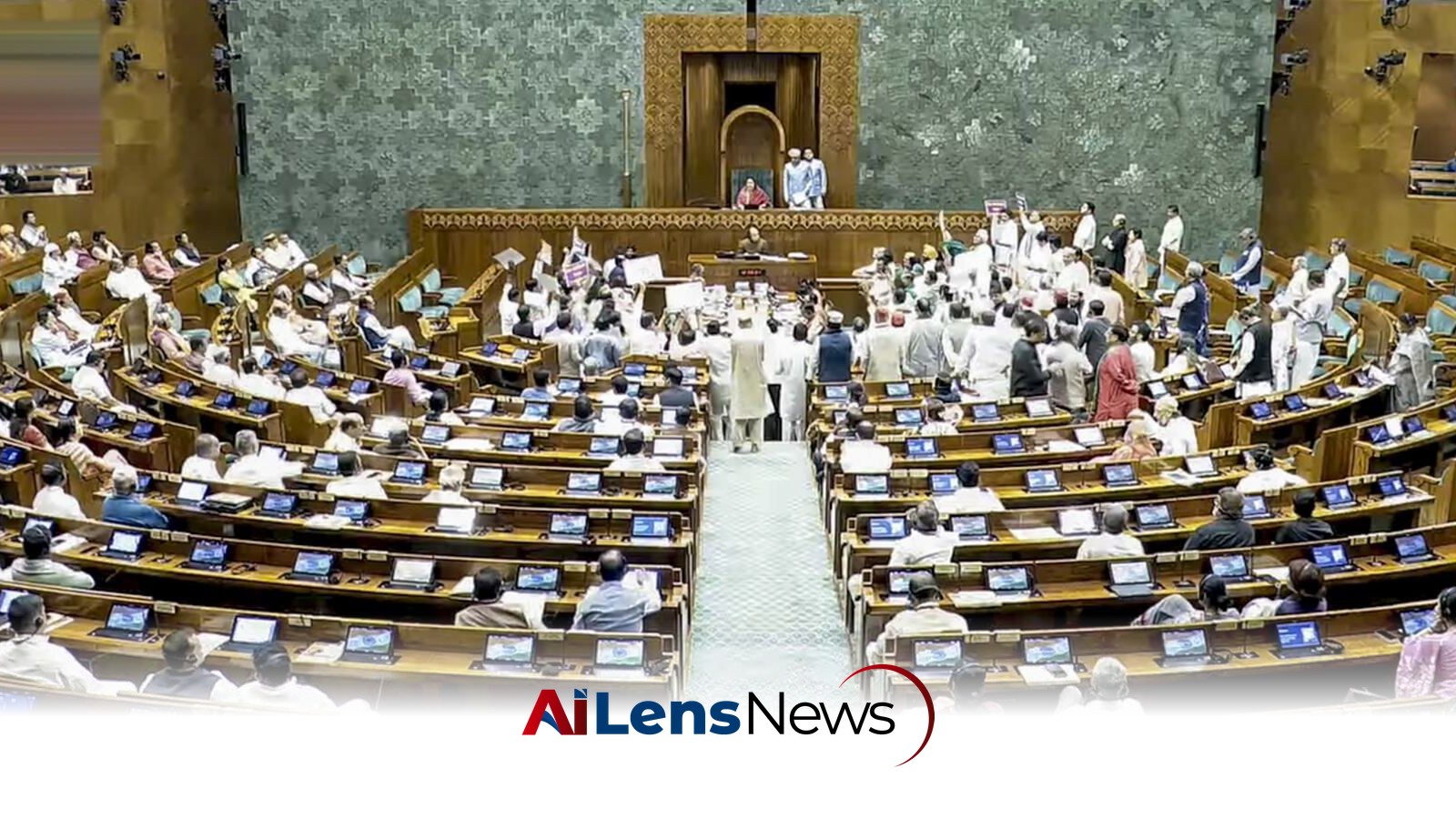


The second day of the Monsoon Session in Parliament was marred by protests from the Opposition, leading to multiple adjournments in both Houses.
New Delhi, India Jul 21, 2026 ALN: Parliament remained deadlocked for the second consecutive day on Tuesday as Opposition protests forced repeated adjournments in both the Lok Sabha and the Rajya Sabha, leaving little legislative business to be transacted. The ongoing protests are primarily centered around several contentious issues, including the alleged NEET paper leak, police action during the recent "Sansad Chalo" protest, and allegations surrounding the theft of donations intended for the Ram temple in Ayodhya.
The National Eligibility cum Entrance Test (NEET) has been a focal point of contention in recent months, with accusations of irregularities and a paper leak raising serious concerns among students and educational stakeholders. NEET is a crucial examination for medical aspirants in India, and any allegations of impropriety can significantly impact the students' futures and the integrity of the examination system. The protests are not just limited to the Parliament; they have also seen significant participation from students and civil society, who are demanding accountability and transparency in the examination process.
In the Lok Sabha, disruptions began as soon as Question Hour commenced at 11 am. Opposition members trooped into the Well of the House, raising slogans over the NEET paper leak and the alleged baton-charge on students protesting the issue. The atmosphere in the House was tense, with members visibly frustrated and determined to voice their concerns. Speaker Om Birla urged the protesting members to return to their seats, assuring them that they would get an opportunity to raise their concerns in accordance with parliamentary rules. However, with the protests continuing, he adjourned the House, reflecting the growing impasse between the ruling party and the Opposition.
When proceedings resumed at noon, Opposition members again raised slogans, forcing ministers to table parliamentary papers amid the din. This scenario is not uncommon in Indian parliamentary proceedings, where the Opposition often resorts to protests to draw attention to issues they believe are being neglected by the government. Repeated appeals from the Chair asking members to resume their seats went unheeded, leading to another adjournment until 2 pm. The deadlock persisted after the House reconvened in the afternoon. Presiding officer Dilip Saikia appealed to Opposition MPs to participate in the proceedings, but the protests continued unabated, prompting the House to be adjourned for the remainder of the day.
Tuesday marked the second consecutive day of disruptions in the Lok Sabha, with Opposition members pressing for discussions on the alleged irregularities in the NEET examination, the police action during Monday's protest march in Delhi, and the Ayodhya temple donation theft allegations. The repeated adjournments highlight the deepening rift between the government and the Opposition, raising questions about the functioning of Parliament and the ability of lawmakers to effectively address pressing issues.
The Rajya Sabha witnessed a similar impasse. Soon after official papers were laid on the table, Leader of the Opposition Mallikarjun Kharge sought to raise the issue of the police action against students protesting the alleged NEET paper leak. Kharge alleged that police resorted to a lathi-charge and used tear gas against the protesters, a claim that has sparked outrage among various student groups and civil rights organizations. His remarks triggered slogan-shouting from Treasury Bench members, which was met with counter-slogans from the Opposition, prompting Chairman C P Radhakrishnan to adjourn the House till noon.
When the Upper House reassembled, Secretary General P C Mody read out a message from the Lok Sabha informing members that the Lower House had adopted a motion recommending that the Rajya Sabha elect two members to the Joint Committee on Offices of Profit to fill vacancies arising from the retirement of N R Elango and Deepak Prakash. However, amid continuing protests, the House was adjourned again till 2 pm, indicating that the stalemate was far from resolution.
The post-lunch sitting also failed to function. As Opposition MPs resumed sloganeering, Deputy Chairman Harivansh adjourned the Rajya Sabha for the day. The inability of both Houses to conduct their business raises significant concerns about the legislative agenda and the pressing matters that require parliamentary attention. With several critical bills pending, including those related to economic reforms, social welfare, and national security, the ongoing deadlock poses a challenge to the government's ability to govern effectively.
The implications of these protests extend beyond the immediate disruptions in Parliament. They reflect a growing discontent among various segments of society, particularly among students who feel marginalized in the decision-making processes that affect their futures. The NEET protests, in particular, underscore the broader issues of access and equity in education, as well as the accountability of governmental institutions.
Furthermore, the allegations of police violence during the protests have sparked a debate about the use of force in handling public dissent, raising questions about the balance between maintaining law and order and respecting citizens' rights to protest. As the situation unfolds, it will be crucial for the government to address these concerns transparently and constructively to restore public confidence in the democratic process.
As Parliament continues to grapple with these issues, the focus will likely remain on the need for dialogue and compromise to ensure that the legislative process can resume effectively. The Opposition's insistence on discussing these matters highlights the importance of parliamentary accountability and the role of elected representatives in voicing the concerns of their constituents. Ultimately, the resolution of this deadlock will require a commitment from all parties to engage in meaningful discussions and work towards a common understanding that prioritizes the interests of the public.
To learn more about the latest developments in Elections, stay updated with our exclusive reports and analyses on AiLensNews.

