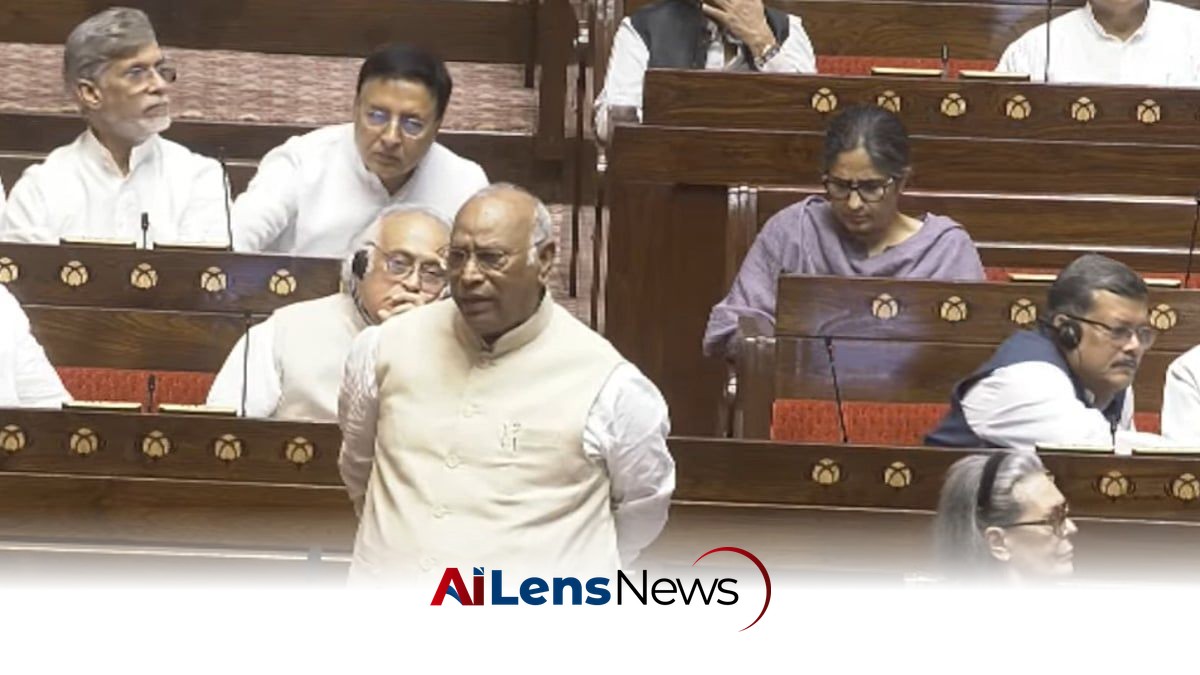


The second day of Parliament's Monsoon Session saw significant disruptions as opposition leaders raised concerns over alleged examination irregularities and police actions against student protests.
New Delhi, India Jul 21, 2026 ALN: The ongoing Monsoon Session of Parliament has taken a contentious turn as the opposition parties have united to express their concerns regarding the examination crisis affecting students across the country. The situation has escalated to a point where the opposition has called for discussions on what they term the "brutality unleashed" on students and the government's perceived lack of accountability in addressing these pressing issues.
On Tuesday, Leader of Opposition Rahul Gandhi, accompanied by several opposition MPs, met with Lok Sabha Speaker Om Birla. The primary agenda of their meeting was to urge him to facilitate a discussion in the House regarding the treatment of students during recent protests, as well as the government's inaction in the face of what many are calling an examination crisis. This crisis has been characterized by a series of alleged irregularities, including paper leaks and police violence against protesting students. The opposition has framed this issue as not just a failure of the examination system but a broader failure of the government to protect the rights of students and ensure a fair educational environment.
In a show of solidarity with the students, Chandra Shekhar Azad, the chief of the Aazad Samaj Party-Kanshi Ram and a Member of Parliament, staged a protest on the Parliament premises. His demonstration was specifically aimed at highlighting the alleged paper leak issue and the police action that occurred during a Congress-led protest march on the preceding day. Azad's protest included an overnight sit-in within the Parliament complex, where he called for the resignation of Union Education Minister Dharmendra Pradhan. Azad's actions underscore the growing frustration among various political factions regarding the government's handling of educational matters, particularly in light of the reported systemic failures.
The tensions in Parliament were palpable as Vice President CP Radhakrishnan was forced to adjourn the Rajya Sabha shortly after the session began. This decision came in response to uproarious protests led by Congress president Mallikarjun Kharge, who raised concerns over the police crackdown on student protests organized by the CJP (Campaign for Justice and Peace). The adjournment reflects the increasingly volatile atmosphere in Parliament, where opposition members have been vocal about their demands for accountability and transparency from the government.
Similarly, the Lok Sabha faced disruptions almost immediately after proceedings commenced, leading Speaker Om Birla to adjourn the session until 12 PM. Birla reassured members that they would have the opportunity to raise their issues in accordance with parliamentary rules. However, as opposition members continued to protest, the Speaker found it necessary to adjourn the House, illustrating the challenges faced by the government in maintaining order amidst rising tensions.
In the backdrop of these disruptions, the INDIA bloc, a coalition of opposition parties, convened a meeting of their floor leaders. This gathering aimed to strategize on how best to address the ongoing examination crisis and other contentious issues that have emerged during the session. The coalition's unity and collective approach may play a crucial role in shaping the discourse in Parliament and influencing public opinion.
In contrast to the opposition's turmoil, Prime Minister Narendra Modi chaired a meeting of the National Democratic Alliance's (NDA) Parliamentary Party, known as Mangal Milan. During this meeting, Parliamentary Affairs Minister Kiren Rijiju reported that Modi highlighted the government’s achievements over recent months and provided updates on free trade agreements signed with various countries. This meeting underscores the government's efforts to focus on its legislative agenda and achievements, even as the opposition seeks to draw attention to significant issues affecting the populace.
As the examination crisis continues to unfold, Congress MP K C Venugopal submitted an adjournment motion notice in the Lok Sabha. This motion seeks to suspend the day's business in order to facilitate a discussion on the ongoing crisis within the examination system, highlighting the alleged paper leaks that have plagued competitive examinations, including the National Eligibility cum Entrance Test (NEET). Venugopal pointed out that there have been 152 reported instances of question paper leaks affecting major competitive examinations, raising serious concerns about the integrity of the examination process.
Despite the gravity of the situation, Venugopal criticized the government's failure to take meaningful action against those responsible for these irregularities. He also voiced concerns over the police actions taken against students who have been protesting against the examination system, demanding that Union Education Minister Dharmendra Pradhan make a suo motu statement in the House regarding these issues.
Additionally, Congress MP Manickam Tagore also moved an adjournment motion in the Lok Sabha. His motion calls for a discussion on the alleged use of force by the Delhi Police and the Railway Protection Force (RPF) against peaceful student protesters near Parliament. Tagore's notice emphasizes the troubling reports of excessive force used against demonstrators who were advocating for accountability in the examination system. He raised alarms about the suspension of internet services around the Parliament area, which has further complicated the situation for those seeking to voice their concerns.
In the Rajya Sabha, Congress MP Syed Naseer Hussain submitted a notice under Rule 267, seeking suspension of the day's business to discuss what he termed a "systemic crisis" in India's examination system. Hussain's notice calls for an immediate discussion on the cancellation of NEET-UG 2026 following the alleged paper leak, as well as irregularities in the implementation of the Central Board of Secondary Education's (CBSE) On-Screen Marking system. He also pointed out the recurring failures in recruitment examinations, which have led to a significant loss of public confidence in the examination process.
The second day of the Monsoon Session of Parliament is anticipated to be tumultuous, with the opposition preparing to confront the BJP-led NDA government on a range of contentious issues. Among the key topics likely to dominate discussions are the alleged theft of donations at the Ayodhya Ram Temple, the ongoing NEET-UG paper leak controversy, and the broader implications of ethanol blending policies.
The opening day of the session witnessed significant disruptions, with both Houses of Parliament being adjourned multiple times as opposition members vocally protested against the alleged NEET-UG paper leak and the reported theft of donations at the Ram Temple in Ayodhya. These protests not only highlight the opposition's determination to hold the government accountable but also reflect the growing dissatisfaction among the public regarding the government's handling of educational and financial integrity issues.
The implications of these debates extend beyond the walls of Parliament, as the examination crisis has far-reaching consequences for students, parents, and the education system as a whole. The opposition's push for accountability and transparency may resonate with a broader audience, potentially influencing public perception of the government and its policies. As the Monsoon Session progresses, it remains to be seen how the government will respond to these mounting pressures and whether it will take steps to address the concerns raised by the opposition and the public.
To learn more about the latest developments in Elections, stay updated with our exclusive reports and analyses on AiLensNews.

