

More
Checking your session
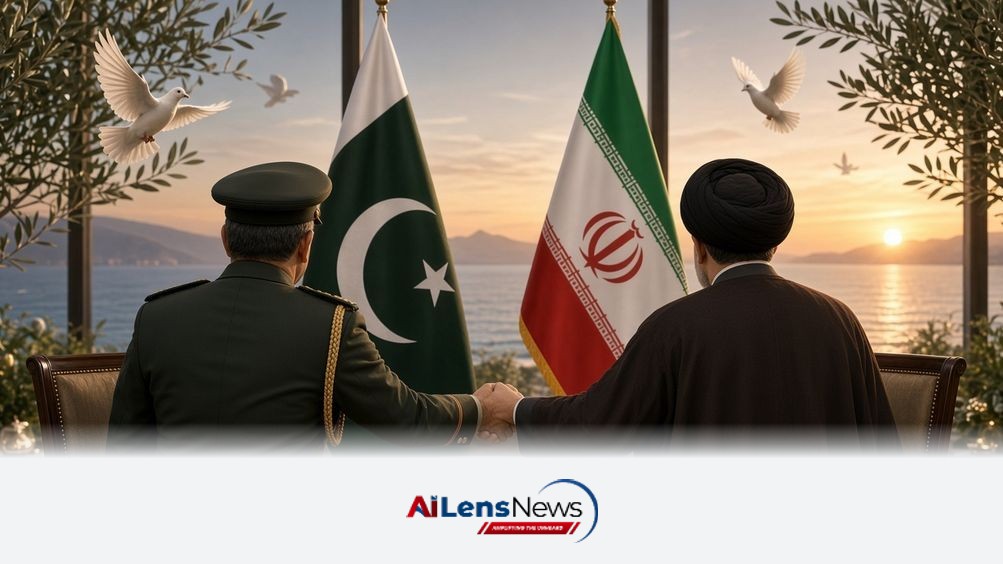



Pakistan Army Chief Field Marshal Asim Munir met with Iranian leaders to address the West Asia conflict and the reopening of the vital Strait of Hormuz.
New Delhi, India Aug 25, 2026 ALN: Pakistan Army Chief Field Marshal Asim Munir has held "comprehensive discussions" with the Iranian leadership in Tehran, focusing on measures to prevent further escalation of the West Asia conflict and the reopening of the Strait of Hormuz, the army's media wing said on Tuesday.
The army chief, who was accompanied by Interior Minister Mohsin Naqvi, concluded a day-long visit to Iran as part of Islamabad’s diplomatic efforts to break the deadlock in the ongoing US-Iran conflict, the Inter-Services Public Relations (ISPR) said in a statement.
It added that the visit was "part of Pakistan’s diplomatic efforts to end the stalemate in the ongoing US-Iran conflict and explore ways for achieving enduring peace and a permanent end to instability in the region.”
The army chief called on Iranian President Masoud Pezeshkian, Mohsen Rezaei, Representative of the Supreme Leader on the Supreme National Security Council, Mohammad Bagher Ghalibaf, Speaker of the Parliament of Iran, Seyed Abbas Araghchi, Foreign Minister of Iran, and Eskandar Momeni, Minister of Interior of Iran.
"Comprehensive discussions focused on measures to prevent further escalation, reopening of the Strait of Hormuz and expedited termination of the conflict,” the statement said.
The Strait of Hormuz is a 55-km-wide narrow waterway between Iran and Oman, separating the Persian Gulf from the Arabian Sea. It is one of the busiest and most strategically significant shipping routes in the world, as a fifth of global oil passed through it before the conflict began on February 28.
The discussions between leaders from Pakistan and Iran also covered regional peace and possible ways to reach a negotiated settlement to the disputes, the statement said.
The Iranian leadership appreciated Pakistan's "constructive role” in facilitating dialogue, de-escalation and a peaceful resolution of the conflict, according to the statement.
Pakistan has been leading the push for peace and reviving its mediation efforts in the stalled US-Iran peace negotiations. In April, a ceasefire was announced with an agreement to end the US-Iran conflict. However, the peace process faltered later on and has not been put back on track.
The conflict began when the United States and Israel launched strikes against Iran on February 28, triggering Iranian retaliation and choking the vital Strait of Hormuz and entailing a petroleum price hike. An interim peace agreement, which Pakistan signed as a guarantor, derailed last month as tensions escalated in West Asia with the US and Iran resuming military strikes. Pakistan's efforts to revive the talks have so far failed to yield results.
The visit by Pakistan's leadership was part of the country's broader diplomatic efforts to help break the deadlock in the conflict and explore ways to achieve lasting peace and an end to regional instability. The visit comes as Washington ramps up pressure on Iran with an expanded round of sanctions, which US officials say are designed to cut off Tehran's economic lifeline and put the world on notice to cease doing business with the country.
President Donald Trump has also warned of economic consequences for countries providing what he called "any type of lifeline" to Iran, as Washington seeks to intensify pressure on Iran. Oil shipments through the Strait of Hormuz have been severely disrupted, while Tehran has threatened to target unauthorized tankers attempting to transit the waterway.
The geopolitical implications of the discussions between Pakistan and Iran are significant, especially considering the critical role the Strait of Hormuz plays in global energy security. The waterway is a chokepoint for oil shipments, with a substantial percentage of the world's oil supply transiting through it. Any disruption in this route can have far-reaching consequences on global oil prices and economic stability.
Historically, the Strait of Hormuz has been a flashpoint for tensions between Iran and Western nations, particularly the US and its allies. The repeated military confrontations and threats from both sides have raised concerns over the potential for a larger conflict that could destabilize the entire region. The discussions between the Pakistani and Iranian leadership could be seen as an attempt to mediate and de-escalate these tensions, which have been exacerbated by the US's aggressive stance against Iran.
Furthermore, Pakistan's involvement in these discussions highlights its strategic position in the region. As a neighbor to both Iran and India, and with its own complex relationship with the US, Pakistan is uniquely positioned to act as a mediator. Islamabad's diplomatic efforts could help to facilitate dialogue not only between Iran and the US but also among other regional players who have stakes in maintaining stability in West Asia.
The Iranian leadership's appreciation of Pakistan's role in these discussions underscores the importance of regional cooperation in addressing security challenges. Both countries share concerns over extremist groups and the potential for instability spilling over their borders. Collaborative efforts to ensure peace and security can lead to stronger bilateral ties and a more stable regional environment.
In conclusion, the discussions surrounding the reopening of the Strait of Hormuz and the broader US-Iran conflict reflect the intricate dynamics of West Asia. As regional tensions continue to simmer, the role of mediators like Pakistan becomes increasingly crucial in fostering dialogue and seeking peaceful resolutions to conflicts that have global implications. The outcomes of these discussions could set the stage for future diplomatic engagements and possibly pave the way for a more stable and peaceful region.
To learn more about the latest developments in Political Controversies, stay updated with our exclusive reports and analyses on AILensNews.