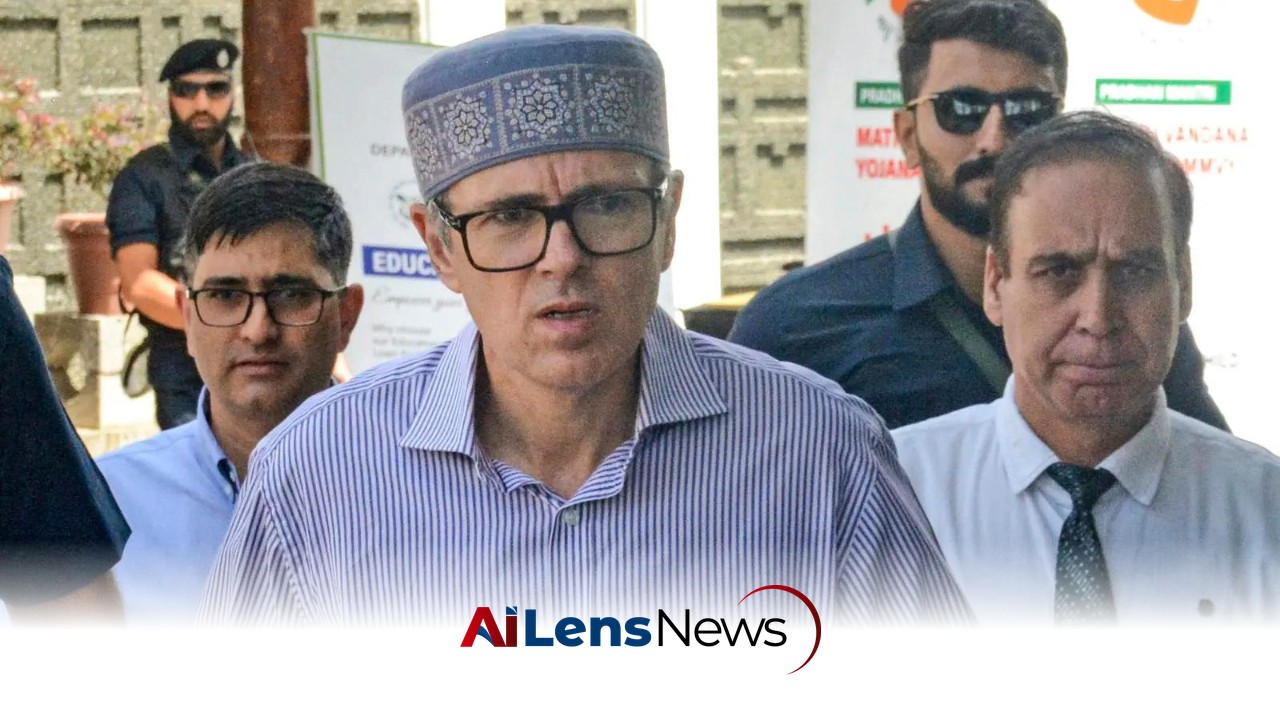


Jammu and Kashmir Chief Minister Omar Abdullah has announced a protest in Delhi on July 20, advocating for the restoration of statehood for Jammu and Kashmir.
New Delhi, India Jul 16, 2026 ALN: Jammu and Kashmir Chief Minister Omar Abdullah has confirmed plans for a significant protest in Delhi, scheduled for July 20. The demonstration, organized by the National Conference, aims to press for the restoration of statehood for Jammu and Kashmir. This protest is part of a broader movement that has gained momentum since the revocation of Article 370 in August 2019, which had granted special autonomy to the region.
In a recent statement, Abdullah emphasized that the protest program will proceed as planned, despite potential changes to the venue or format. He expressed determination to raise the voice of the people of Jammu and Kashmir in the national capital. The significance of this protest lies not only in the demand for statehood but also in the broader implications it has for the political landscape of the region and the rights of its residents.
The call for statehood restoration has been a long-standing issue for the people of Jammu and Kashmir, particularly following the abrogation of Article 370 in 2019, which revoked the region's special status. This move was met with widespread criticism and concern, both domestically and internationally, as it altered the political framework that had been in place since ’s independence in 1947. The abrogation led to the bifurcation of the state into two Union Territories: Jammu & Kashmir and Ladakh, effectively diminishing the political power of local governance.
Abdullah's leadership in this protest reflects the ongoing political discourse surrounding the rights and governance of Jammu and Kashmir. The National Conference, which has historically represented the interests of the people of Jammu and Kashmir, sees the restoration of statehood as crucial for re-establishing local governance and addressing the unique challenges faced by the region. Abdullah's commitment to this cause underscores his party's position as a key player in the ongoing struggle for rights and autonomy in Jammu and Kashmir.
The protest is not merely a political event; it is also a response to the sentiments of the people in the region, many of whom feel disenfranchised and marginalized following the changes implemented in 2019. The National Conference aims to mobilize supporters and stakeholders to ensure a strong turnout in Delhi, aiming to draw attention to their cause and advocate for the rights of the people they represent. This mobilization is critical, as it seeks to reinforce the narrative that the demand for statehood is not just a political issue but a matter of justice and recognition for the people of Jammu and Kashmir.
In the lead-up to the protest, Abdullah has also addressed the recent delays in obtaining permission for the demonstration, refraining from labeling it as sabotage. Instead, he focused on the importance of the demonstration in highlighting the demand for statehood. This approach reflects a strategic decision to keep the focus on the cause rather than getting sidetracked by bureaucratic hurdles, which could detract from the message of the protest.
The implications of this protest extend beyond the immediate demands for statehood. It is a manifestation of the larger struggle for identity, rights, and governance that has characterized Jammu and Kashmir's political landscape for decades. The region has a complex history marked by conflict, political upheaval, and a quest for autonomy. The restoration of statehood is seen by many as a necessary step toward healing the wounds of the past and creating a framework for sustainable governance that respects the aspirations of the local population.
Furthermore, the protest is likely to attract attention from various political factions and civil society groups, each with their perspectives on the situation in Jammu and Kashmir. The involvement of multiple stakeholders could lead to a broader dialogue about the future of the region, potentially influencing national policy decisions. It could also serve as a platform for other voices advocating for different aspects of governance, rights, and development in Jammu and Kashmir.
The upcoming protest is set to be a pivotal moment in the ongoing struggle for statehood, with Abdullah at the forefront, rallying support for a cause that resonates deeply with the citizens of Jammu and Kashmir. As the date approaches, the eyes of the nation will be on Delhi, where the National Conference aims to make a strong statement about the future of Jammu and Kashmir and the rights of its people. The outcome of this protest could have significant ramifications for the political dynamics in the region and the relationship between the central government and the people of Jammu and Kashmir.
In conclusion, the planned demonstration on July 20 is more than just a call for statehood; it represents a critical juncture in the ongoing dialogue about the identity, rights, and governance of Jammu and Kashmir. With Abdullah leading the charge, the National Conference seeks to galvanize support for a movement that is deeply rooted in the aspirations of the people they represent. The protest is expected to serve as a reminder of the enduring struggle for autonomy and recognition in a region that has faced significant challenges in its quest for self-determination.
To understand the significance of this protest, it is essential to consider the historical context surrounding Jammu and Kashmir. The region has been a focal point of conflict and political contention since the partition of in 1947. The princely state of Jammu and Kashmir, which initially chose to remain independent, eventually acceded to under certain conditions, including the promise of autonomy. Article 370 was a constitutional provision that enshrined this autonomy, allowing the region to maintain its own laws and governance structures.
The revocation of this article in 2019 was perceived by many as a unilateral decision by the central government, undermining the rights of the people of Jammu and Kashmir and disregarding the historical agreements that had been made. The bifurcation of the state into Union Territories was particularly controversial, as it led to a significant reduction in local political representation and decision-making power. This has fueled a sense of alienation among the residents, who argue that their voices are not being heard in the corridors of power in New Delhi.
In the aftermath of the abrogation, there were widespread protests, internet shutdowns, and a heavy military presence in the region, which further exacerbated tensions. The National Conference and other regional parties have since been vocal in their opposition to these changes, advocating for the restoration of statehood as a means of re-establishing democratic governance and addressing the aspirations of the people. The protest planned by Abdullah is thus a continuation of this struggle, aiming to bring national attention to the plight of Jammu and Kashmir.
Moreover, the protest is likely to resonate with various civil society organizations and human rights advocates who have been monitoring the situation in Jammu and Kashmir. Their involvement could amplify the message of the protest, bringing in additional perspectives on issues such as human rights, governance, and socio-economic development in the region. This could potentially lead to a more comprehensive dialogue about the future of Jammu and Kashmir, one that includes not just political considerations but also social and economic dimensions.
As the protest date approaches, it will be essential to observe how the central government responds to this mobilization. The government's approach to the protest could set a precedent for how future demonstrations and demands for statehood or autonomy are handled. It could either lead to a more conciliatory approach, recognizing the need for dialogue and engagement with local voices, or it could result in a more repressive stance, further alienating the people of Jammu and Kashmir.
In summary, the planned protest by Omar Abdullah and the National Conference is not just a call for the restoration of statehood; it is a reflection of the deep-rooted aspirations and grievances of the people of Jammu and Kashmir. The outcome of this protest could have far-reaching implications for the political landscape of the region, the relationship between the central government and the local population, and the broader discourse on governance and rights in Jammu and Kashmir. As the nation watches, the protest represents a critical moment in the ongoing struggle for justice, recognition, and autonomy in a region that has long sought its place within the n Union.
To learn more about the latest developments in Elections, stay updated with our exclusive reports and analyses on AiLensNews.

