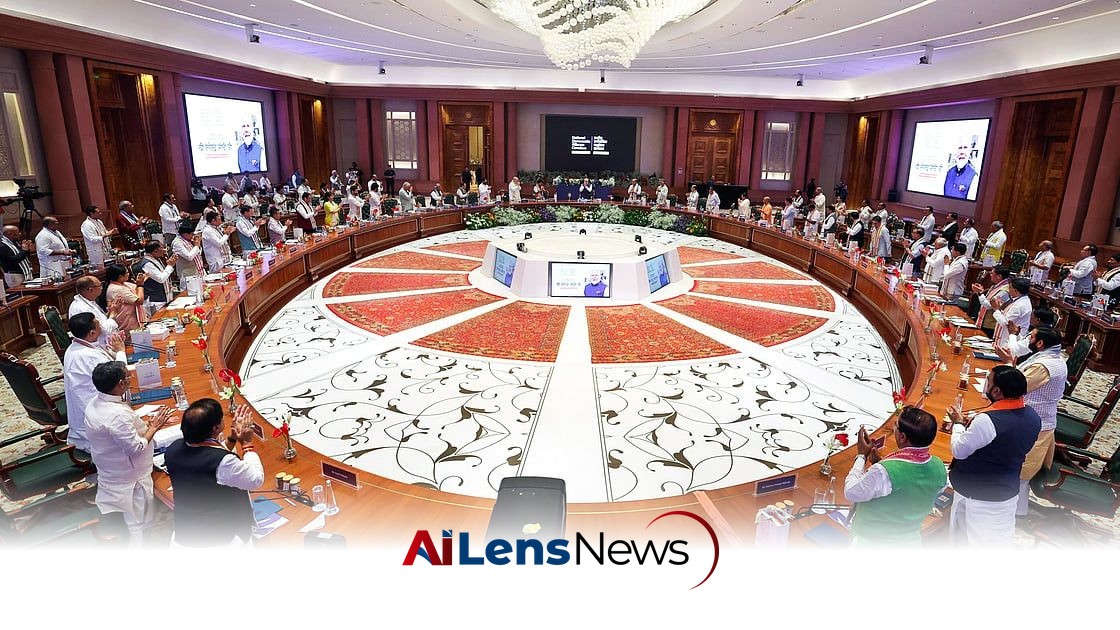


As the Monsoon session of Parliament approaches, the NDA is finalizing its strategy to push key legislations, including the Delimitation Bill and Women's Reservation Bill.
New Delhi, India Jul 17, 2026 ALN: Ahead of the Monsoon session of Parliament beginning July 20, the BJP-led National Democratic Alliance (NDA) is set to finalize its floor strategy at a meeting of senior alliance ministers chaired by Defence Minister Rajnath Singh on Friday. The government is preparing to push a series of key legislations, including a renewed attempt to secure the passage of the Constitution (131st Amendment) Bill, which pertains to delimitation and women's reservation.
The Constitution (131st Amendment) Bill aims to create a framework for the delimitation of parliamentary and assembly constituencies in India, which is a process that redraws the boundaries of electoral districts. Delimitation is a critical aspect of electoral democracy, as it directly affects the representation of various regions and communities in the legislative assemblies. This bill is particularly significant as it also seeks to enhance women's representation in legislative bodies by reserving a certain percentage of seats for women. The push for this legislation has gained momentum following the government's belief that political dynamics may have shifted in their favor since the bill failed to secure the required two-thirds majority during Parliament's special session in April.
Delimitation in India has been a contentious issue, often intertwined with the politics of representation and regional equity. The last delimitation exercise was conducted in 2000, and many believe that a new exercise is overdue to reflect changes in population and demographic shifts. The NDA's strategy meeting assumes a crucial role in navigating the complexities and sensitivities surrounding delimitation and women's reservation. According to sources, the meeting will focus on the NDA's legislative agenda, coordination among alliance partners, and a unified strategy to counter the Opposition during the session. Floor leaders of constituent parties are expected to attend ahead of the all-party meeting on July 19, where the government will brief Opposition parties about its agenda and seek their cooperation on various issues. Prime Minister Narendra Modi is also scheduled to chair the NDA Parliamentary Party meeting on July 21, further emphasizing the importance of a cohesive approach.
The NDA's optimism regarding the Constitution (131st Amendment) Bill is rooted in recent political realignments that may provide the necessary support from regional parties. While the NDA is still believed to be a few Members of Parliament (MPs) short of the constitutional threshold required for passing the bill, sources indicate that the ruling alliance is hopeful of garnering support from previously unaligned parties. This potential coalition-building is indicative of the shifting political landscape in India, where alliances can be fluid and responsive to the prevailing political climate. The ability to secure votes from regional parties can significantly impact the NDA's legislative agenda, especially in a parliamentary system where the majority is essential for passing bills.
Union Minister Ramdas Athawale expressed confidence on Wednesday that both the Women's Reservation Bill and the Delimitation Bill would be passed during the Monsoon session. He claimed that the NDA now possesses the necessary numbers following recent developments involving parties such as the Trinamool Congress, Shiv Sena (UBT), and the Dravida Munnetra Kazhagam (DMK). Athawale urged Opposition parties to support the proposed constitutional amendments, emphasizing that women should benefit from reservation in the upcoming 2029 Lok Sabha elections. This call to action reflects the NDA's strategy to frame the legislation as a progressive step towards gender equality in Indian politics, a narrative that resonates with a significant portion of the electorate, especially in the context of increasing demands for gender parity in governance.
Apart from the constitutional amendment Bills, the government is expected to introduce several other key legislations during the session. These may include reforms in various sectors, reflecting the NDA's broader agenda of governance and development. The government has indicated its intention to address pressing issues such as economic recovery, infrastructure development, and social welfare initiatives, which are critical in the context of the ongoing challenges posed by the COVID-19 pandemic and its aftermath. However, the government must also prepare for an Opposition offensive on pressing issues, including the alleged NEET-UG paper leak, accusations regarding the misappropriation of donations at the Ram Temple, and recent political defections that have raised eyebrows regarding transparency and accountability in governance.
Sources also indicated that Friday's meeting would discuss floor management strategies and the alliance's response to a breach of privilege notice that has been moved against Rajnath Singh. This notice, if pursued, could complicate the NDA's efforts to maintain a united front during the session, especially as it relates to the broader narrative surrounding accountability in governance. The Opposition is likely to use such controversies to question the integrity of the ruling alliance, thereby impacting its legislative agenda.
The meeting coincides with the Joint Parliamentary Committee adopting its report on the proposed Constitution (130th Amendment) Bill. This bill has drawn criticism from Opposition parties, particularly regarding provisions that relate to the disqualification of the Prime Minister, Chief Ministers, and Union Ministers if they remain in judicial custody for 30 days without securing bail. The implications of such provisions are significant, as they touch upon the accountability of elected officials and the balance of power between the judiciary and the legislature. The Opposition's concerns highlight the ongoing tension between the ruling party and its rivals, as well as the broader questions surrounding democratic governance in India. This scrutiny is likely to intensify as the Monsoon session progresses, with the Opposition eager to capitalize on any perceived missteps by the government.
As the Monsoon session approaches, the NDA is likely to face a challenging environment, with the Opposition poised to leverage any missteps or controversies to galvanize public sentiment against the government. Key issues such as the Ram Temple funding and allegations of corruption in the NEET-UG examinations are likely to be focal points for the Opposition's strategy. The government's ability to navigate these challenges while advancing its legislative agenda will be critical in shaping the political landscape in the coming months. The NDA's approach to these issues will not only determine the success of its legislative initiatives but also influence public perception ahead of the next general elections.
In conclusion, the NDA's strategy for the Monsoon session is not only about passing key legislation but also about managing the broader political narrative amidst a backdrop of scrutiny and dissent. The outcomes of this session could have lasting implications for the NDA's governance and its ability to maintain support from both its allies and the electorate as the country moves closer to the next general elections. The balancing act of advancing legislative priorities while addressing public concerns and maintaining political alliances will be crucial for the NDA's continued relevance in Indian politics.
To learn more about the latest developments in Elections, stay updated with our exclusive reports and analyses on AiLensNews.

