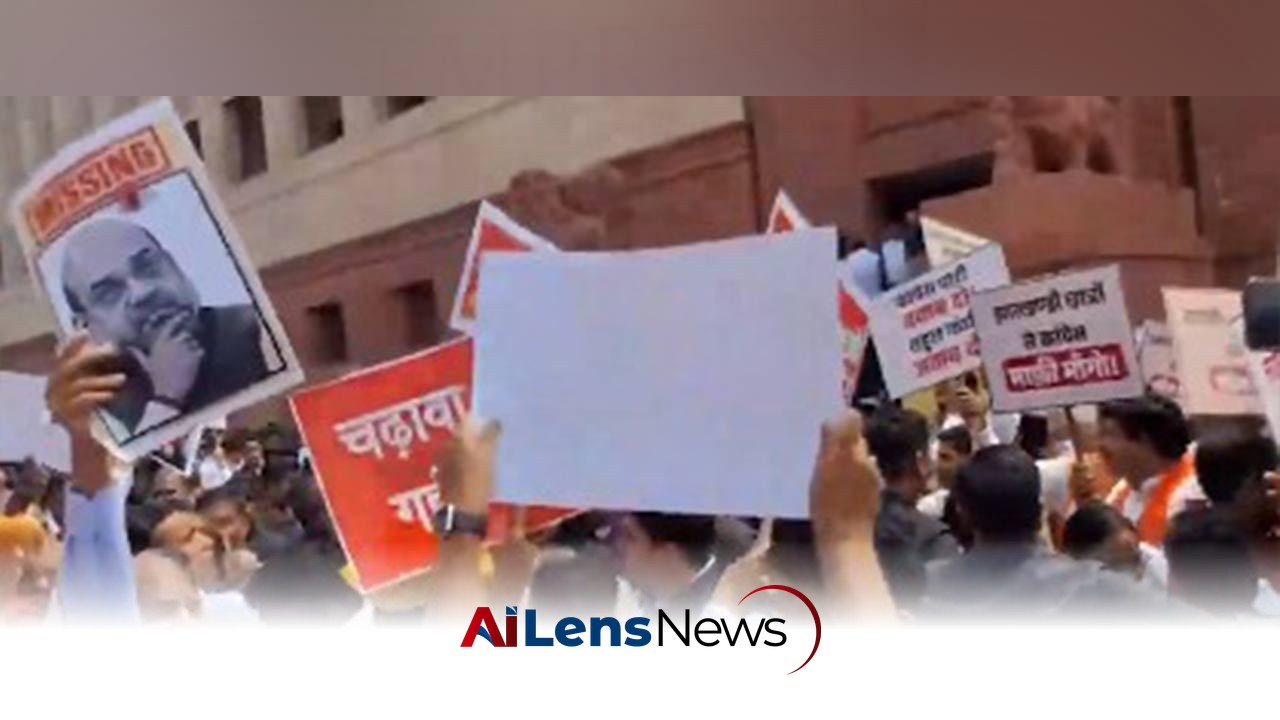


On the last day of the Monsoon session, NDA and Opposition MPs clashed in protests at Parliament, accusing each other over various issues, including police actions and temple donations.
New Delhi, India Aug 13, 2026 ALN: New Delhi: The Members of Parliament (MPs) from the National Democratic Alliance (NDA) and various Opposition parties engaged in separate protests on Thursday at the Parliament’s Makar Dwar, marking the final day of the Monsoon session. This day was characterized by heightened tensions and a display of political rivalry, reflecting the ongoing discord between the ruling party and the Opposition.
The protests were a culmination of a series of contentious debates and discussions that had unfolded during the Monsoon session. The NDA, led by the Bharatiya Janata Party (BJP), has faced increasing scrutiny from the Opposition, particularly regarding issues of governance, economic management, and civil rights. As the session drew to a close, both factions took to the streets of Parliament to voice their grievances, emphasizing the deepening political divide in the country.
During the protests, a section of Opposition MPs raised slogans against the government, holding placards that called attention to the alleged embezzlement of donations made for the construction of the Ram Temple in Ayodhya. This issue has been a sensitive topic, as the Ram Temple is not only a significant religious site for many Hindus but also a symbol of political mobilization for the BJP. The Opposition's focus on this matter underscores their strategy to challenge the NDA's narrative and hold the government accountable for its actions and decisions. The Ram Temple, which has been a focal point of Hindu nationalism, has seen considerable funding from various donors, and any allegations of misappropriation are likely to resonate deeply within the electorate.
In contrast, NDA MPs directed their protests at Congress and specifically targeted Lok Sabha Leader of Opposition Rahul Gandhi. They raised slogans questioning Gandhi's leadership and accountability regarding the alleged police action against protesters during the 'Vidhan Sabha Gherao' march in Jharkhand. This incident, which involved clashes between police and demonstrators, has been a point of contention, with both sides accusing each other of inciting violence and failing to uphold democratic principles. The BJP's strategy appears to be aimed at undermining the credibility of the Congress party, particularly as it seeks to maintain its dominance in Indian politics.
The backdrop to these protests includes a series of events leading up to the Monsoon session, where discussions on various critical issues took place, including the ongoing concerns regarding student protests over the NEET paper leak issue. On Wednesday, amid the Opposition’s persistent demand for his presence in Parliament, Home Minister Amit Shah addressed the allegations surrounding the police action against students during a protest on July 20. Shah expressed his readiness to answer any questions regarding the incident but accused the Opposition of obstructing meaningful discussions. His remarks highlight the government's ongoing struggle to manage public sentiment and respond to criticism effectively.
In a pointed response, Rahul Gandhi attempted to shift the focus away from Shah's offer for debate, stating that the Opposition was not interested in what he termed the Home Minister's “imagination or lectures.” Gandhi emphasized that the youth of the country were more concerned about accountability, particularly who was responsible for the orders that led to the use of force against protesters. This exchange highlights the generational divide in political discourse, with younger constituents increasingly demanding transparency and accountability from their leaders. The focus on youth issues, especially in the context of education and employment, reflects a broader concern among the electorate regarding the government's handling of key social issues.
Trinamool Congress MP Saugata Roy, speaking to reporters before the protest, criticized the government for not providing satisfactory answers regarding the use of pellet guns during protests. He expressed frustration over what he perceived as the government’s failure to engage with the concerns raised by the Opposition, stating, "The Opposition did not want to listen to a long speech of the Home Minister. We wanted the government to clarify who gave the order to open fire with pellet guns. They did not provide an answer." This sentiment reflects a broader concern among Opposition parties regarding the government's handling of dissent and civil liberties, particularly in light of increasing reports of police brutality during protests across the country.
In response to the accusations from the Opposition, BJP MP Samik Bhattacharya countered by asserting that the Opposition lacked the courage to engage in substantive discussions. He claimed, "One should have the courage to listen to the answers, which they do not have. They do not even dare to participate in the discussion. Who is the father of the corruption that has prevailed across the country? Its name is Congress. Congress is synonymous with corruption." This statement underscores the BJP's strategy to frame the Opposition as responsible for systemic corruption, a narrative they have consistently used to rally their base and discredit their opponents. The effectiveness of this strategy has been evident in various election campaigns, where the BJP has successfully positioned itself as the party of change in contrast to the perceived failures of the Congress-led governments in the past.
The culmination of these events led to the adjournment of the Lok Sabha sine die on Thursday, signaling the end of the Monsoon session. The adjournment reflects not only the immediate outcome of the protests but also the broader implications for parliamentary democracy in India. The inability of both sides to find common ground on pressing issues raises concerns about the effectiveness of legislative processes and the potential for increased polarization in Indian politics. The Monsoon session, which is typically a critical time for the government to address pressing legislative matters, has instead devolved into a battleground for political posturing.
As the political landscape continues to evolve, the implications of these protests and the ongoing confrontations between the NDA and the Opposition will likely resonate beyond the walls of Parliament. The questions surrounding governance, accountability, and civil rights remain at the forefront of public discourse, with citizens increasingly demanding transparency from their elected representatives. The coming months will be critical as both factions prepare for future political battles, particularly in the context of upcoming elections and the broader implications for the democratic fabric of the nation. The Opposition's strategy of mobilizing public sentiment against the government’s alleged failures may play a crucial role in shaping the political narrative leading up to these elections.
The protests on the last day of the Monsoon session serve as a reminder of the contentious nature of Indian politics, where issues of governance, accountability, and civil rights are often at the heart of political rivalries. As the NDA and the Opposition continue to clash, the need for constructive dialogue and collaboration becomes increasingly apparent, not only for the functioning of Parliament but also for the health of Indian democracy as a whole. The growing disconnect between the government and the Opposition, along with the public's increasing disillusionment with political processes, poses a significant challenge for the future of governance in India. The ability of both sides to navigate these challenges will determine the trajectory of Indian democracy in the years to come.
To learn more about the latest developments in Elections, stay updated with our exclusive reports and analyses on AiLensNews.

