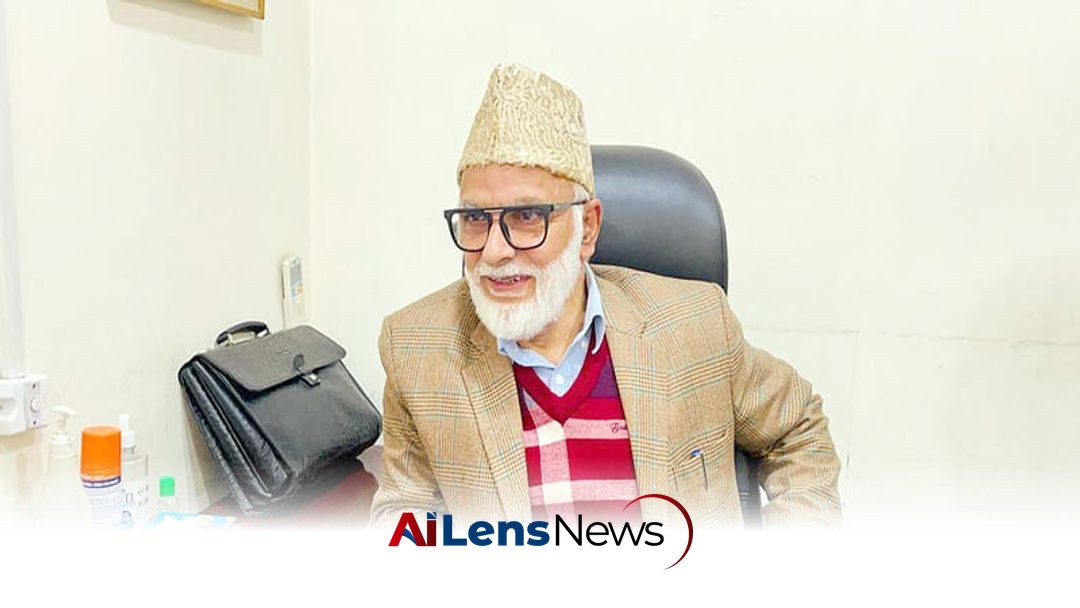


Haji Ali Mohammad Sagar of the National Conference condemns PDP, PC, and Apni Party for facilitating BJP's political expansion in Jammu and Kashmir.
New Delhi, India Jul 24, 2026 ALN: National Conference General Secretary Haji Ali Mohammad Sagar Thursday launched a scathing attack on the PDP, Peoples Conference (PC) and Apni Party, calling them the BJP's A, B and C Teams who enabled the abrogation of Articles 370 and 35-A and are now attempting to rewrite history.
Addressing a special meeting at the party headquarters, Sagar said it was the PDP's “opportunistic alliance” with the BJP in 2015 that opened the floodgates for the saffron party's political expansion in Jammu and Kashmir, ultimately culminating in the unconstitutional abrogation of Articles 370 and 35-A, as per a press release. "Those who escorted the BJP into the corridors of power, legitimised its political footprint and enabled the assault on Jammu and Kashmir's constitutional identity have no moral, political or ideological right to lecture the National Conference on Articles 370 and 35-A. They stand exposed before the people," he said. The meeting reviewed organisational affairs, upcoming party programmes and the government's relief and rescue operations following the recent weather-related devastation across J&K. Participants also hailed the resounding success of the National Conference-led protest in New Delhi for the restoration of statehood and thanked all political parties and individuals who stood shoulder to shoulder with the party in its democratic struggle.
Sagar expressed gratitude to the parties that joined the movement, while castigating the PDP, Peoples Conference and Apni Party for boycotting the protest. "They chose to appease their political masters in Delhi and Nagpur instead of standing with the people of Jammu and Kashmir. Their absence exposed their double standards and reaffirmed their role as the BJP's political surrogates. They preach unity from television studios but desert the people when history demands courage and conviction," he said. Launching a blistering attack on the PDP, Sagar accused the party of sacrificing the interests, dignity and constitutional safeguards of J&K for the sake of power. "The PDP embraced the BJP, normalised its politics in Jammu and Kashmir, facilitated the extension of one central law after another and paved the road to August 5, 2019. Today, the very architects of that political disaster are masquerading as champions of Article 370. It is the height of hypocrisy. The people have neither forgotten nor forgiven their betrayal," he asserted.
Responding to Mehbooba Mufti's recent remarks, Sagar said they stemmed from political desperation rather than principle. "It was not the National Conference but the PDP that dug the grave of Jammu and Kashmir's special constitutional position. Those who bartered the State's interests for power cannot now wrap themselves in the flag of Article 370. Political theatrics cannot erase historical facts," he said. Referring to PC, Sagar said the party abandoned the People's Alliance for Gupkar Declaration (PAGD) at the first opportunity to curry favour with the BJP. He recalled that the party's founder had publicly advocated consigning Article 370 "to the sea", saying the party's politics had always revolved around advancing the BJP's agenda in Jammu and Kashmir. He described Apni Party as a post-August 5 political experiment conceived to legitimise the erosion of Jammu and Kashmir's constitutional and democratic rights. Sagar further said that the PDP used the PAGD merely as an electoral lifeline to revive its dwindling political fortunes ahead of the District Development Council elections.
"The moment its narrow political interests were served, it abandoned the alliance and resumed its smear campaign against the National Conference. Opportunism is the only ideology the PDP has consistently upheld," he said. Reaffirming the National Conference's ideological position, Sagar said Articles 370 and 35-A were the historic constitutional legacy of Sher-e-Kashmir Sheikh Mohammad Abdullah and the National Conference and would remain the party's central political commitment. "Articles 370 and 35-A are not the PDP's political slogan—they are the National Conference's constitutional legacy. We neither surrendered them nor compromised on them. Unlike seasonal politicians, we have fought every constitutional, political and democratic battle to safeguard the identity, dignity and rights of the people of Jammu and Kashmir. Restoration of statehood is the first constitutional milestone towards reclaiming every right that was unlawfully snatched away on August 5, 2019. Our struggle will continue until justice is restored," he declared. The meeting was also addressed by Women's Wing President and MLA Habba Kadal Advocate Shameema Firdous and State Spokesperson Imran Nabi Dar.
The political landscape of Jammu and Kashmir has been tumultuous, particularly following the abrogation of Articles 370 and 35-A in August 2019. These articles were pivotal in granting special status to the region, allowing it a degree of autonomy and protecting its demographic and cultural identity. The revocation of these articles has been a subject of intense political debate and has led to significant shifts in the region's governance and political affiliations.
The National Conference, which has historically been one of the dominant political parties in Jammu and Kashmir, has positioned itself as a defender of the region's constitutional rights. The party's criticism of the PDP, PC, and Apni Party underscores a broader narrative about the legitimacy of political alliances and the consequences of such partnerships on regional identity and autonomy. Sagar's remarks reflect a deep-seated concern regarding the erosion of democratic principles and the implications of aligning with national parties like the BJP, which has been accused of pursuing a Hindu nationalist agenda that may undermine the secular fabric of Jammu and Kashmir.
Furthermore, Sagar's comments regarding the People's Alliance for Gupkar Declaration (PAGD) highlight the complexities of opposition politics in Jammu and Kashmir. The PAGD was formed as a coalition of regional parties to resist the BJP's policies and to advocate for the restoration of the region's special status. However, the dissolution of alliances and the subsequent accusations of opportunism reveal the challenges faced by political parties in maintaining unity in the face of external pressures and internal dissent.
As the National Conference continues to advocate for the restoration of statehood and the rights of the people of Jammu and Kashmir, the political dynamics in the region remain fluid. The responses from various parties to the National Conference's stance will likely shape the future political landscape, particularly as the region approaches upcoming elections and potential shifts in public sentiment.
In conclusion, Sagar's criticisms serve not only as a reflection of the National Conference's position but also as a broader commentary on the state of politics in Jammu and Kashmir. The ongoing struggle for political identity, autonomy, and the preservation of constitutional rights is central to the discourse surrounding the future of the region. As political parties navigate these complex issues, the implications for governance, civil rights, and regional stability will be significant, warranting close attention from both local and national observers.
To learn more about the latest developments in Political Controversies, stay updated with our exclusive reports and analyses on AiLensNews.

