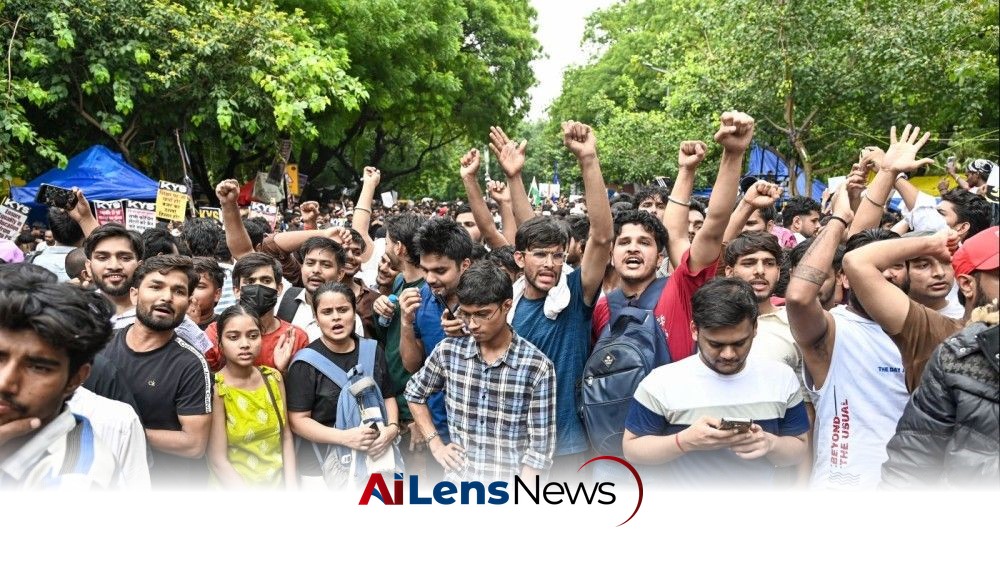


Opposition Members of Parliament have submitted adjournment notices in both houses, condemning police actions against NEET protesters and demanding immediate discussions.
Kohima, India Jul 27, 2026 ALN: New Delhi, July 27 Several Opposition Members of Parliament on Monday submitted adjournment motion notices in both the Lok Sabha and the Rajya Sabha, demanding an immediate discussion on what they described as the "brutal, unprovoked, disproportionate" use of force by the Delhi Police and security personnel against students protesting at Jantar Mantar on July 20.
The notices come in the wake of the large-scale 'Sansad Chalo' protest held in New Delhi on July 20, where hundreds of students participated in a demonstration organised by the Cockroach Janta Party (CJP) against the NEET paper leaks and other examination-related irregularities. The National Eligibility cum Entrance Test (NEET) is a highly competitive exam in India, serving as a gateway for students aspiring to enter medical colleges. However, the examination has been marred by controversies over alleged paper leaks and malpractices, leading to widespread discontent among students and their families.
The NEET exam has been a focal point of debate in India’s education system for several years. Originally introduced to standardize the admission process for medical colleges, it has faced criticism for its perceived lack of fairness and the immense pressure it places on students. The examination has been associated with numerous controversies, including allegations of cheating, paper leaks, and favoritism, which have prompted calls for reform from various quarters. The protests on July 20 were a culmination of these longstanding grievances, reflecting a growing frustration among students regarding the integrity of the examination process.
The protesters had also demanded the resignation of Dharmendra Pradhan from the post of Union Education Minister. Pradhan subsequently tendered his resignation on July 25, which has been interpreted by some as a response to the mounting pressure and dissatisfaction surrounding the government's handling of educational policies and examination integrity. His resignation, while seen as a significant political move, raises questions about accountability within the government and the extent to which it is willing to engage with the concerns of the student community.
The demonstration later turned violent, following which security personnel resorted to the use of force to disperse the crowd. During the clashes, several protesters as well as police personnel sustained serious injuries. The use of force by police has drawn significant criticism, with many claiming that the actions were not only excessive but also indicative of a broader pattern of state repression against dissent. The incident has reignited discussions about the appropriate use of force by law enforcement agencies, particularly in situations involving peaceful protests, where the rights of citizens to assemble and express their views must be balanced against the need for public order.
Congress MPs K.C. Venugopal, Manickam Tagore, Hibi Eden and Vijayakumar alias Vijay Vasanth submitted separate adjournment motion notices in the Lok Sabha seeking a discussion on what they termed "brutal, unprovoked, and disproportionate use of force" by the Delhi Police against protestors. The MPs highlighted the need for accountability and transparency in the actions taken by law enforcement, especially in situations involving young students advocating for their rights. This call for accountability is part of a larger narrative concerning police conduct in India, where instances of excessive force and human rights violations have sparked public outcry and demands for reform.
According to the notices, the security personnel resorted to the use of "excessive and lethal force", including "pellet guns" and "shock batons" against the protestors at Jantar Mantar, which led to consequent "grave injuries, including probable loss of eyesight, suffered by student protestors." The mention of pellet guns, which have been controversial in various contexts, raises concerns about the appropriateness of their use in crowd control situations, particularly against peaceful demonstrators. The deployment of such weapons has been widely criticized by human rights advocates, who argue that they can cause severe harm and are often used disproportionately against marginalized groups during protests.
In the Rajya Sabha, Congress' Syed Naseer Hussain submitted a Suspension of Business Notice under Rule 267, seeking an immediate discussion on the alleged excessive use of force against students who were peacefully protesting in Delhi on July 20. This procedural move is aimed at prioritizing the issue within parliamentary discussions, reflecting the urgency felt by the opposition regarding police conduct and the treatment of student protestors. The parliamentary discussion is crucial, as it provides a platform for elected representatives to voice the concerns of their constituents and hold the government accountable for its actions.
Meanwhile, DMK MP T.R. Baalu also submitted an adjournment motion notice in the Lok Sabha, calling for an "immediate ban" on NEET and an inquiry into the alleged indiscriminate use of lethal weapons against students protesting at Jantar Mantar. The demand for a ban on NEET stems from ongoing debates about the fairness and accessibility of the examination, with critics arguing that it disproportionately affects students from marginalized backgrounds who may not have the same resources to prepare effectively. This perspective highlights a broader issue within the Indian education system, where disparities in access to quality education and resources can lead to unequal outcomes in competitive examinations like NEET.
The Central government is set to introduce the Public Examinations (Prevention of Unfair Means) Amendment Bill, 2026, in Parliament on Monday as part of its legislative agenda to further strengthen the legal framework against paper leaks and examination malpractices. This bill is part of the government's broader strategy to address public concerns regarding the integrity of examinations and to restore faith in the education system. However, the introduction of new legislation may not fully address the grievances of students, particularly if the systemic issues leading to protests are not adequately resolved. For many students, the introduction of new laws is seen as insufficient without accompanying reforms that tackle the root causes of their frustrations, such as ensuring equitable access to education and maintaining the integrity of examination processes.
The protests and subsequent violence have sparked a wider conversation about the rights of students to assemble and voice their concerns in a democratic society. Many advocates argue that peaceful protests are a vital aspect of civic engagement and should be protected, rather than suppressed through force. This incident may also lead to increased scrutiny of police practices and protocols in handling public demonstrations, especially in the context of youth activism. The role of law enforcement in a democracy is to protect the rights of citizens, including their right to protest, and the events of July 20 have raised critical questions about whether this principle is being upheld in practice.
The implications of these developments are significant, as they not only affect the immediate stakeholders—students, educators, and law enforcement—but also have the potential to influence public policy and the political landscape in India. The government's response to the protests and the subsequent parliamentary discussions will likely be closely monitored by civil society organizations, political analysts, and the media, as they may set precedents for how similar issues are handled in the future. The ability of the government to navigate this crisis effectively will be critical in shaping public perception and maintaining trust in its commitment to addressing the concerns of students and ensuring their rights are respected.
In conclusion, the demands for discussion in both houses of Parliament highlight the ongoing tensions between governmental authority and the rights of citizens to protest. The events surrounding the NEET protests are emblematic of larger societal issues, including the accessibility of education, the integrity of examination processes, and the treatment of dissent in a democratic framework. As the situation continues to evolve, it will be essential for all stakeholders to engage in constructive dialogue to address the underlying concerns that have led to such unrest. The outcome of these discussions may well determine the future trajectory of educational policy in India and the extent to which students feel empowered to advocate for their rights.
To learn more about the latest developments in Political Controversies, stay updated with our exclusive reports and analyses on AiLensNews.

