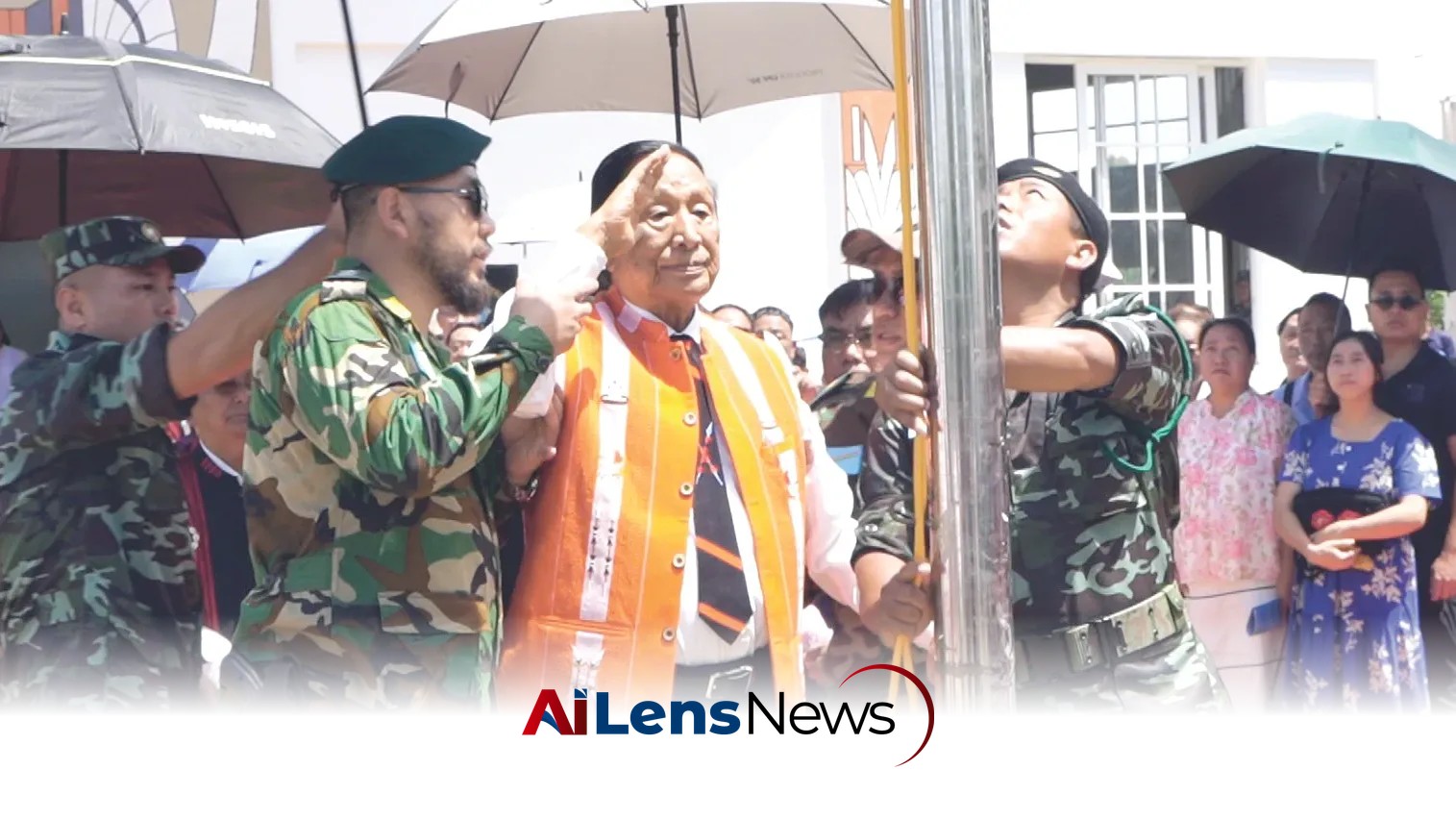


On August 14, 2026, various Naga political groups observed the 80th Naga Independence Day, emphasizing their commitment to sovereignty and the unique history of the Naga people.
Kohima, India Aug 15, 2026 ALN: DIMAPUR, AUG 14: Various Naga political groups (NPGs) observed the 80th Naga Independence Day at their respective headquarters and designated camps on August 14, 2026. Naga political leaders paid tribute to martyrs and reiterated their positions on the Naga political issue, which has been a longstanding and complex matter involving historical grievances, territorial claims, and aspirations for sovereignty.
The observance of the Naga Independence Day is a significant event in the Naga political calendar, marking the declaration of independence made by the Naga National Council (NNC) in 1947. This declaration was made just days before India gained independence from British rule, and it has since been a cornerstone of Naga identity and political aspirations. The Naga political struggle is rooted in the belief that the Nagas have a distinct identity and a right to self-determination, separate from India and Myanmar.
Naga flag, constitution, sovereignty non-negotiable, says Muivah
NSCN (I-M) observed the 80th Naga Independence Day at the newly inaugurated Tatar Hoho House, Camp Hebron. Deputy Ato Kilonser V.S. Atem read out a speech by NSCN (I-M) Ato Kilonser Th Muivah, emphasizing that ongoing Indo-Naga political negotiations must lead to an “acceptable and honorable” political agreement based on the August 3, 2015 Framework Agreement (FA). He asserted that Nagalim’s “unique history,” sovereignty, sovereign territory, national flag, and constitution were non-negotiable for the NSCN.
Muivah described the Naga homeland as a “God-given land,” maintaining that Nagas had a unique history and had never been part of India or Burma (present Myanmar) by consent or conquest. This assertion reflects a deeply ingrained belief among many Nagas that their history predates colonial rule and the subsequent partition of the region. He paid tribute to Naga patriots and martyrs, remembering late chairman Isak Chishi Swu and others for their contributions to the NSCN and the Naga national movement, which has been characterized by a quest for autonomy and recognition.
He extended greetings to organizations and national workers committed to “sovereign Nagalim,” thanking supporters for their commitment to the Framework Agreement. A significant part of Muivah’s speech focused on the historical identity and territorial claim of the Nagas, asserting that their ancestors moved from Mongolia through China and Burma before settling in Nagalim. This narrative of migration is an essential aspect of Naga identity, reinforcing the notion of a historical homeland that is integral to their claims for sovereignty.
Muivah argued that the settlement of the Nagas in their present homeland demonstrated that Nagalim was their God-given land, stating, “It did not start with us, and it will not end with us.” He stressed the responsibility of the current generation to preserve it for future generations. This emphasis on heritage and continuity underscores the importance of cultural preservation in the Naga political discourse.
He alleged that Nagalim had been divided by “artificial states” and “so-called international boundaries,” leaving Naga people split between India and Myanmar. This division has resulted in significant challenges for the Naga community, as many families and communities find themselves on either side of the border, complicating social, cultural, and economic interactions. He urged Nagas not to lose confidence in their history and political rights, warning against accepting a “wrong decision or solution” that could erase their historical identity.
Muivah highlighted that the Naga spirit of freedom existed long before the present NSCN leadership, referencing resistance against British expansion from 1832 and the 1929 memorandum to the Simon Commission. He credited earlier generations, including the Naga National Council (NNC) and its leaders, with laying the foundation for the Naga national resistance movement. This historical context is crucial for understanding the depth of the Naga struggle, which has been marked by both armed resistance and political negotiations.
He stated that the NSCN was formed in 1980 after rejecting the Shillong Accord, with the goal of preserving the Naga national principle, which includes defending the August 14, 1947 declaration of Naga independence and the May 16, 1951 plebiscite. The Shillong Accord, signed in 1975, was a significant but controversial agreement that aimed to bring a resolution to the Naga issue but was rejected by many factions within the Naga community, leading to the formation of the NSCN.
Muivah claimed that the conflict could not be resolved militarily, noting that Indian leadership had acknowledged this. He recalled the NSCN’s international campaign, including its admission to the Unrepresented Nations and Peoples Organisation (UNPO) in 1993, which contributed to the Government of India initiating political dialogue with the NSCN. This international recognition has provided a platform for the Naga cause, allowing for greater visibility and support on the global stage.
He mentioned meetings with former Prime Ministers P.V. Narasimha Rao and H.D. Deve Gowda, both of whom expressed support for a political solution. The Indo-Naga ceasefire was announced in 1997, marking a shift from military solutions to political settlements. This ceasefire has been a critical development, allowing for a more conducive environment for negotiations and dialogue between the Naga groups and the Government of India.
Muivah emphasized that the Framework Agreement established a basis for a “new relationship” and “sharing sovereign power” between the two entities. He warned that any breach of the agreement could undermine the political process and made it clear that the NSCN would not compromise on core national principles. This insistence on the sanctity of the Framework Agreement reflects the deep-seated anxieties regarding the historical treatment of Naga aspirations by the Indian state.
He reiterated that the final political agreement must recognize Nagalim’s unique history and provide for sovereignty, sovereign territory, national flag, and national constitution, stating these issues were “non-negotiable.” This assertion of non-negotiability is a clear signal to the Indian government that the Naga leadership is firmly rooted in their demands, which they believe are essential for any meaningful resolution to the ongoing conflict.
Muivah acknowledged the divisions among Naga political groups but attributed them to differences in political ideas. He urged unity, criticizing factions that emerged from rebellion or vested interests, which he claimed weakened the Naga movement. The fragmentation of the Naga political landscape has often been cited as a significant obstacle to achieving a unified and coherent approach to negotiations with the Indian government.
Christian faith was a central theme in Muivah’s speech. He attributed the survival of the Naga political movement to divine intervention and emphasized that freedom must be guided by Christian faith. This intertwining of faith and politics is emblematic of the Naga identity, where Christianity plays a vital role in shaping cultural and political narratives. He concluded by reaffirming that the final political agreement should respect Nagalim’s unique history and the Framework Agreement.
The program was attended by representatives of various Naga organizations and civil society bodies, with speeches from several leaders. The event began with an opening prayer and included patriotic songs and cultural performances. These elements of the celebration not only served to honor the sacrifices of past leaders and martyrs but also reinforced the collective identity of the Naga people in their ongoing struggle for recognition and sovereignty.
Naga solution must be inclusive, honourable, says Vusshe
NSCN-K (Khango-Vusshe) Ato Kilonser Hokato Vusshe called for an “honourable and inclusive” Naga political solution, urging the Government of India to demonstrate sincerity in implementing the Framework Agreement and Agreed Position. He emphasized that the August 14, 1947 declaration marked a significant chapter in Naga history, underscoring the importance of this date in the collective memory of the Naga people.
Vusshe stated that NSCN-K remained committed to the collective objective of an honourable and inclusive Naga solution. He acknowledged the need for the Naga political process to adapt to contemporary realities, citing developments in various sectors that had implications for Naga land and traditional movement across the Indo-Myanmar border. This recognition of changing dynamics is crucial for ensuring that the Naga political discourse remains relevant and responsive to the needs of the community.
He urged the Government of India to honor its commitments and work towards a comprehensive solution without further delay, calling for unity among Naga political groups to strengthen their cause. The call for unity is particularly pertinent in the context of the ongoing negotiations, as a divided front could weaken the Naga position in discussions with the Indian government. The Naga political issue remains a complex and multifaceted challenge, deeply intertwined with issues of identity, history, and aspirations for self-determination, with implications that extend beyond the immediate political landscape.
To learn more about the latest developments in Political Controversies, stay updated with our exclusive reports and analyses on AiLensNews.

