

The Cockroach Janata Party insists on the resignation of Education Minister Dharmendra Pradhan as a precondition for further discussions on educational reforms.
Kohima, India Jul 25, 2026 ALN: The Cockroach Janata Party (CJP) has reiterated its demand for the resignation of Education Minister Dharmendra Pradhan, stating that further discussions on educational reforms are pointless without his departure. This statement comes just hours before the third round of talks with the government, highlighting the growing tensions between the CJP and the ruling administration over critical issues in the education sector.
The demand for Pradhan's resignation is rooted in a series of controversies surrounding the integrity of the public examination system in India, particularly the ongoing paper leak crisis. The CJP has positioned itself as a vocal critic of the government's handling of these issues, asserting that the current leadership has failed to provide a safe and fair environment for students taking competitive exams. The party's insistence on Pradhan's resignation underscores a broader dissatisfaction with the government's approach to educational governance and accountability.
While the CJP welcomed the government's decision to amend The Public Examinations (Prevention of Unfair Means) Act, 2024, aimed at addressing the issue of paper leaks, the party's primary focus remains on Pradhan's resignation. The amendments are seen as a step in the right direction, but for the CJP, they do not address the fundamental leadership failures that they believe have contributed to the current crisis.
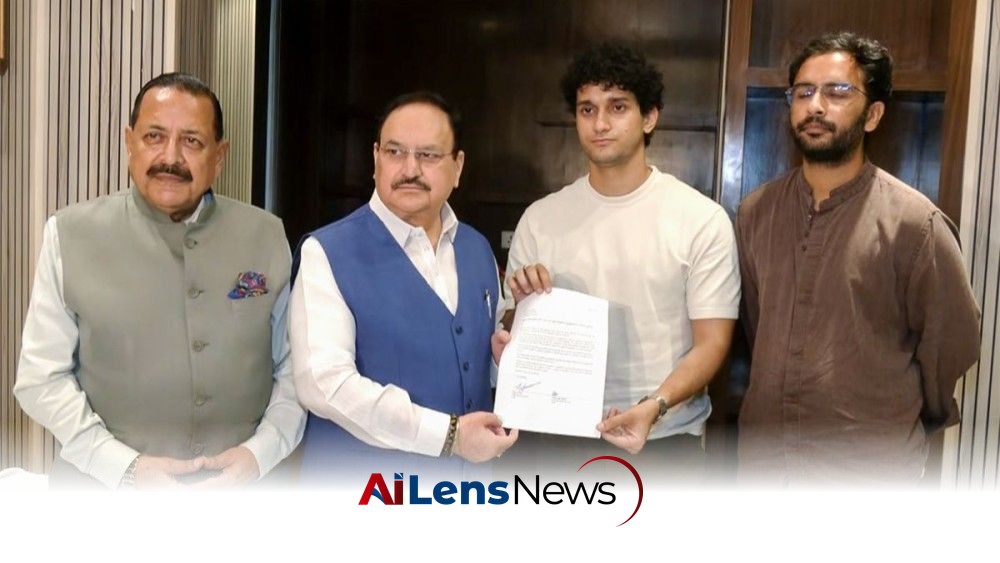
On Friday, Union Ministers J.P. Nadda and Jitendra Singh met with CJP representatives at the Constitution Club for the second round of discussions, where the government indicated it would respond to the CJP's demands. This meeting was part of a series of negotiations that have been taking place as the government seeks to quell the unrest surrounding the education sector. The CJP's representatives have articulated their demands clearly, positioning resignation as a non-negotiable prerequisite for any meaningful dialogue.
CJP spokesperson Ashutosh Ranka emphasized that there would be no further dialogue if the government was unwilling to remove Pradhan. "In yesterday's meeting, we received a positive response regarding compensation and legal cases. We got an in-principle agreement, and we hope to receive the written agreement today as well. However, there has still been no concrete decision on our main demand — the resignation of Dharmendra Pradhan," he stated. Ranka's comments reflect a strategic approach by the CJP, leveraging the government's need for dialogue to amplify their demands.
Ranka pointed out that media reports suggested Pradhan would not resign, questioning the purpose of continued meetings under such circumstances. "If Dharmendra Pradhan is not going to resign, then please tell us what the point of holding such meetings is? In that case, we will move ahead with whatever strategy we decide on next," he added. This sentiment captures the frustration of the CJP, as they feel that without a significant leadership change, the discussions are unlikely to yield any substantial outcomes.
Amid the ongoing paper leak controversy, the government has replaced the Education Secretary and dismissed 47 officials from the National Testing Agency (NTA). These actions have been described as insufficient by Ranka, who asserts that ultimate accountability lies with the Education Minister. The CJP's perspective is that while these administrative changes may be necessary, they do not address the systemic issues that have led to widespread distrust in the examination process.
"Now, we will have to examine which 47 officials have been suspended and with what intention that action has been taken. We need to look at all those details. But again, as we've been saying, the ultimate accountability lies with the Education Minister of this country because he is directly responsible for all the paper leaks and for all the students who died by suicide after the NEET paper leak. Therefore, he must resign," Ranka insisted. This statement highlights the emotional toll that the paper leak crisis has had on students and families, further complicating the political landscape surrounding education reform.
The issue of paper leaks and the subsequent fallout has significant implications for students across India. The integrity of competitive exams is vital for educational and career opportunities, and any perception of corruption or mismanagement can lead to widespread disillusionment among the youth. The CJP's demands reflect a growing concern that unless there is accountability at the highest levels, the faith of students and parents in the examination system will continue to erode.
On Friday, the Union Cabinet approved a Draft Bill proposing stricter penalties for paper leaks in competitive examinations. This decision follows Prime Minister Narendra Modi's commitment to introduce fast-track courts and enhanced penalties to protect students' futures. The government's proactive approach in proposing legislative changes indicates an awareness of the public's frustration and a desire to restore confidence in the examination process.
The Cabinet meeting, chaired by PM Modi at the Parliament House complex, endorsed amendments to The Public Examinations (Prevention of Unfair Means) Act, 2024. The proposed Bill suggests a jail term of up to 10 years and a maximum fine of Rs 10 crore for organized paper leaks, a significant increase from the current law, which stipulates three to five years' imprisonment for individuals and five to 10 years for organized crimes related to cheating and paper leaks. This legislative change is intended to send a strong message about the government's commitment to tackling corruption in the educational sector.
However, the effectiveness of these measures will largely depend on the implementation and the political will to ensure accountability. Critics argue that without a cultural shift within the Ministry of Education and a commitment to transparency, even the most stringent laws may not be sufficient to prevent future incidents of malpractice. The CJP's demand for Pradhan's resignation is emblematic of a call for a comprehensive overhaul of the educational governance framework, one that prioritizes the needs and rights of students.
The ongoing negotiations and the political dynamics surrounding them will be closely watched by various stakeholders, including students, educators, and policymakers. As the situation unfolds, the implications for educational reform in India could be profound, potentially reshaping the landscape of competitive examinations and the governance of education in the country. The outcome of these discussions will not only affect the immediate crisis but may also set a precedent for how future educational challenges are addressed in India.
To learn more about the latest developments in Political Controversies, stay updated with our exclusive reports and analyses on AiLensNews.

