

More
Checking your session
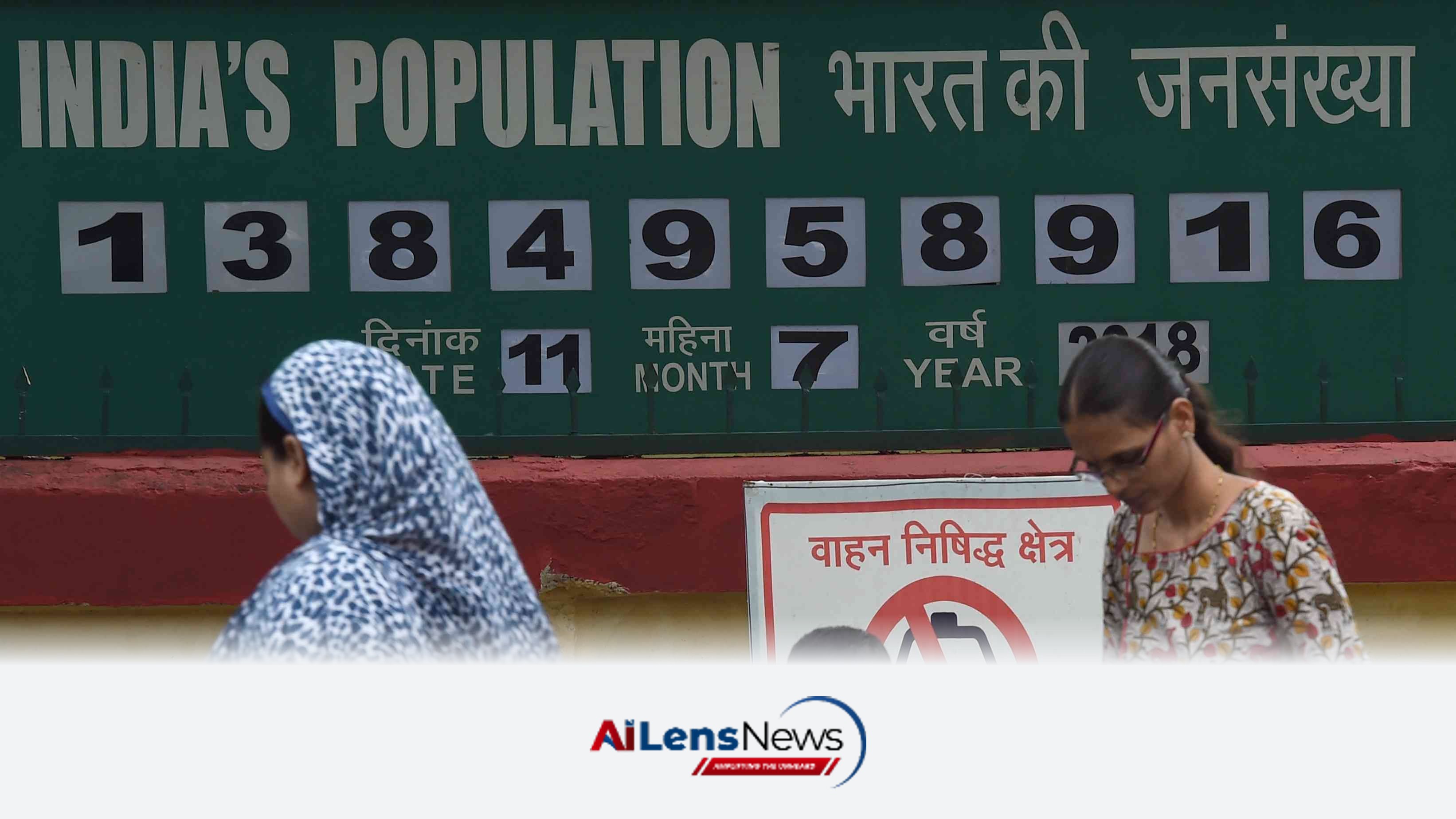



The Modi government's approach to the upcoming caste census has drawn criticism for its methodology, raising concerns about data reliability and political motives.
New Delhi, India Aug 24, 2026 ALN: In April 2025, the Modi government made a dramatic U-turn and announced that it would count caste in India’s next census. At the time, it made sure to take potshots at its predecessor, the Manmohan Singh-led United Progressive Alliance government, for not including caste in the 2011 census.
“Most political parties recommended conducting a caste census,” the Cabinet had snidely noted in a press release then. “Despite this, the previous government opted for a survey instead of a caste census, known as the Socio-Economic and Caste Census.”
A year later, however, the Modi government has disclosed that it will follow the same method for counting caste that was used by Manmohan Singh’s administration. This has triggered allegations of sabotage, given that the data collected in 2011 was seen to be so faulty that it was never released.
Analysts, activists, and politicians who advocate for a caste census have expressed concerns about the chosen methodology. Many describe it as flawed and question the decision to stick to the 2011 model when states such as Bihar and Telangana have recently conducted more robust caste surveys.
Some critics have even argued that the caste data collected in this census will be useless. However, others remain hopeful that researchers will still be able to clean it up and work with it.
The population enumeration phase of the census, during which enumerators go door-to-door collecting data from individuals, will begin in snowbound parts of north India next month. This will be the first time since 1931 that caste will be counted as part of the exercise.
To do so, enumerators will first ask respondents whether they belong to a Scheduled Caste or a Scheduled Tribe and then ask them to state their caste. People will also have the option to say that they have no caste or that they do not wish to declare their caste, The Hindu has reported.
Critics argue that having an open-ended question on caste leads to an enormous range of responses that make any meaningful analysis nearly impossible. The 2011 survey, which also had an open-ended question on caste, reportedly yielded an astounding 46 lakh entries.
Sociologist Satish Deshpande, who has written extensively on caste and has been advocating for counting it since the 2001 census, called this a “planned failure.”
“Variations of spellings alone will account for tens of thousands of entries,” he said. “It is quite tragic that a deliberate attempt is being made to prevent usable data from coming out.”
In addition to spelling errors, an open-ended question about caste is also likely to lead to members of the same community identifying themselves using different caste names. In a news conference on August 17, Anil Jaihind, chairperson of the Congress party’s Other Backward Classes department, illustrated this using the example of carpenters from his home state of Haryana.
“Some from this caste identify themselves as Badhais, while others prefer Jangid,” he said. “Yet others in the same caste group go by Jangda, Khati, Dhiman, Suthar, Tarkhan, Ramgarhia and Vishwakarma.”
Counting India: This is the first in a special series tracking the census, being held after 15 years.
The alternative to an open-ended question, Deshpande suggested, was to have a drop-down list of caste names which were already available with the state. Respondents could choose their caste from it. For those who do not find their caste on this list, an “Other” option could be included, the sociologist added. Those choosing “Other” could state their caste in response to a follow-up question.
“This data can then be rationalized at the regional level by forming expert committees, as is done for the language, religion, and occupation data collected in the census,” he recommended.
In the absence of a drop-down list, though, this analysis will have to be done for all responses. Activist-politician Yogendra Yadav contended that the design of the census was a clear sign that the Modi government lacked the “political will” to count caste.
“When they don’t even have the political will for putting together a drop-down list, how will they find the political will to analyze the findings?” he asked. “The whole point is to make the data useless. It is designed to fail.”
For many activists, this is not just a problem of shoddy data collection, but a question of social justice for the Other Backward Classes.
They worry that this census will not reflect the group’s actual share in the population because it does not recognize them as a distinct category. As mentioned earlier, enumerators will only ask respondents whether they belong to the Scheduled Castes or the Scheduled Tribes, and not the Other Backward Classes.
In 1980, the Mandal Commission had estimated that the Other Backward Classes made up 52% of India’s population. That is why some Opposition parties have long held that the current 27% quota for them in government jobs and educational institutions is inadequate.
The Congress, too, has come around to this view in recent years with its leader, Rahul Gandhi, promising to remove the Supreme Court’s 50% cap on reservations if voted to power. But doing so will require irrefutable data to get past judicial scrutiny, activists say.
“The Supreme Court keeps asking for data,” complained Sushil Gautam, an Ambedkarite activist from Meerut in Uttar Pradesh. “The data does not exist because a proper caste census has never been done. And so laws favoring the OBCs are not enacted even though they vote for the Bharatiya Janata Party in big numbers.”
Gautam went so far as to allege that the BJP was never sincere about conducting a caste census. It had made a U-turn on the issue, he claimed, only because it had its eyes set on Bihar, where Assembly elections were held in November.
The state had already carried out a caste survey, which established that the Other Backward Classes accounted for over 63% of its population. To win the favor of such a substantial segment of the electorate in Bihar, the saffron party felt compelled to say that it would hold a nationwide caste census, Gautam suggested. Several spokespersons from the BJP declined to answer questions for this story.
Could the supposedly faulty design of the census lead to political backlash from the Other Backward Classes? Jaihind of the Congress party was certain that it would. The Opposition outfit plans to launch “a program” to take this issue to voters soon, he told The Hindu.
Activists from the community, however, were less optimistic. “If the Other Backward Classes were like the Dalits, they would have hit the streets and forced the government’s hand,” said Dharmendra Kushwah, a Gwalior-based lawyer and a core committee member of the OBC Mahasabha. “This community is fast asleep, or rather intoxicated. It does not care about rights.”
In his view, the Modi government had “betrayed” the Other Backward Classes by not treating them at par with the Scheduled Castes and the Scheduled Tribes in the census. The open-ended caste question will “make it hard” for people to draw conclusions from the census, he alleged.
Hard is not the same as impossible, though, if Praveen Chakravarty, a Rajya Sabha MP from the Congress, were to be believed. The former investment banker heads the grand old party’s data analytics department and served as convener of the party’s data analytics committee. He expressed optimism that artificial intelligence could help make sense of the data collected, even if it is flawed.
To learn more about the latest developments in Political Controversies, stay updated with our exclusive reports and analyses on AILensNews.
Qatar has welcomed the U.S. decision to remove Syria from its list of State Spon…
Dr. Syed Naseer Hussain, AICC General Secretary for Jammu & Kashmir, states that…

As tensions rise over parade routes in Portadown, the focus shifts to the younge…

In a recent meeting in Tripoli, Libyan Presidential Council Chairman Dr. Mohamed…

A senior UAE diplomat discusses the complexities of resuming trade ties with Ira…