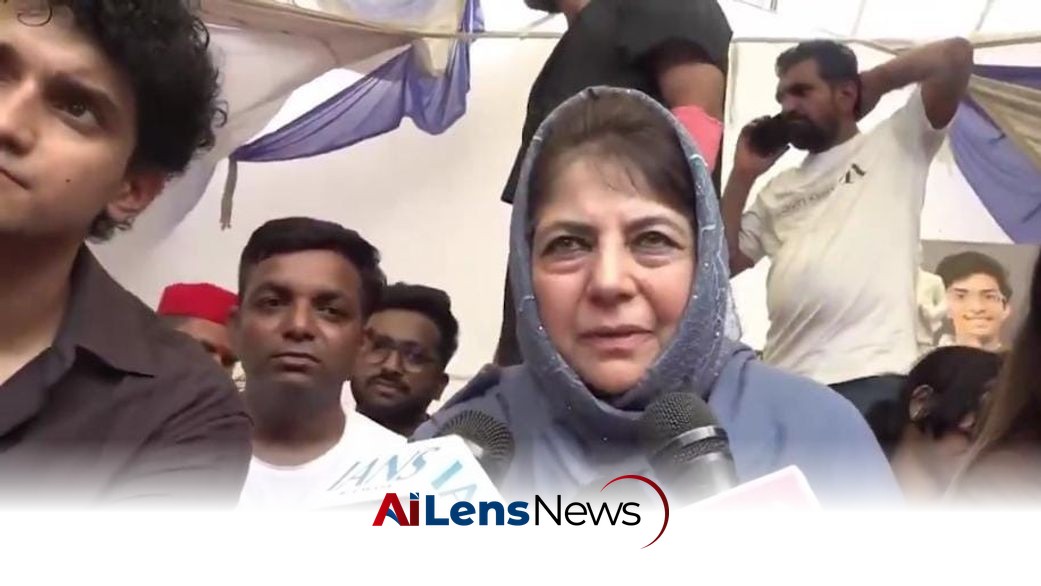


At Jantar Mantar, PDP president Mehbooba Mufti likens the protesters' struggle to a significant test, urging perseverance against injustice and corruption.
New Delhi, India Jul 23, 2026 ALN: Peoples Democratic Party (PDP) president Mehbooba Mufti on Thursday told protesters at Jantar Mantar that their struggle was a test even bigger than the National Eligibility-cum-Entrance Test (NEET), urging them to persevere in the fight against injustice and corruption.
Addressing the gathering, Mufti said those participating in the protest had left behind their homes and families and were enduring the scorching heat for a larger cause. "All of you have left your homes and families and are sweating in this heat. This is the biggest NEET examination for you," she said.
Mufti's remarks come at a time when NEET, an entrance examination for medical colleges in India, has been surrounded by controversies, including allegations of paper leaks and irregularities. The exam is a critical milestone for aspiring medical students, determining their entry into prestigious medical institutions across the country. The significance of NEET has made it a focal point of discussion regarding fairness and transparency in educational assessments.
Describing the protest as an "exam" that must be passed honestly, Mufti stated that a successful movement would send a strong message against paper leaks and other alleged injustices. "There should be no cheating in this exam. This is the paper you have to pass. If you pass this test and succeed here, no one will dare leak the NEET examination paper in the future," she said.
Her analogy of the protest as a larger examination reflects a growing sentiment among many young people in India who feel that systemic issues are undermining their opportunities for education and employment. The NEET controversy has sparked widespread outrage and demands for reforms in the examination process, with many students and parents calling for greater accountability and transparency from educational authorities.
Mufti went on to criticize what she described as failures of governance, referring to alleged corruption and crimes against women. "No one will dare steal donations meant for Lord Ram's temple. No one will dare allow a 12-year-old girl to be gang-raped by 32 people," she said. Her comments highlight the broader social issues that have plagued India, including corruption in various sectors and the urgent need for justice in cases of violence against women.
In recent years, India has seen a rise in protests addressing various forms of injustice, ranging from issues of corruption to violence against marginalized communities. The Jantar Mantar site has been a historical venue for protests, symbolizing the democratic right to assemble and voice dissent. Mufti's choice of location underscores the importance of public spaces in facilitating political discourse and activism.
Framing the protest as a fight to uphold constitutional values, Mufti asserted that victory for the protesters would also be a victory for India's democracy. "If you emerge victorious, our Constitution will win. Babasaheb Ambedkar's Constitution will win. Our democracy will win," she said. This statement resonates with many citizens who view the Constitution as a living document that must be defended against attempts to undermine its principles.
Mehbooba Mufti's leadership and rhetoric in this protest reflect a broader political narrative in India, where regional parties are increasingly vocal about issues impacting their constituencies. The PDP, which has historically focused on the rights and aspirations of the people of Jammu and Kashmir, is now extending its advocacy to national issues, emphasizing the interconnectedness of local and national struggles.
She said the struggle was also for parents who sacrifice to educate their children and for students whose lives had been affected by the NEET controversy. "It will be a victory for those parents who sacrifice their own needs to pay for your coaching and educate you. It will also be a victory for those boys and girls who sacrificed their lives because of the NEET issue," she added. This appeal to familial sacrifice resonates deeply in Indian society, where education is often viewed as a pathway to better opportunities and social mobility.
The NEET exam has been a contentious issue since its inception, with various stakeholders voicing their concerns about its fairness and accessibility. The examination has faced criticism for its high-stakes nature, which places immense pressure on students. Additionally, the socio-economic disparities in access to quality education and coaching have raised questions about equity in the examination process.
For many students, the NEET exam is not just a test of knowledge but a determinant of their future. The intense competition and the high stakes involved create a scenario where students often feel overwhelmed. This pressure has led to discussions about mental health and the need for supportive measures to help students cope with the demands of such examinations.
Furthermore, the controversies surrounding NEET have highlighted systemic issues within the education sector, including the need for reforms that promote transparency and fairness. Allegations of paper leaks have raised concerns about the integrity of the examination process, leading to calls for a thorough investigation and accountability from the authorities responsible for conducting the exam.
The protest at Jantar Mantar is not only about NEET but also about broader issues of governance and justice in India. As Mehbooba Mufti pointed out, the fight against corruption and violence is interconnected with the right to education. The voices raised at this protest contribute to a larger narrative about the need for systemic change in various sectors, including education, law enforcement, and governance.
As the protest at Jantar Mantar continues, it is clear that the issues raised by Mehbooba Mufti and the participants are part of a larger dialogue about justice, governance, and the right to education in India. The outcomes of such movements could have far-reaching implications for policy reforms, particularly in the education sector.
Moreover, the protest highlights the need for sustained engagement from political leaders and civil society to address the grievances of students and parents alike. As the nation grapples with these challenges, the voices of those advocating for change will be critical in shaping the future of education and governance in India.
The participation of young people in protests such as this one signifies a growing awareness and activism among the youth regarding their rights and the state of governance in the country. It reflects a desire for accountability and a demand for a system that works for everyone, particularly for those who have historically been marginalized or overlooked.
In conclusion, Mehbooba Mufti's declaration of the protest at Jantar Mantar as the "biggest NEET exam" serves as a powerful metaphor for the ongoing struggle against injustice and corruption in India. It encapsulates the urgency of addressing systemic issues that affect education and governance, while also highlighting the resilience of citizens who are willing to fight for their rights and the future of their country.
To learn more about the latest developments in Political Controversies, stay updated with our exclusive reports and analyses on AiLensNews.

