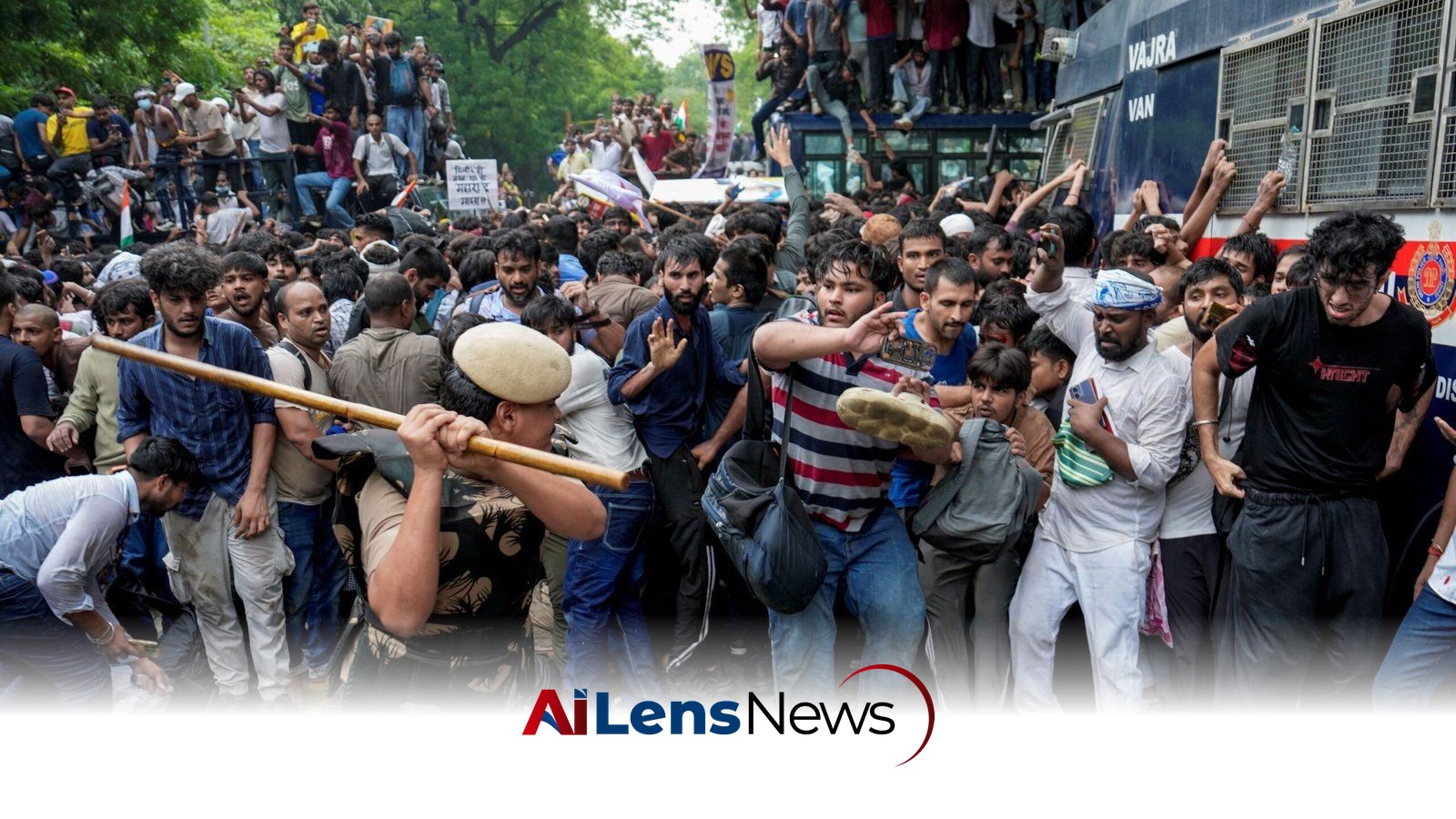


The Supreme Court affirmed the right to peaceful protest, stating that agitation does not justify police violence, as it hears pleas regarding police actions during recent protests.
Shillong, India Jul 27, 2026 ALN: In a significant ruling, the Supreme Court of India has reaffirmed the constitutional right to peaceful protest, emphasizing that no agitation can justify police excesses, including the use of force such as ‘lathi charges’. This landmark decision underscores the importance of civil liberties in a democratic society, particularly in the context of recent protests regarding the National Eligibility cum Entrance Test (NEET) paper leak and other exam-related irregularities.
The bench, led by Chief Justice Surya Kant, is set to hear a series of petitions on Tuesday that allege police misconduct against students who have been protesting across the country. These protests have arisen from widespread dissatisfaction with the management of the NEET exam, a crucial entry point for aspiring medical students in India, which has been marred by allegations of corruption and mismanagement.
In addition to addressing the grievances of the protesting students, the Supreme Court will also consider a separate plea filed by family members of police personnel who were reportedly attacked during these protests. This dual focus highlights the complex dynamics of public demonstrations, where the rights of both protesters and law enforcement officers must be balanced.
Chief Justice Kant noted, "The right to peaceful protest is absolutely guaranteed. That cannot be denied. Merely because there is agitation cannot justify police excesses." This statement reflects a growing concern over the use of excessive force by law enforcement during public demonstrations, a topic that has gained traction in various parts of the world, including India, where protests have sometimes turned violent.
The bench further emphasized the importance of maintaining public order while respecting the rights of individuals to express dissent. The Chief Justice remarked on the necessity for a clear protocol regarding police action during protests, advocating for a structured approach that allows for peaceful expression while also addressing the potential for disorder. "There should be a protocol in place. There should be proper space and no restriction. But if there are some anti-social elements etc., that can be taken care of. This is not a question of Delhi only. Uniformity of protocol is needed," he stated.
Moreover, the court's assertion that "Just because there is agitation does not mean there is ‘lathi charge’" highlights the need for self-regulation within law enforcement agencies. The Chief Justice called for discipline and restraint, which are essential to the democratic process, urging all parties involved to assist the court in upholding these principles.
Solicitor General Tushar Mehta, representing the central government, expressed his commitment to assist the court in a dispassionate manner, indicating the government's willingness to engage with the judiciary on this sensitive issue. The involvement of the Solicitor General is noteworthy, as it suggests that the government acknowledges the gravity of the allegations against the police and the need for accountability.
During the proceedings, lawyer Fauzia Shakil raised alarming claims that police in Bihar allegedly used AK-47 rifles against protesters. Such allegations, if substantiated, would represent a severe breach of protocol and human rights, raising questions about the escalation of force in response to civil dissent. Senior advocate Vikas Singh echoed these concerns, noting that Bihar has witnessed numerous attacks on students, further complicating the narrative surrounding the protests.
The protests gained momentum following a significant incident on July 20, when a march led by the Cockroach Janta Party in Delhi resulted in violent clashes between protesters and security personnel. Reports indicate that police employed lathis (batons) and teargas shells to disperse crowds attempting to reach Parliament. The protesters were demanding the resignation of Union Education Minister Dharmendra Pradhan, holding him accountable for the NEET paper leak scandal.
In a notable development, the agitation organized by the Cockroach Janta Party was called off after Minister Pradhan resigned, signifying a rare instance where sustained public pressure resulted in a governmental response. Pradhan's resignation was framed as a reflection of his deep sorrow over the events of the past week, emphasizing that the issue at hand transcended personal prestige.
On July 22, the Delhi High Court took a proactive stance by seeking responses from both the central government and the Delhi Police regarding allegations of excessive force used against protesters during the July 20 march. The high court has mandated that all relevant records related to police actions, including CCTV footage and videography, be preserved for review. This judicial oversight is critical in ensuring accountability and transparency in law enforcement actions during public demonstrations.
This recent ruling by the Supreme Court and the ongoing judicial scrutiny by the Delhi High Court reflect a broader societal dialogue about the rights of citizens to protest peacefully and the responsibilities of the state to protect those rights. The implications of these legal proceedings extend beyond the immediate context of the NEET protests, as they set a precedent for how similar situations may be handled in the future.
As India continues to grapple with issues of governance, civil rights, and public dissent, the Supreme Court's decision serves as a reminder of the fundamental tenets of democracy. The court's stance not only reinforces the right to peaceful protest but also calls for a critical examination of law enforcement practices, ensuring that the balance between maintaining public order and respecting civil liberties is upheld. As the hearings progress, the legal community, civil society, and the general public will be closely watching how these issues unfold and what measures will be implemented to safeguard the rights of all individuals involved in the democratic process.
To learn more about the latest developments in Political Controversies, stay updated with our exclusive reports and analyses on AiLensNews.

