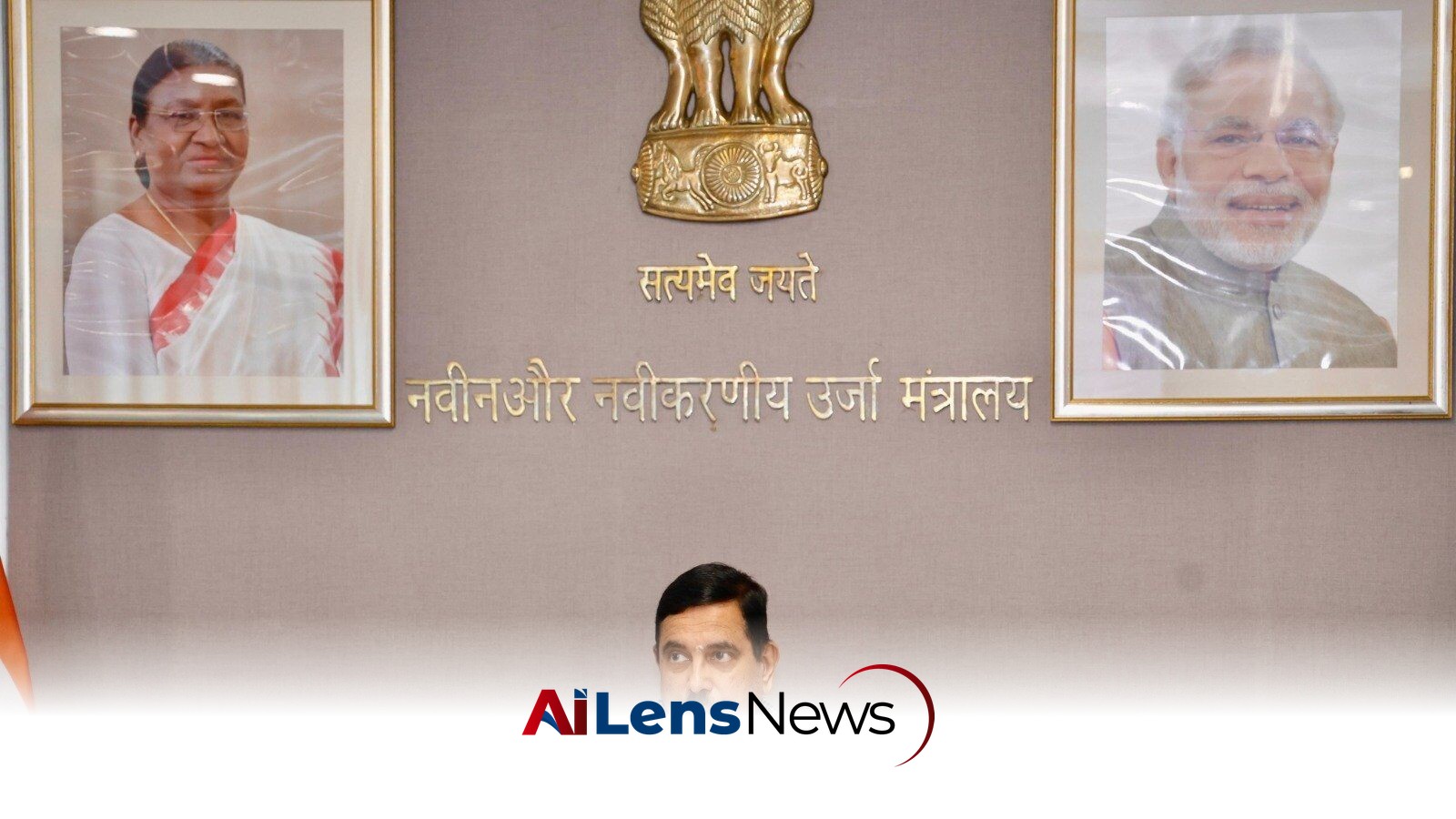


Union Minister Pralhad Joshi has been appointed as the new Education Minister after Dharmendra Pradhan's resignation, effective immediately.
Shillong, India Jul 26, 2026 ALN: Union Minister Pralhad Joshi was on Saturday given additional charge of the Ministry of Education following the resignation of Dharmendra Pradhan from the post. This transition marks a significant shift in the Indian government's educational leadership, particularly given the challenges and reforms that the education sector currently faces.
Joshi, who currently heads the Ministry of Consumer Affairs, Food and Public Distribution, will now also oversee the Education Ministry. The dual responsibility highlights the government's strategy of streamlining ministerial roles, especially in sectors that are interconnected, such as consumer affairs and education. The Ministry of Education plays a pivotal role in shaping policies that affect millions of students across the country, and Joshi's previous experience in government may provide a unique perspective on how to integrate food security and educational policies.
A communiqué issued by Rashtrapati Bhavan stated that President Droupadi Murmu, acting on the advice of Prime Minister Narendra Modi, accepted Pradhan's resignation with immediate effect. The reasons behind Pradhan's resignation have not been publicly detailed, but such changes in cabinet positions are not uncommon in Indian politics, particularly in response to evolving governmental strategies or in preparation for upcoming elections.
Dharmendra Pradhan has been a prominent figure in the Indian Cabinet, having previously served as the Minister of Petroleum and Natural Gas, and his tenure as the Education Minister was marked by several key initiatives aimed at reforming the educational landscape. His resignation may signal a shift in focus for the education sector, as the government prepares to address ongoing issues such as access to quality education, curriculum reforms, and the integration of technology in learning environments.
Soon after his appointment, Joshi said he accepted the responsibility with "a sense of duty and humility" and reaffirmed his commitment to advancing the country's education sector. His statement reflects an understanding of the significant challenges ahead, including ensuring educational access for all, improving infrastructure, and addressing disparities in educational quality across different regions of India.
The appointment comes into effect immediately, with Joshi assuming charge of the Education Ministry in addition to his existing ministerial responsibilities. This dual role may place additional demands on Joshi, who will need to balance the priorities of both ministries effectively. The Ministry of Education is currently grappling with several pressing issues, including the implementation of the National Education Policy (NEP) 2020, which aims to overhaul the educational framework in India.
The NEP 2020 emphasizes holistic education, vocational training, and the integration of technology into classrooms. One of the key objectives of this policy is to transform the educational landscape by providing a more flexible and multidisciplinary approach to learning, which aligns with global educational standards. Joshi’s leadership will be crucial in ensuring that these reforms are not only implemented but also adapted to meet the diverse needs of India's student population.
Moreover, Joshi's experience in managing consumer affairs may provide valuable insights into addressing challenges related to educational materials and resources, including the availability of textbooks and digital learning tools. As the education sector increasingly relies on technology, ensuring equitable access to these resources will be paramount.
In addition to internal challenges, Joshi will also need to navigate external pressures, including public expectations and the demands of various stakeholders in the education sector. Teachers, parents, and student organizations often have differing views on educational policies, and balancing these perspectives will be essential for fostering a collaborative environment that benefits students.
Furthermore, the implications of Joshi's appointment extend beyond immediate policy changes. The education sector in India is facing a critical juncture, especially in the wake of the COVID-19 pandemic, which disrupted traditional learning and highlighted existing inequalities. As schools and colleges work to recover, the new minister will need to prioritize mental health and well-being, alongside academic recovery, to support students who have faced significant challenges during the pandemic.
In the wake of the pandemic, the educational landscape has undergone significant changes. With the shift to online learning, many students faced challenges such as lack of access to devices, inadequate internet connectivity, and a lack of support for self-directed learning. These challenges have exacerbated existing disparities, particularly in rural and underserved areas. Joshi's role will involve addressing these inequities, ensuring that all students have the tools and resources they need to succeed in a rapidly evolving educational environment.
Moreover, the NEP 2020 outlines several ambitious goals, including the introduction of vocational education at an earlier stage, promoting regional languages, and ensuring that education is inclusive and accessible to all. Joshi will need to work closely with state governments, educational institutions, and various stakeholders to implement these policies effectively and gauge their impact on the ground.
Another critical area of focus will be teacher training and development. The quality of education is often directly linked to the quality of teaching, and ensuring that teachers are well-equipped with the skills and knowledge necessary to deliver effective instruction is paramount. Joshi's experience in consumer affairs may aid in understanding the needs of educators and the importance of providing them with the necessary resources and support.
In conclusion, Pralhad Joshi's appointment as the Education Minister comes at a crucial time for India's educational landscape. With a commitment to advancing the sector and a keen understanding of the interconnectedness of various governmental functions, Joshi has the potential to drive meaningful change. However, the success of his tenure will depend on his ability to address both the immediate and long-term challenges facing the education system, ensuring that it not only recovers from recent setbacks but also evolves to meet the needs of future generations. The education sector is at a crossroads, and with the right leadership and vision, it can emerge stronger and more equitable, paving the way for a brighter future for all students in India.
To learn more about the latest developments in Elections, stay updated with our exclusive reports and analyses on AiLensNews.

