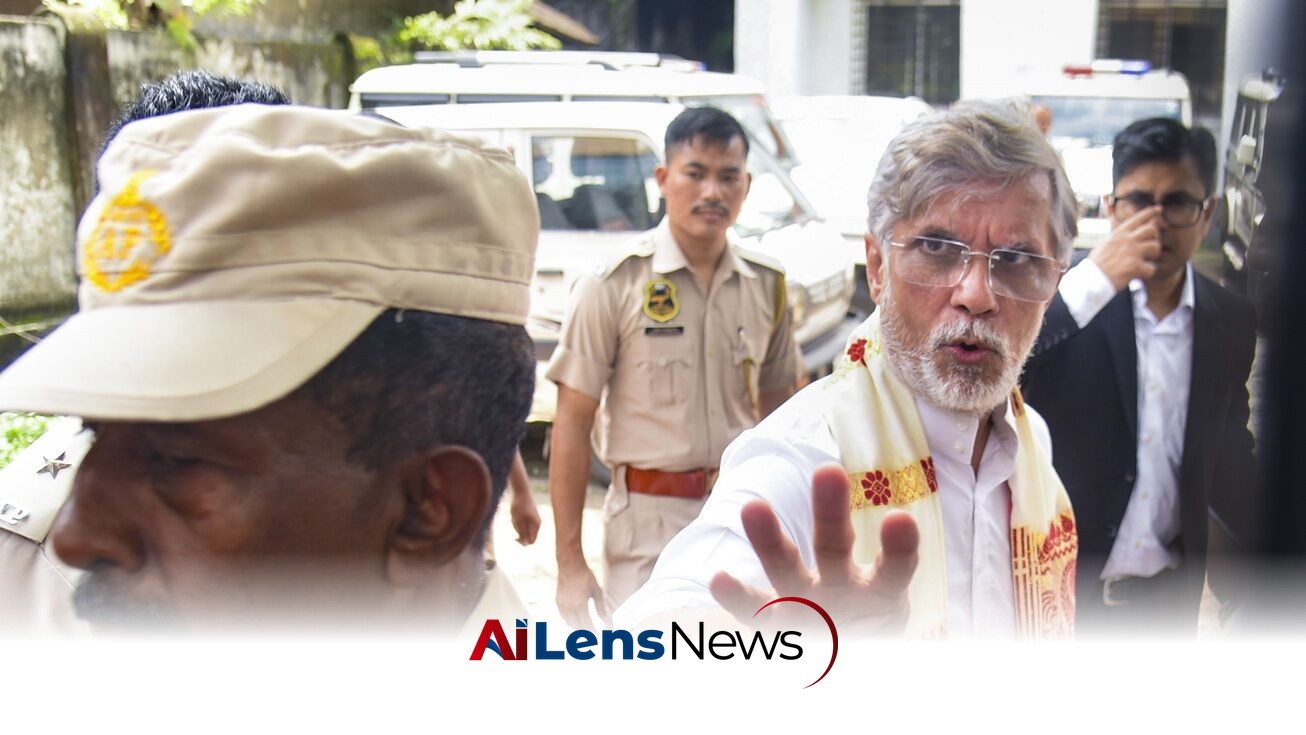


Congress leader Pawan Khera complies with a summons from the Assam Police Crime Branch regarding a defamation case filed by Riniki Bhuyan Sharma.
Shillong, India Jul 23, 2026 ALN: Senior Congress leader and Rajya Sabha member Pawan Khera, on Thursday, appeared before the Assam Police Crime Branch in connection with an ongoing defamation case filed by Riniki Bhuyan Sharma, wife of Assam Chief Minister Himanta Biswa Sarma. This case has garnered significant attention not only due to the high-profile nature of those involved but also because it highlights the growing tensions between political parties in Assam, particularly between the ruling Bharatiya Janata Party (BJP) and the opposition Congress party.
Khera arrived in Guwahati from New Delhi and reached the Crime Branch headquarters after being summoned by the investigating agency. His appearance comes at a time when political discourse in India is increasingly polarized, with allegations and counter-allegations becoming commonplace in the battle for public opinion. Khera's case is emblematic of this trend, as it involves serious accusations of defamation that could have wider implications for political rhetoric in the country.
Speaking to the press before entering the Crime Branch office, Khera stated that he was complying with the summons and cooperating with the investigation. "I have appeared before the Crime Branch in response to the notice issued to me. Earlier, I had informed the investigating agency that I was unwell and also had pre-scheduled party programmes. They accepted my request," he said. This highlights Khera's attempt to present himself as a law-abiding citizen while also emphasizing his commitments to his party and its activities.
The Crime Branch had most recently directed Khera to appear on July 17 after he failed to attend earlier scheduled hearings. According to the Assam Pradesh Congress Committee (APCC), the Congress leader was then attending the party's “Chhatron Ki Goonj” programme in Bengaluru, where Leader of Opposition Rahul Gandhi was scheduled to participate. This absence from the July 17 hearing raised questions about Khera's priorities and his commitment to addressing the allegations against him, which have been a point of contention in Assam's political landscape.
Despite missing the July 17 appearance, Khera has previously joined the investigation on multiple occasions and has been questioned by Crime Branch officials as part of the probe. His cooperation may be seen as an attempt to mitigate any potential backlash from the public and to maintain his political standing within the Congress party. Additionally, Khera has also secured interim protection from arrest from the Supreme Court in the case, which underscores the legal complexities surrounding this matter.
The case originates from a complaint lodged by Riniki Bhuyan Sharma at the Guwahati Crime Branch Police Station over statements made by Khera during a press conference and on social media. The allegations made by Sharma are serious, as they concern her citizenship status, foreign passports, and financial interests abroad. Such accusations, if proven to be false, could have significant ramifications not only for Khera but also for the Congress party's image in Assam.
In her complaint, Sharma alleged that the Congress leader made defamatory and false allegations regarding her citizenship status, foreign passports, and financial interests abroad. The implications of these allegations are profound, particularly in the context of Assam, where issues of identity and citizenship have been at the forefront of political discourse, especially following the National Register of Citizens (NRC) exercise. This exercise aimed to document all legal citizens of Assam, and it has led to a heated debate over who qualifies as a citizen, often with accusations of political motivations behind claims of illegal immigration.
Based on the complaint, Assam Police registered an FIR under multiple provisions of the Bharatiya Nyaya Sanhita (BNS), including sections relating to cheating, forgery, using forged documents as genuine, making false statements, intentional insult, and defamation. The complexity of the legal framework surrounding this case highlights the challenges that political figures in India face when navigating the intersection of law and politics.
The investigation has witnessed several rounds of legal proceedings. Khera had earlier approached the Telangana High Court, which granted him transit anticipatory bail to enable him to seek regular relief before the competent court in Assam. This legal maneuvering reflects the intricate nature of Indian legal proceedings, where political leaders often utilize the judicial system to protect their interests while also engaging in public discourse.
Subsequently, the Supreme Court intervened and stayed the operation of the transit anticipatory bail while clarifying that any plea filed before the competent court in Assam would be decided independently. This intervention by the apex court signifies the importance of judicial oversight in politically charged cases, ensuring that legal processes are followed without undue influence from political considerations.
The apex court later granted Khera interim protection from arrest while directing him to cooperate fully with the investigation. This decision underscores the judiciary's role in balancing the rights of individuals against the interests of the state in conducting investigations. The Crime Branch is continuing its investigation into the allegations and is expected to examine the material submitted by Khera during the course of the probe.
The ongoing investigation and legal proceedings surrounding this case are likely to have lasting implications for Assam's political landscape. As the Congress party seeks to regain its foothold in a state where it has historically been a significant player, the outcome of this case could influence public perception of the party and its leaders. Moreover, the case raises broader questions about the accountability of public figures and the extent to which political discourse can be scrutinized without crossing the line into defamation.
In conclusion, Pawan Khera's appearance before the Assam Police Crime Branch marks a significant moment in the ongoing political saga in Assam. The case not only involves serious allegations of defamation but also reflects the broader tensions between political parties in the region. As the investigation unfolds, it will be crucial to observe how it impacts Khera's political career, the Congress party's standing in Assam, and the nature of political discourse in India as a whole.
To learn more about the latest developments in Political Controversies, stay updated with our exclusive reports and analyses on AiLensNews.

