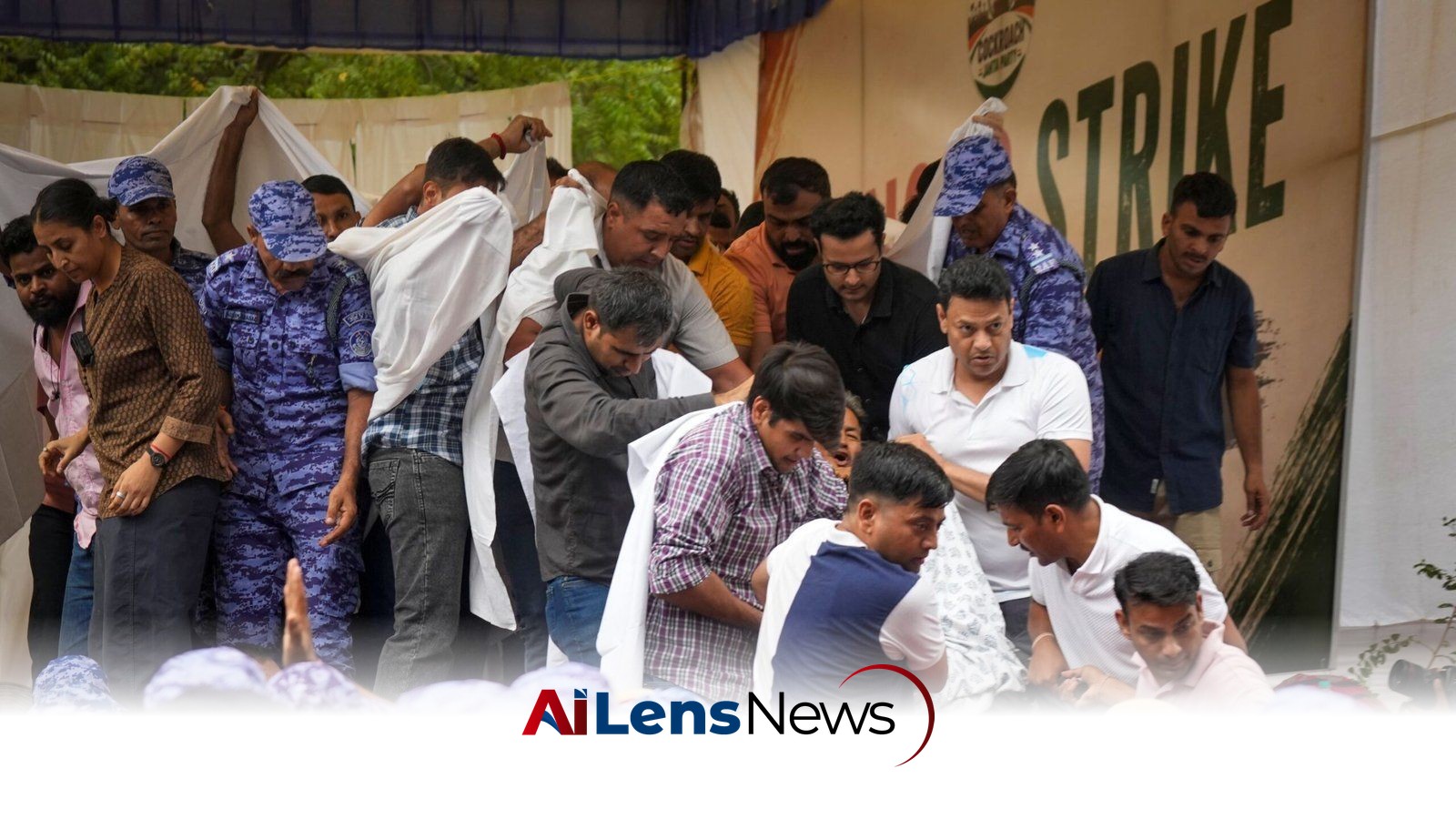


The upcoming all-party meeting will focus on the removal of activist Sonam Wangchuk and discuss new legislative proposals, including the controversial Ram temple donation issue.
Shillong, India Jul 18, 2026 ALN: The forcible removal of activist Sonam Wangchuk from Jantar Mantar, citing health concerns, is set to resonate during the all-party meeting convened by the government on Sunday. Wangchuk, a prominent figure known for his advocacy on education reform and environmental issues, has often been a vocal critic of government policies, particularly those affecting the Himalayan region. His removal from the protest site has raised questions about the government's handling of dissent and the rights of activists to voice their concerns in public spaces.
Wangchuk, an engineer and educator, has been a notable advocate for sustainable development and climate action, particularly in the context of the Himalayan ecosystem. His work in promoting educational reforms has garnered attention both nationally and internationally. His removal from Jantar Mantar, a traditional site for protests and demonstrations in the capital, has sparked discussions about the limits of governmental authority in managing public dissent. This incident has come to symbolize broader concerns regarding civil liberties in India, particularly for those who challenge the status quo.
This meeting, which will involve the floor leaders of all major parties, will discuss several pressing issues, including the alleged embezzlement of donations for the Ram temple in Ayodhya. The Ram temple, a significant site for Hindu devotees, has been at the center of political and religious discourse in India for decades. The temple's construction has been a contentious issue, intertwined with questions of national identity, religious sentiment, and political power. Allegations concerning financial misconduct related to the temple's construction have sparked outrage among various political factions, particularly those opposing the ruling party. The issue highlights the complexities of religious funding and the need for transparency in managing donations, especially for projects that hold cultural and religious significance.
The Ram temple issue is emblematic of the broader socio-political landscape in India, where religion often intersects with politics. The construction of the temple has been a rallying point for the ruling party, which has positioned itself as a defender of Hindu interests. However, the allegations of embezzlement could challenge the party's narrative and credibility, particularly among its supporters. The ramifications of this scandal could lead to heightened tensions within the legislature and influence public opinion regarding the government's transparency in financial matters.
Wangchuk’s removal from the Cockroach Janata Party (CJP) protest site at Jantar Mantar in central Delhi by the city police will dominate the customary meet. The CJP, which has been vocal in its demands for environmental protection and sustainable development, has gained attention for its unique approach to activism. Wangchuk's presence at the protest was seen as a rallying point for various social issues, including climate change and educational reforms. His removal has raised concerns regarding the government's commitment to upholding democratic rights and freedoms, particularly the right to protest.
In recent years, India has witnessed an increase in restrictions on protests and dissent, with many activists facing legal challenges or being silenced through various means. This trend has raised alarms among civil rights organizations and advocates for democracy, who argue that the space for dissent is rapidly shrinking. Wangchuk's case is part of a larger narrative concerning the treatment of activists and the state’s response to public outcry over pressing social issues.
The alleged mishandling of donations at the Ram temple will also play a significant role in the proceedings. The Samajwadi Party has announced that it will obstruct House proceedings regarding this matter. This decision reflects the party's strategy to leverage the issue to galvanize support among its base and to challenge the ruling party's credibility. The opposition's stance is indicative of the political maneuvering that often occurs in the Indian legislative process, where issues of governance and accountability are used as tools to gain political advantage.
Additionally, the government has announced five new bills that will be introduced in the Lok Sabha or the Rajya Sabha during the upcoming Monsoon Session. These bills cover a range of topics, reflecting the government’s legislative priorities and its approach to governance. The proposed legislation includes:
In addition to the new bills, there are important pending and deferred legislation that will also be a focus of discussion:
The discussions in this all-party meeting are expected to set the tone for the upcoming legislative session, addressing both urgent social issues and significant policy changes. As the government navigates these complex issues, the implications of the meeting could extend beyond the immediate legislative agenda, influencing public sentiment and the political landscape in the months to come. The outcomes of the discussions may also shape the strategies of various political parties as they prepare for future elections, particularly in light of the ongoing debates surrounding governance, accountability, and civil rights.
As India approaches a pivotal election cycle, the stakes are high for all political parties. The handling of dissent, the management of religious and financial issues, and the introduction of new legislation will play critical roles in shaping voter perceptions. The government's ability to address these issues transparently and effectively could either bolster its standing or lead to significant electoral challenges. The upcoming all-party meeting, therefore, represents not just a legislative discussion but a crucial moment in the ongoing dialogue about democracy, governance, and the rights of citizens in India.
To learn more about the latest developments in Political Controversies, stay updated with our exclusive reports and analyses on AiLensNews.

