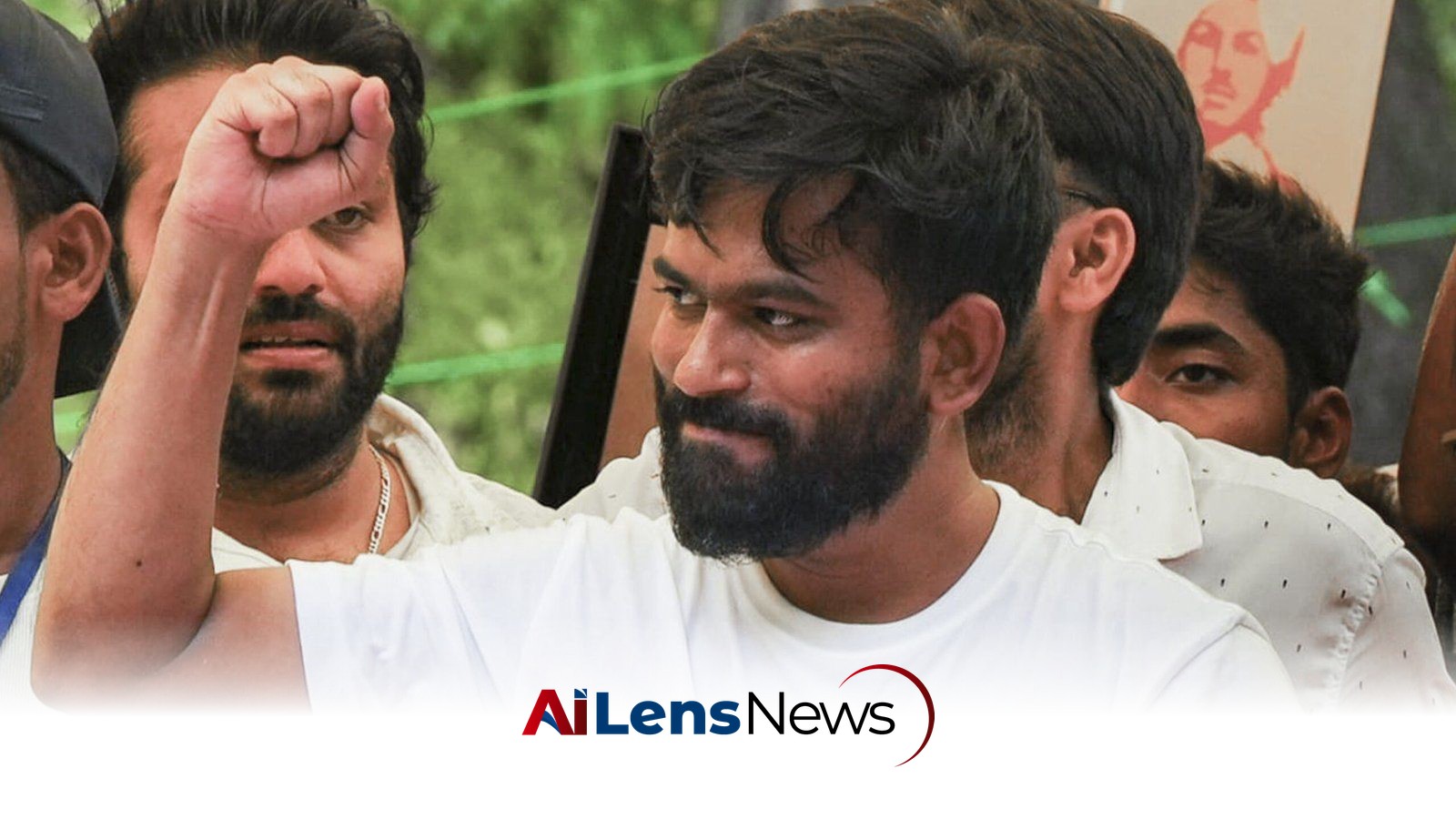


Abhijeet Dipke, founder of the Cockroach Janta Party, transforms a minister's resignation into a broader lesson on democracy and youth empowerment.
Shillong, India Jul 25, 2026 ALN: When Abhijeet Dipke stood before thousands of students at Jantar Mantar on Saturday after Union Education Minister Dharmendra Pradhan resigned, he did not dwell on his own role in creating one of the biggest youth stirs in recent years.
Instead, he sought to turn the moment into a lesson on democracy.
“This resignation is the evidence that if you don’t get scared, don’t bend before this government, you can get a resignation,” he proclaimed. “If you are scared to speak, how is it democracy?… They think they are kings because we sent them there.”
For the 30-year-old founder of the Cockroach Janta Party (CJP), the resignation was never meant to be the end of the story. “This is the first wicket,” he told the crowd. “This is just the beginning.”
That ability to convert a political victory into a larger argument about democratic participation perhaps explains how a man who, by his own admission, was applying for jobs in the United States barely two months ago ended up leading a movement that forced the resignation of a Union minister.
When PTI interviewed him in early June, Dipke was preparing to fly back from Boston, where he had completed a master’s degree in public relations.
He expected to be arrested the moment he landed in India. “I’ll most probably get arrested from the airport,” he had said. Only weeks earlier, he recalled, he had been planning a career abroad. As international attention around CJP grew, multinational companies in the US and Europe offered him jobs. He turned them down.
The gamble has transformed both his life and India’s political conversation.
Born out of satire after unemployed youth were likened to “cockroaches”, CJP rapidly evolved into what Dipke insisted on calling a “political youth movement”.
At the outset, he argued that its popularity reflected not his own appeal but the failure of the political establishment to address unemployment, education and the aspirations of young Indians.
“It’s the failure of the political ecosystem that they have failed to cater to the aspirations, the needs, the concerns and the hope of the youth,” he had told PTI. “The youth have followed a party which was born out of satire. There could be no bigger explanation than this.”
That belief continues to define his politics. On Saturday, as chants celebrating the resignation echoed across Jantar Mantar, Dipke repeatedly steered the conversation away from personalities and back to issues.
“The youth have shown they can force anyone’s resignation if they want,” he said. “The people who said this government never listens have been proved wrong.”
Then came perhaps the clearest articulation yet of what he wants the movement to become.
“If politics of Hindu-Muslim does not happen and issue-based politics happens, then thrones would shake,” he said. “The youth of this country will not fall into the trap of Hindu-Muslim politics. They will talk about employment.”
Those who have watched the protests from the beginning say that instinct to resist personality politics has been visible throughout the agitation. Dipke insisted that only slogans centred on students’ demands be raised. On one occasion, when supporters began chanting slogans hailing him, he immediately stopped them, reminding the gathering that the movement belonged to students, not to an individual.
Even on Saturday, arguably the biggest day of his public life, was spent widening the movement’s demands rather than declaring victory.
Calling the resignation “justice” for students who died by suicide, he demanded action against police personnel involved in violence on July 20, withdrawal of cases against protesting students, and reforms in the examination system.
His trademark symbolism also remained intact. “A cockroach, once it enters, does not leave so easily,” he smiled, before delivering a warning to officers he accused of attacking protesters. “If we can take a minister’s resignation, who are you? Don’t mess with the cockroach.”
Dipke’s own journey is far removed from the image of a conventional political leader.
Born into a Dalit family in Maharashtra, he studied mass communication and journalism before moving to the United States to pursue a master’s degree in public relations at Boston University.
Friends and associates describe him as someone who gravitated towards political communication rather than electoral politics, using digital media, satire and popular culture to engage young audiences.
Before launching CJP, Dipke worked in political communications and volunteered with the Aam Aadmi Party’s social media team between 2020 and 2023, helping create digital campaigns and online political messaging. His familiarity with internet culture would later become one of CJP’s defining strengths, with memes, humour and sharp messaging attracting millions of followers in a matter of weeks.
Behind the defiant public persona lies a family that has watched the movement with pride mixed with fear.
His parents said on Saturday they had not slept peacefully for the past 40 days, worrying constantly as their son led protests, faced police action and received threats.
While they said they are proud to be Abhijeet Dipke’s parents, they also revealed a wish that captures the tension between public admiration and private anxiety. They said they would rather see him devote himself to social work than enter electoral politics.
Dipke himself has avoided answering questions about CJP’s political future.
Even in June, when asked whether the platform might eventually become a political party, he described such discussions as premature. His immediate objective, he said then, was accountability.
Saturday’s celebrations suggested that objective had been achieved. Yet the message Dipke chose to leave the crowd with was not about defeating a minister but about changing the nature of politics itself.
“The youth have awakened,” he said. “The dawn of democracy has arrived.”
This moment of political awakening among the youth in India is significant in a country where young people make up a substantial portion of the electorate. As of 2023, nearly 50% of India’s population is under the age of 25, and this demographic has increasingly become a focal point for political parties seeking to gain traction in elections. The rise of Abhijeet Dipke and the Cockroach Janta Party may signal a shift in how political movements are formed and sustained, especially among younger voters who are disillusioned with traditional party politics.
The CJP’s emergence as a force in Indian politics is also reflective of broader global trends where youth-led movements have challenged established political norms. From the Black Lives Matter movement in the United States to climate strikes led by figures like Greta Thunberg, young activists are reshaping political discourse and demanding accountability from their leaders. Dipke’s movement, rooted in humor and satire, resonates with a generation that values authenticity and relatability in political messaging.
Furthermore, the focus on issue-based politics rather than identity politics is particularly relevant in the context of India’s diverse society. The country has a long history of political mobilization based on religious and caste identities, often leading to polarization and conflict. Dipke’s insistence on prioritizing employment, education, and youth aspirations over divisive narratives reflects a desire for a more inclusive and constructive political dialogue.
As the CJP continues to gain momentum, it remains to be seen how Dipke will navigate the challenges of sustaining a grassroots movement while also addressing the complexities of India’s political landscape. The resignation of a Union minister is a significant achievement, but it also raises questions about the future of the movement and its potential to influence policy changes at a national level.
In the coming months, the CJP will likely face scrutiny from both the government and established political parties, as well as challenges in maintaining unity among its supporters. The need for clear leadership and strategic direction will be crucial as the movement evolves. Dipke’s ability to balance the demands of activism with the realities of political engagement will be tested as he seeks to broaden the movement’s impact beyond symbolic victories.
Ultimately, the rise of Abhijeet Dipke and the Cockroach Janta Party represents a moment of potential transformation in Indian politics, one that could inspire a new generation of leaders to emerge from the grassroots level. Whether this movement can sustain its momentum and effect meaningful change in the political landscape remains to be seen, but it undoubtedly highlights the power of youth activism and the importance of civic engagement in shaping the future of democracy in India.
To learn more about the latest developments in Political History & Legacy, stay updated with our exclusive reports and analyses on AiLensNews.

