

More
Checking your session
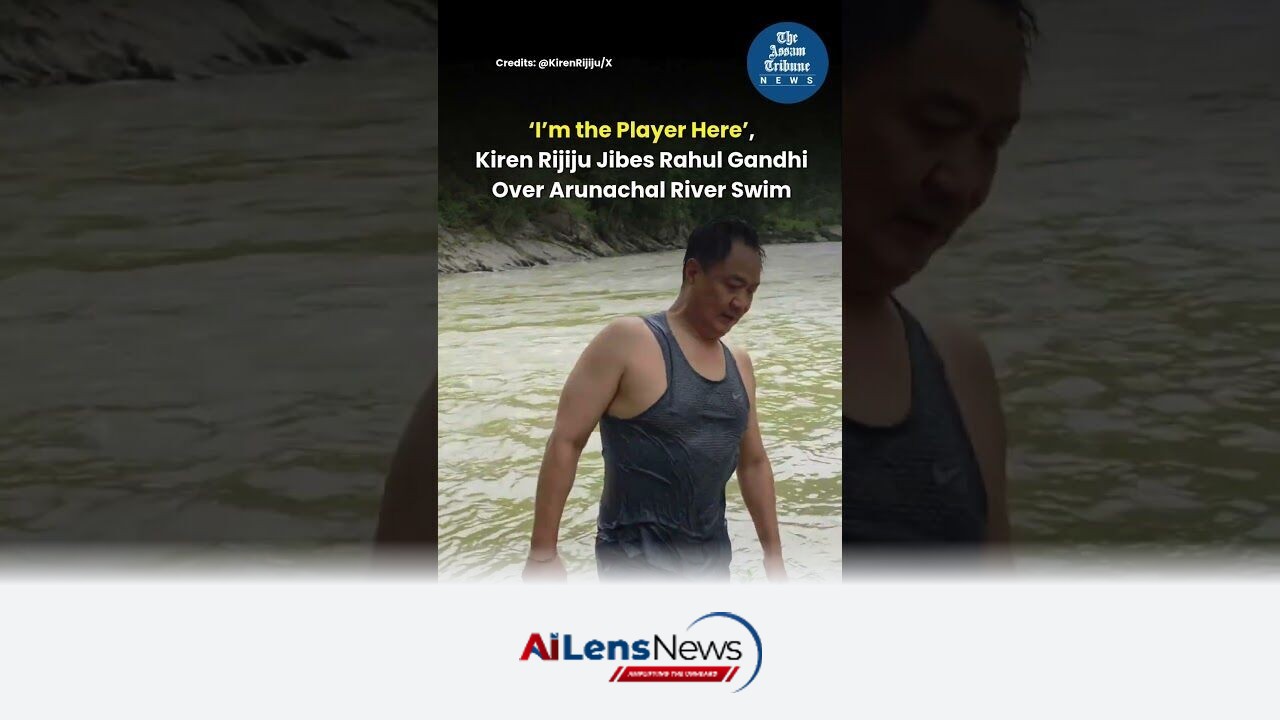



Kiren Rijiju humorously responds to Rahul Gandhi's recent river swim in Arunachal Pradesh, asserting his own role in the region.
Imphal, India Aug 23, 2026 ALN: In a lighthearted exchange on social media, Kiren Rijiju, the Union Minister of Law and Justice, took a playful jab at Rahul Gandhi regarding the latter's recent swim in a river in Arunachal Pradesh. Rijiju's comment, "I’m the player here," has sparked discussions about the political undertones of the interaction.
Rijiju's remark came after Gandhi shared images of his adventurous swim in the river, which is known for its scenic beauty and significance in the region. The minister's response was seen as an attempt to assert his connection to Arunachal Pradesh, a state he represents in the Indian government. This kind of engagement is not uncommon in the political arena, where leaders often interact with one another in a manner that blends personal and political narratives.
The exchange highlights the ongoing political rivalry between the Bharatiya Janata Party (BJP) and the Indian National Congress, of which Gandhi is a prominent leader. The BJP, under Prime Minister Narendra Modi's leadership, has been increasingly focused on consolidating its power in the northeastern states, where regional identity and local governance play critical roles in influencing voter behavior. Arunachal Pradesh, with its rich cultural diversity and strategic significance, has been a focal point in this political contest.
Gandhi's swim was part of a broader outreach effort, aiming to connect with the youth and promote environmental awareness. His actions have often been met with scrutiny and commentary from political opponents, including Rijiju. By engaging in activities that resonate with younger constituents, Gandhi seeks to position himself as a relatable leader who understands contemporary issues such as climate change and conservation, which are particularly pressing in the context of the Himalayan ecosystem.
Rijiju's comment reflects a common tactic in Indian politics, where leaders often use humor and social media to engage with their opponents and the public. This interaction serves as a reminder of the competitive nature of political discourse in India, especially in regions with significant electoral stakes. Social media has transformed the way politicians communicate, allowing for real-time exchanges that can quickly go viral, influencing public opinion almost instantaneously.
As the political landscape evolves, such exchanges may influence public perception and voter sentiment, particularly among younger demographics who are increasingly active on social media platforms. The youth vote is pivotal in many elections, and politicians are keenly aware of the need to connect with this group on issues that matter to them. The ability to engage in lighthearted banter can humanize politicians, making them more approachable in the eyes of the electorate.
The backdrop of this exchange is also significant. Arunachal Pradesh is a state that has seen its share of political turbulence, with border disputes, ethnic tensions, and the impact of climate change affecting local communities. The river that Gandhi swam in is not just a natural feature; it represents the lifeblood of many local villages and is central to the cultural identity of the indigenous tribes. Thus, when a prominent leader swims in this river, it is imbued with deeper meanings related to environmental stewardship and cultural heritage.
Moreover, the rivalry between the BJP and Congress is emblematic of larger ideological battles in Indian politics, with the BJP often emphasizing nationalism and development, while the Congress seeks to highlight social justice and inclusive growth. Each party's approach to governance and community engagement is scrutinized by the public, and actions like Gandhi's swim are interpreted through these lenses.
The playful banter between Rijiju and Gandhi underscores the dynamic nature of Indian politics, where personal interactions can quickly become part of larger political narratives. As both leaders continue to engage with the public, their actions and words will likely shape the political discourse in the lead-up to future elections. The ability to navigate social media effectively, leverage personal anecdotes, and connect with constituents on issues they care about will be crucial for both politicians as they vie for influence and support in an increasingly competitive electoral landscape.
In summary, the exchange between Rijiju and Gandhi is more than just a social media quip; it is a reflection of the current state of Indian politics, where humor, personal connection, and social engagement are key strategies for political survival and success. As the nation approaches its next electoral cycle, such interactions will continue to play a significant role in shaping public perception and electoral outcomes.
To learn more about the latest developments in Political Controversies, stay updated with our exclusive reports and analyses on AILensNews.

The absence of Zubair Anam Majumdar from the Assam Congress Youth Conclave's org…

Students in Imphal are protesting for the National Register of Citizens (NRC) to…

The Manipur BJP staged a protest outside Congress Bhavan, accusing Sonia Gandhi …

The Jaintia National Council has accused Meghalaya authorities of using force ag…

The United Naga Council has condemned the militarized search operations by centr…