

More
Checking your session
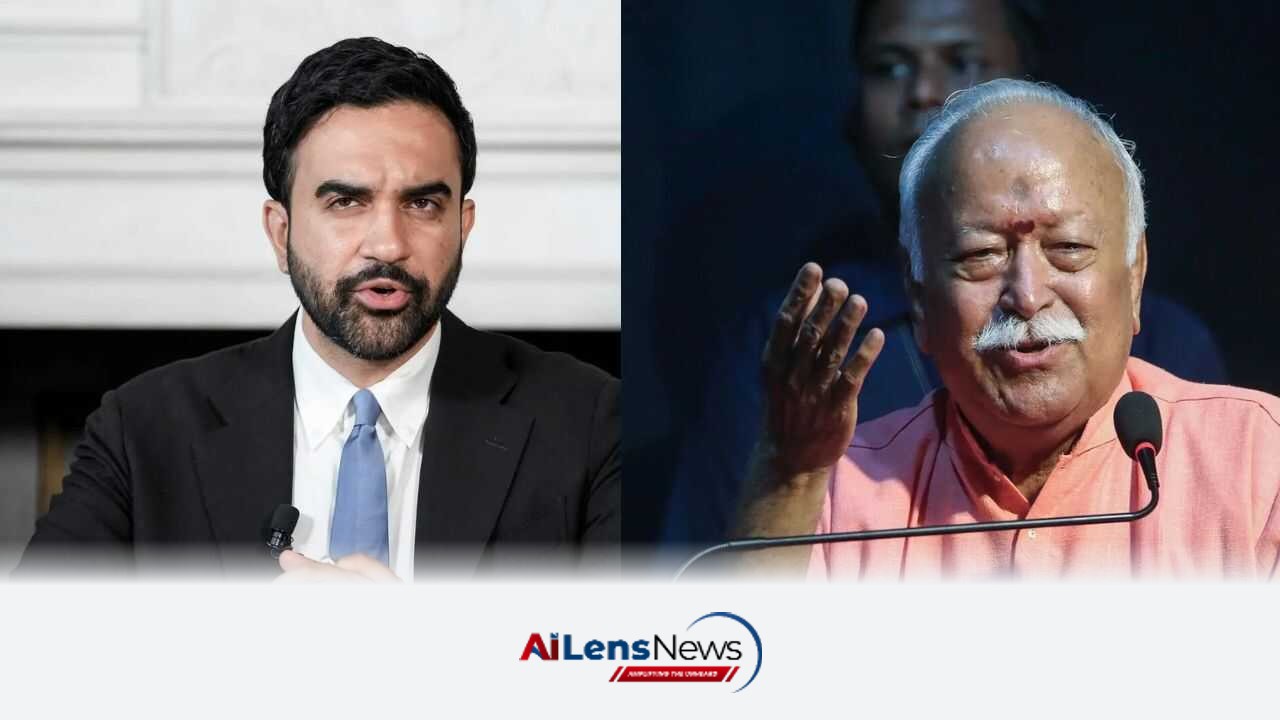



Zohran Mamdani publicly opposes Mohan Bhagwat's Madison Square rally, questioning its jurisdictional authority for cancellation.
New Delhi, India Aug 26, 2026 ALN: In a recent press conference, Zohran Mamdani, a prominent political figure, expressed his opposition to the upcoming rally featuring Mohan Bhagwat, the chief of the Rashtriya Swayamsevak Sangh (RSS). Scheduled for August 29 at Madison Square Garden in New York, the event aims to gather approximately 5,000 members of the n diaspora. This rally is part of a broader initiative by the RSS to strengthen its connections with ns living abroad, particularly in the United States, as the organization celebrates its centenary year.
Mamdani's remarks come as Bhagwat's visit is seen as an attempt to bolster the RSS's influence among the n community in the West. The RSS, known for its right-wing Hindu nationalist ideology, has been both praised and criticized for its approach to cultural identity and community engagement. Mamdani's opposition to the rally reflects a growing concern among segments of the diaspora about the implications of such gatherings, especially given the current political climate in both and the United States.
The RSS, founded in 1925, has long been a significant player in n politics and society, promoting a vision of Hindutva, or Hindu nationalism. The organization's influence has expanded beyond , with efforts to connect with the n diaspora around the world. Bhagwat's address at Madison Square Garden is expected to focus on themes of cultural identity, community engagement, and the role of the n diaspora in supporting 's growth and development.
However, the RSS has faced criticism for its perceived promotion of exclusionary and divisive ideologies that some argue undermine 's secular fabric. Critics contend that the organization's rhetoric can marginalize minority communities, particularly Muslims and Christians. This backdrop of controversy adds a layer of complexity to the upcoming rally, as it may serve as a platform for both cultural celebration and political mobilization.
Mamdani stated, "I don't support the rally, but I don't know if the city has any jurisdiction on cancelling a private event.” His comments highlight the tension surrounding the rally and reflect a broader unease among some community members regarding the potential consequences of such gatherings. Mamdani's position resonates with those who are concerned about the implications of the RSS's ideology on community cohesion and the potential for fostering division within the diaspora.
Moreover, Mamdani's remarks underscore the challenges faced by local authorities when dealing with events that may have significant political undertones. The question of whether a city has the authority to cancel a private event raises important considerations about freedom of speech, assembly, and the role of government in regulating public discourse.
The announcement of Bhagwat's rally has sparked mixed reactions within the n diaspora. Some view it as an opportunity for cultural celebration, emphasizing the importance of maintaining connections to their heritage and fostering a sense of community among ns abroad. Supporters argue that the rally could serve as a unifying event, promoting pride in n culture and identity.
Conversely, others fear that the rally may promote divisive ideologies that could exacerbate existing tensions within the community. Critics argue that the RSS's emphasis on Hindu nationalism may alienate non-Hindu members of the diaspora and contribute to a climate of intolerance. This concern is particularly salient in light of rising global nationalism and the challenges faced by minority communities in various parts of the world.
As the date approaches, the discourse surrounding the event is likely to intensify, with various stakeholders voicing their opinions. Organizations representing different facets of the n diaspora may mobilize to either support or protest the rally, reflecting the diverse perspectives within the community. Mamdani's stance may resonate with those who are wary of the RSS's influence and its implications for community cohesion.
In conclusion, the upcoming rally is not just a cultural event but a focal point for broader discussions about identity, politics, and community dynamics among the n diaspora in the United States. The event will likely serve as a litmus test for the RSS's ability to galvanize support among ns abroad while also highlighting the challenges of navigating complex cultural and political landscapes. As the dialogue continues, it will be essential for community leaders and members to engage thoughtfully with the issues at hand, fostering a spirit of inclusivity and understanding in an increasingly polarized environment.
To learn more about the latest developments in Political Controversies, stay updated with our exclusive reports and analyses on AILensNews.