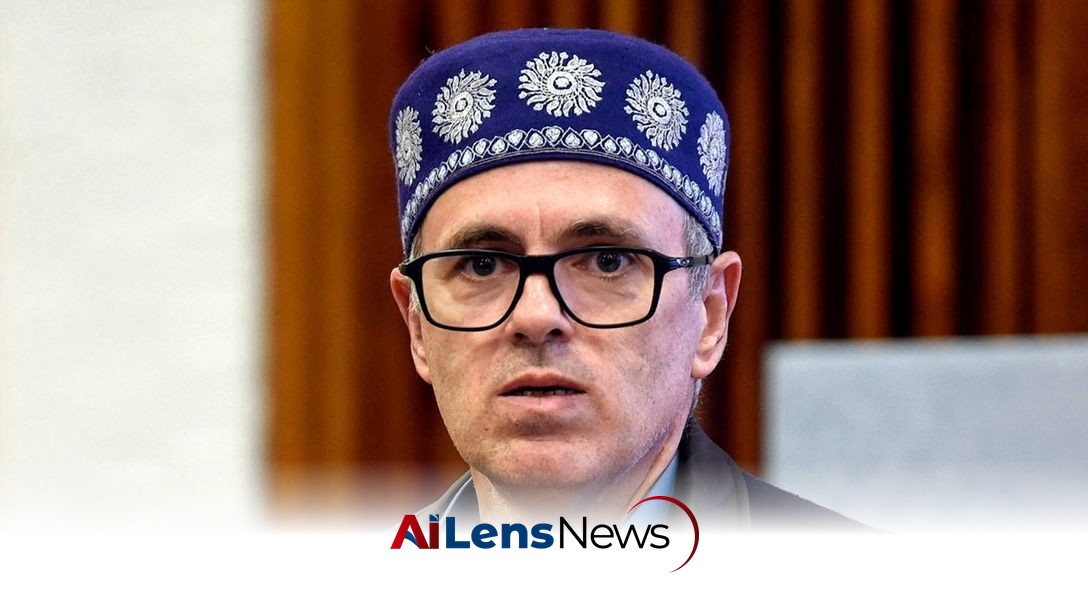


Jammu and Kashmir Chief Minister Omar Abdullah condemns PDP president Mehbooba Mufti's comments justifying force in Kashmir, calling them hurtful and inappropriate.
Leh, India Jul 27, 2026 ALN: The political landscape of Jammu and Kashmir has been stirred once again following comments made by former Chief Minister Mehbooba Mufti at a protest in New Delhi's Jantar Mantar. Omar Abdullah, the current Chief Minister and leader of the National Conference party, has sharply criticized Mufti, the president of the People's Democratic Party (PDP), for her remarks which he claims justify the use of force in Kashmir. This incident has reignited discussions about the ongoing conflict in the region and the implications of political rhetoric in a highly sensitive environment.
Mufti was attending a protest concerning alleged irregularities in student examinations when she made comments that have since drawn scrutiny and backlash. In a video that circulated widely on social media, Mufti stated that while the use of force against students in Delhi was inappropriate, the situation in Kashmir was different due to the presence of militancy. This statement has been interpreted by many, including Abdullah, as an endorsement of aggressive policies in Kashmir, which has long been a flashpoint of violence and unrest. The context of her remarks is significant, as Jammu and Kashmir has a long history of conflict, with various stakeholders asserting different narratives about governance, security, and civil rights.
Omar Abdullah's response was swift and pointed. He questioned the rationale behind Mufti's attendance at the protest, suggesting that her remarks were not only out of touch but also harmful to the sentiments of the people in Jammu and Kashmir. Abdullah stated, "The people at Jantar Mantar themselves should answer why she went there. But what she said there was that the use of force, arrests and all these things in Kashmir are understandable because there is militancy here. I fail to understand how that can be justified." His comments reflect a broader concern among local leaders about the implications of framing violence and suppression as necessary responses to militancy. The use of such language can further polarize communities and exacerbate tensions, making reconciliation and dialogue even more challenging.
Abdullah further articulated a critical stance on the use of militancy as a justification for denying justice and constitutional rights to the residents of Jammu and Kashmir. He posed several rhetorical questions, emphasizing that the existence of militancy should not lead to a suspension of the rule of law or the rights of individuals. "Does militancy mean that the law should not be enforced fairly? Does it mean children should not get justice? Does it mean people's passports should be withheld?" Abdullah questioned, underscoring the need for a balanced approach to governance that respects the rights of all citizens, regardless of the security situation. The call for a fair application of the law is particularly vital in a region where the rule of law has often been compromised by ongoing violence and unrest.
The controversy surrounding Mufti's remarks has been compounded by allegations from PDP legislators, who suggested that the video of her comments was manipulated using artificial intelligence. Abdullah dismissed these claims as a tactic to evade accountability, stating, "One of their MLAs claimed it was AI. Are we so foolish? The entire national media was present there. Television cameras and microphones are clearly visible in the videos, and there is more than one recording." This dismissal of the AI narrative highlights the political tensions that continue to define discourse in the region, as leaders on both sides seek to control the narrative surrounding their actions and statements. The debate over the authenticity of the remarks signals a broader struggle for credibility and legitimacy among political actors in Jammu and Kashmir.
In the context of Kashmir's complex political history, Abdullah's critique of Mufti also touches on broader themes of accountability and political integrity. He pointed out previous controversies involving the PDP, including their alliance with the Bharatiya Janata Party (BJP) in 2015, which has been a contentious issue among many Kashmiris. Abdullah remarked, "You have not apologised for the 2015 alliance with the BJP. You never expressed regret over what happened in 2016. Again and again those actions were defended. Now once again, force in Kashmir is being justified." This historical lens adds depth to the current debate, as it suggests that past decisions continue to influence present political dynamics and public perceptions. The alliance with the BJP, in particular, has been a source of division, with many viewing it as a betrayal of the PDP's original mandate and values.
Abdullah's comments also reflect a deep concern for the future of democratic engagement in Jammu and Kashmir. He warned that justifying the use of force against protestors sends a dangerous message to citizens who may wish to advocate for their rights or engage in political movements. "When a former chief minister says that suppressing protests here is understandable, then who will come out to demand their rights in the future? If tomorrow we launch another movement for statehood, people will wonder whether force against them will again be described as justified," he cautioned. This perspective highlights the fragile nature of civil liberties in the region and the potential chilling effect such statements can have on public participation in democratic processes. The fear of reprisal can deter citizens from voicing their concerns, thereby undermining the very foundations of a democratic society.
The implications of this political exchange are significant, particularly in light of Jammu and Kashmir's ongoing struggle for autonomy and recognition of its unique status within India. The region has experienced decades of conflict, with various political parties and groups advocating for different solutions, ranging from full autonomy to integration with India. Mufti's remarks, and Abdullah's subsequent criticism, illustrate the complexities of navigating these discussions in a region where sentiments are often heightened and the stakes are high. The political environment is further complicated by external factors, including national policies and international perceptions, which can influence local dynamics and the prospects for peace.
In conclusion, the exchange between Omar Abdullah and Mehbooba Mufti at Jantar Mantar serves as a reminder of the delicate balance between security and civil rights in Jammu and Kashmir. As political leaders continue to grapple with the legacy of past decisions and the realities of current governance, the need for a thoughtful and inclusive dialogue remains paramount. The voices of the people, their rights, and their aspirations must be at the forefront of any political discourse to ensure a just and equitable future for all residents of the region. The ongoing struggle for justice, accountability, and democratic engagement underscores the importance of fostering a political environment where diverse perspectives can be heard and respected, paving the way for lasting peace and stability.
To learn more about the latest developments in Political Controversies, stay updated with our exclusive reports and analyses on AiLensNews.

