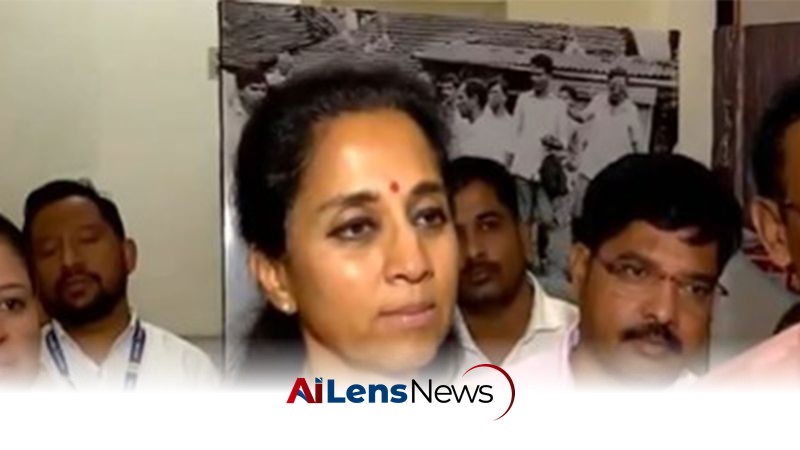


The NCP (SP) shows potential support for the women's reservation linked to delimitation, stirring political debate ahead of the monsoon session.
Leh, India Jul 16, 2026 ALN: The political landscape surrounding the pending Constitution 131st Amendment Bill, which links women's reservation in politics to delimitation, has taken a significant turn. On Wednesday, indications emerged that the Sharad Pawar-led Nationalist Congress Party (NCP) may offer its backing for the bill during the upcoming monsoon session of Parliament.
Despite the growing speculation, NCP (SP) leader Supriya Sule was quick to dismiss claims regarding her party's support for the bill, which has yet to be made public. Her remarks come at a time when the Congress party has expressed dissatisfaction over the developments.
The Constitution 131st Amendment Bill aims to ensure that women receive a certain percentage of seats in legislative bodies, contingent upon the completion of delimitation exercises. This linkage has been a point of contention among various political factions, with differing opinions on its implications for women's representation in governance. The bill seeks to amend the Constitution to reserve a specified number of seats for women in the Lok Sabha and State Legislative Assemblies, which would mark a historic step towards gender parity in Indian politics.
Delimitation, the process of redrawing electoral boundaries to reflect changes in population, has been a contentious issue in India. It is often viewed through the lens of political strategy, as the redrawing of constituencies can significantly impact electoral outcomes. The relationship between women's reservation and delimitation is particularly complex; while the former aims to empower women in politics, the latter could alter the political landscape in ways that might not necessarily favor female candidates.
The idea of women's reservation in India is not new. It has been a topic of discussion since the 1990s, with various proposals and drafts being put forth over the years. The push for women's reservation stems from the recognition of the underrepresentation of women in political offices, where they constitute a small fraction of elected representatives. The current representation of women in the Lok Sabha, for example, hovers around 14%, a stark contrast to the global average of 25% for women in national parliaments. This disparity has led to calls for systemic changes to ensure that women have a voice in the decision-making processes that affect their lives.
While the NCP (SP) has not officially confirmed its stance, the Congress party's reaction has been one of concern. The Congress has been a vocal advocate for women's reservation and views any potential support from the NCP (SP) as a crucial step forward. The party has long argued that women's participation in politics is essential for a balanced and representative democracy. The discussions around the bill have reignited debates about the effectiveness of current political structures in promoting gender equality.
Other political parties have also weighed in on the issue. Some regional parties have expressed skepticism about the bill, arguing that it could lead to political marginalization of certain groups. They contend that the focus should be on ensuring that women from all backgrounds are represented, rather than creating a system that could inadvertently favor particular demographics. This highlights the ongoing challenge of balancing representation while also addressing the diverse needs of the electorate.
Despite the potential for positive change, there are significant challenges ahead for the Constitution 131st Amendment Bill. The political landscape is fraught with competing interests, and the bill's success will depend on the ability of its proponents to navigate these complexities. The opposition from various factions could lead to intense debates and possible amendments, which may dilute the original intent of the bill.
Additionally, there are concerns about the implementation of such a reservation policy. Critics argue that merely reserving seats for women does not guarantee their active participation or success in elections. Structural barriers, societal attitudes, and the existing political culture may continue to pose significant obstacles to women's effective representation, even with a reservation policy in place. Issues such as access to resources, political training, and societal biases against women in leadership roles must be addressed to ensure that the intended benefits of the bill are realized.
Moreover, the impact of delimitation on women's reservation cannot be understated. As electoral boundaries shift, the demographics of constituencies will change, which could either enhance or diminish the chances of women candidates. The political strategies employed by parties in response to these changes will be critical in determining the success of women candidates in future elections.
The upcoming monsoon session of Parliament is set to be pivotal for the Constitution 131st Amendment Bill. As discussions unfold, the political dynamics surrounding women's reservation and delimitation will be closely monitored by both supporters and critics alike. The outcome of this bill could have far-reaching implications for the representation of women in Indian politics, potentially reshaping the political landscape for future generations.
In conclusion, the interplay between women's reservation and delimitation underscores a broader debate about representation, equity, and the future of governance in India. As political parties grapple with their positions on this issue, the voices of women and their allies will remain crucial in advocating for a more inclusive political framework that truly reflects the diversity of the Indian populace. The successful passage of the 131st Amendment Bill could serve as a catalyst for further reforms aimed at enhancing gender equality in governance, thereby fostering a more equitable society in which the contributions of women are recognized and valued.
To learn more about the latest developments in Political Controversies, stay updated with our exclusive reports and analyses on AiLensNews.

