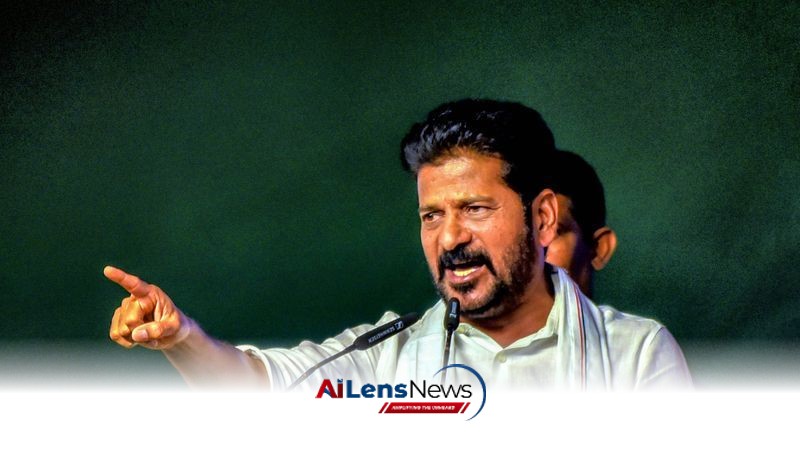



The Indian government has blocked Telangana Chief Minister A Revanth Reddy's trip to the US, citing a proposed meeting with NYC Mayor Zohran Mamdani as a key reason.
Leh, India Aug 22, 2026 ALN: The Indian government has denied political clearance for Telangana Chief Minister A Revanth Reddy's proposed visit to the United States. This decision has raised eyebrows and sparked discussions regarding the implications of diplomatic relations and political maneuvers. The refusal to grant clearance is indicative of the broader dynamics between regional leadership and the central government in India, particularly in the context of international diplomacy.
According to top diplomatic sources, one of the primary reasons for the denial was a planned meeting between Reddy and New York City Mayor Zohran Mamdani. The meeting was perceived as politically sensitive, given the current political climate in India. Mamdani, known for his progressive policies and advocacy for social justice, represents a political ideology that could be seen as counter to the prevailing narratives pushed by the Indian central government. This raises concerns about how such engagements might be interpreted domestically and internationally.
The refusal of clearance comes at a time when political tensions are high, both domestically and internationally. Reddy's proposed visit was intended to strengthen ties and explore opportunities for collaboration between Telangana and New York City. The Telangana state, which has a distinct cultural and economic identity within India, has been actively seeking to enhance its global presence and attract investments. Reddy's initiative was part of a broader strategy to foster international relationships that could benefit the state's economy and development.
However, the Indian government appears to be cautious about any engagements that may be interpreted as undermining its authority or diplomatic protocols. The meeting with Mamdani could have been seen as a potential challenge to the current administration's stance, particularly given the government's emphasis on maintaining a unified national front in diplomatic matters. The central government’s apprehension may stem from fears that such meetings could embolden regional leaders to pursue independent foreign policies that diverge from the national agenda.
This incident raises questions about the role of local leaders in international diplomacy. As more regional leaders seek to engage with global counterparts, the central government may feel compelled to assert its control over such interactions. This situation highlights the ongoing tension between the aspirations of regional leaders and the overarching authority of the central government, particularly in a country as diverse and complex as India.
The denial of clearance for Reddy's trip underscores the complexities of Indian politics and the delicate balance between local aspirations and central authority. As regional leaders continue to seek international partnerships, the central government’s response will likely shape the future of such engagements. The interplay between regional ambitions and central control will be a critical factor in determining how India navigates its position on the global stage.
Moreover, this incident serves as a reflection of the evolving nature of Indian federalism, where regional states are increasingly asserting their identities and seeking to play a more significant role in global affairs. The implications of this denial extend beyond just one leader's trip; they signal a potential shift in how local governments interact with the international community and the central government's role in mediating these interactions.
In the long run, the dynamics established through such incidents could redefine the landscape of Indian politics, particularly as globalization continues to influence local governance and international relations. As regional leaders like Reddy continue to pursue global connections, the central government will need to navigate the fine line between fostering local initiative and maintaining national unity in foreign diplomacy.
To learn more about the latest developments in Political Controversies, stay updated with our exclusive reports and analyses on AILensNews.

