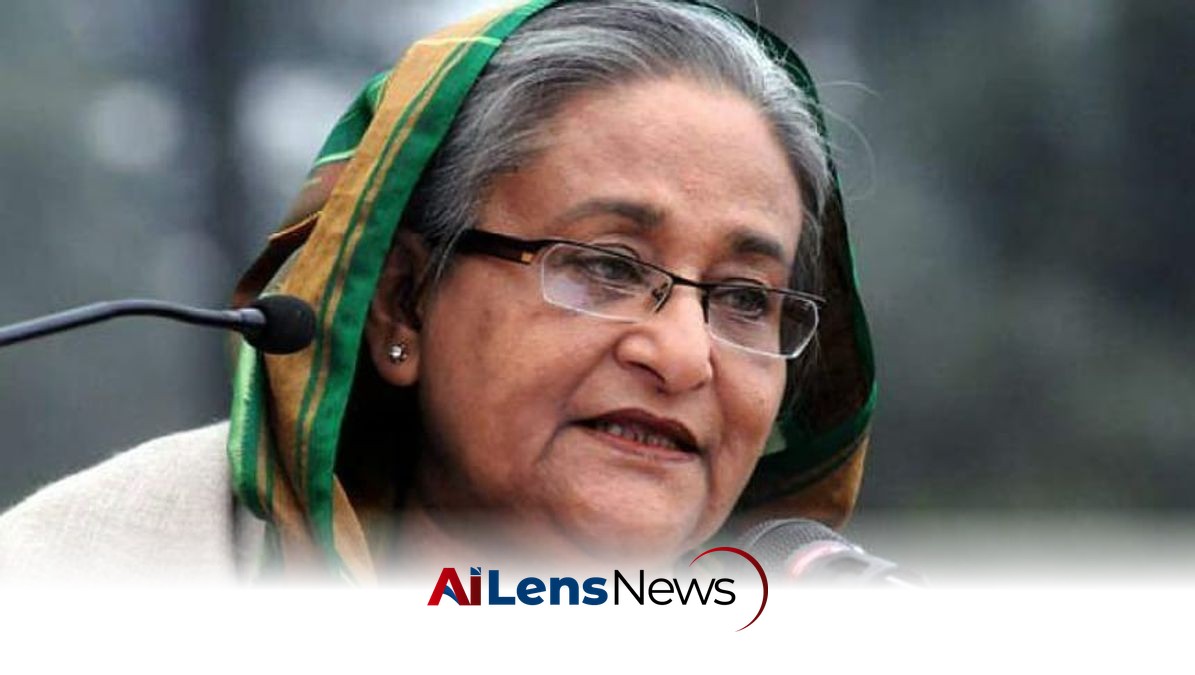


India is currently examining a request from Bangladesh to extradite former Prime Minister Sheikh Hasina, who has been living in India since 2024.
Leh, India Jul 17, 2026 ALN: India on Friday stated that a request from Dhaka to extradite Bangladesh's deposed prime minister Sheikh Hasina is still under scrutiny. The remarks by external affairs ministry spokesperson Randhir Jaiswal came amid reports of Hasina's plans to return to Bangladesh to revive her Awami League party.
"We have received a request for extradition. This request, as we have said earlier, is under examination," he noted. "The request is being taken into consideration given the legalities that are involved," he added.
Last week, sources close to Hasina indicated that the former prime minister is preparing to voluntarily return to Dhaka to rejuvenate her party. Hasina, 78, has been residing in India since fleeing Dhaka after the collapse of her government in August 2024, amid significant anti-government protests.
The political landscape in Bangladesh has been tumultuous, especially following the events of 2024. Hasina's government faced widespread criticism and opposition during her final months in power, particularly due to allegations of human rights abuses and the suppression of dissent. The violent crackdown on student-led protests in 2024, which resulted in numerous casualties and arrests, was a pivotal moment that led to her downfall.
In November of the same year, Hasina was sentenced to death in absentia by a special tribunal in Dhaka for alleged "crimes against humanity" related to her government's violent crackdown on these protests. This verdict has been a significant point of contention in Bangladesh's political discourse, with many supporters arguing that it was politically motivated and aimed at eliminating Hasina's influence in the country.
Since the verdict, Dhaka has been urging New Delhi to extradite her to face the law. The extradition request is complicated by various legal and diplomatic factors, including India's own legal framework regarding extradition, which requires a thorough examination of the case. India's decision-making process in such matters often involves considerations of international relations, domestic law, and the potential implications of extraditing a former head of state.
"We are all prepared to welcome our leader back," stated Kazi Nasim Rupak, a member of the publicity sub-committee of the Awami League party, during a recent interview. This sentiment reflects the ongoing loyalty among Hasina's supporters, who believe that her return could reinvigorate the party and restore its position in Bangladeshi politics.
Relations between India and Bangladesh have significantly deteriorated following the rise of the interim government led by Muhammad Yunus after Hasina's government fell. The political shift in Bangladesh has led to a reevaluation of bilateral ties, which have historically been strong due to shared cultural, economic, and security interests.
The deterioration of relations can be attributed to several factors, including the change in leadership and the differing political ideologies of the ruling parties. The Bangladesh Nationalist Party (BNP), led by Tarique Rahman, has taken a more cautious approach towards India compared to Hasina's Awami League, which traditionally maintained close ties with New Delhi. This shift has raised concerns about regional stability and cooperation on issues such as border security, trade, and water-sharing agreements.
Efforts to stabilize relations were initiated after Lok Sabha Speaker Om Birla, accompanied by Foreign Secretary Vikram Misri, represented India at the inauguration of Tarique Rahman as the prime minister in Dhaka on February 17. Rahman assumed office following his party's overwhelming victory in the parliamentary elections, where Hasina's Awami League was barred from participating. This exclusion of the Awami League from the electoral process has further complicated the political landscape in Bangladesh and has implications for its democratic institutions.
In April, Bangladesh Foreign Minister Khalilur Rahman visited India to help mend the strained bilateral ties after more than 18 months of heightened diplomatic tensions. This visit marked the first high-level engagement with India by a senior member of the new Bangladesh Nationalist Party government. The discussions during this visit focused on various issues, including trade, security cooperation, and the need for dialogue to address mutual concerns.
The extradition request for Sheikh Hasina is emblematic of the broader challenges facing both countries as they navigate their complex relationship. The outcome of this request could have significant implications for India's diplomatic standing in the region and its approach to dealing with neighboring countries. Furthermore, it raises questions about the future of democracy in Bangladesh and the potential for political reconciliation.
As the situation develops, observers will be closely monitoring the responses from both Indian and Bangladeshi officials, as well as the reactions of the public in both countries. The interplay of domestic politics, international relations, and legal considerations will play a crucial role in shaping the future trajectory of this case and the bilateral relationship between India and Bangladesh.
In conclusion, the extradition request for Sheikh Hasina is not merely a legal matter but a reflection of the intricate political dynamics in Bangladesh and the broader implications for South Asian geopolitics. As both nations strive to find common ground, the handling of this request will be a significant test of their diplomatic engagement and commitment to regional stability.
To understand the implications of the extradition request, it is essential to consider the historical context of Bangladesh's political environment. Sheikh Hasina has been a dominant figure in Bangladeshi politics for over three decades, serving multiple terms as prime minister. Her leadership has been marked by significant economic growth and development initiatives, yet her tenure has also been marred by allegations of authoritarianism and human rights violations.
The Awami League, under Hasina's leadership, has traditionally positioned itself as a secular and progressive party, contrasting sharply with the more conservative and nationalist agenda of the BNP. This ideological divide has often resulted in fierce political rivalry, leading to violent confrontations and a polarized electorate. The recent political upheaval and the subsequent call for Hasina's extradition signal a critical juncture in this ongoing struggle for power.
The extradition request also raises questions about international law and the responsibilities of states to uphold human rights. Should India decide to extradite Hasina, it could set a precedent for how countries handle similar requests involving former leaders accused of serious crimes. This scenario highlights the delicate balance between legal obligations and diplomatic relations, as India must weigh the potential backlash from Hasina's supporters against its commitment to international norms.
Moreover, the regional implications of this situation cannot be overlooked. Bangladesh's stability is crucial for the overall security of South Asia, given its geographical position and economic ties with neighboring countries. Any deterioration in Bangladesh's political situation could have ripple effects, potentially destabilizing the region and affecting trade, migration, and security cooperation.
As both countries navigate this complex situation, the diplomatic channels between India and Bangladesh will be critical. The ability to engage in constructive dialogue and address mutual concerns will be essential for maintaining regional stability. The extradition request for Sheikh Hasina serves as a litmus test for the resilience of their bilateral relationship and the effectiveness of their diplomatic engagement in addressing contentious issues.
In summary, the scrutiny of Sheikh Hasina's extradition request is not just a legal issue but a reflection of the intricate political dynamics at play in Bangladesh and the broader South Asian region. The outcomes of this situation will likely influence the future of democracy in Bangladesh, the relationship between India and Bangladesh, and the stability of the region as a whole.
To learn more about the latest developments in Political Controversies, stay updated with our exclusive reports and analyses on AiLensNews.

