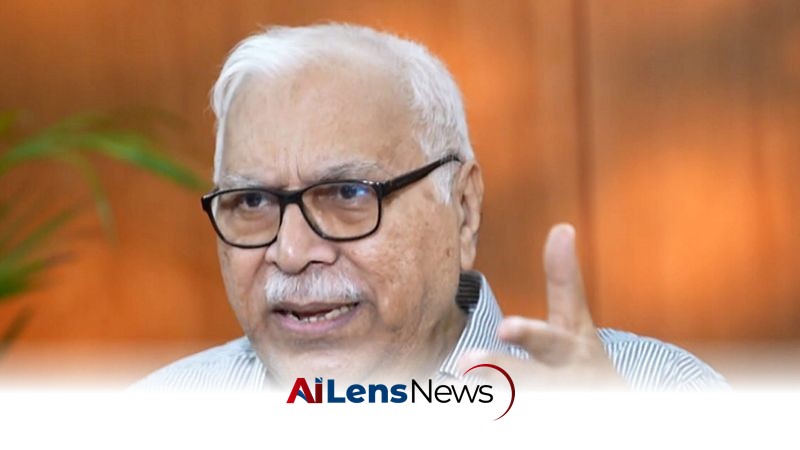


S Y Quraishi discusses his 2022 meeting with RSS leader Mohan Bhagwat, emphasizing the importance of Muslims in the concept of Hindu Rashtra.
Leh, India Jul 15, 2026 ALN: In a recent interview, former Chief Election Commissioner (CEC) S Y Quraishi opened up about his 2022 meeting with Mohan Bhagwat, the chief of the Rashtriya Swayamsevak Sangh (RSS). Quraishi described the encounter as a crucial moment in addressing the rising discourse surrounding communal tensions in India. His reflections shed light on the ongoing challenges of maintaining communal harmony in a nation characterized by its rich tapestry of cultures and religions.
During the meeting, Quraishi expressed his concerns regarding the idea of a Hindu Rashtra, stating that such a concept cannot be envisioned without the inclusion of Muslims. He emphasized that the fabric of Indian society is woven with diverse cultures and religions, and any attempt to marginalize a community would be detrimental to the nation's unity. This perspective is particularly significant given the current socio-political climate in India, where issues of identity, religion, and nationalism often intersect in contentious ways.
The meeting took place against the backdrop of increasing polarization in Indian politics and society. The RSS, a right-wing Hindu nationalist organization, has been influential in shaping the political landscape of India, particularly through its association with the Bharatiya Janata Party (BJP). Quraishi, who has been vocal about his views on secularism and communal harmony, felt it was essential to convey the message of inclusivity directly to Bhagwat. He aimed to highlight the importance of dialogue in bridging divides, especially in a country where communal tensions have historically led to violence and unrest.
The rise of Hindu nationalism has prompted concerns among various communities, particularly Muslims, who fear that their rights and identities may be undermined in the pursuit of a Hindu-centric national identity. Quraishi's meeting with Bhagwat can be seen as a significant attempt to address these fears and promote a more inclusive vision of Indian identity that respects all communities.
Quraishi's remarks have sparked discussions among political analysts and social commentators. Many believe that his perspective sheds light on the urgent need for leaders to engage in constructive dialogue rather than perpetuating divisive narratives. The former CEC's stance is seen as a call to action for both political leaders and citizens to prioritize harmony and inclusivity. His approach serves as a reminder that the future of India depends on its ability to embrace its diversity rather than allow it to become a source of division.
The implications of Quraishi's meeting with Bhagwat extend beyond the immediate context of their conversation. As India continues to navigate complex social dynamics, his insights serve as a reminder of the importance of unity in diversity. The ability to engage in meaningful dialogue can pave the way for a more inclusive future, where all communities feel valued and respected.
Furthermore, Quraishi's meeting raises questions about the role of influential leaders in shaping public discourse. As figures like Bhagwat hold significant sway over large segments of the population, their willingness to engage with dissenting voices and alternative perspectives could have far-reaching effects on societal attitudes and behaviors. Leaders who prioritize inclusivity and understanding may foster a more cohesive society, while those who promote division risk exacerbating existing tensions.
In conclusion, S Y Quraishi's reflections on his meeting with the RSS chief underscore the critical need for conversations that promote understanding and acceptance among all communities in India. His call for inclusivity and dialogue resonates with the broader challenges facing the nation today, as it grapples with the complexities of identity, religion, and nationalism. The future of India's social fabric may depend on the willingness of its leaders to engage in meaningful discussions that honor the country's rich diversity and foster a sense of belonging for all its citizens.
India's communal landscape is shaped by a long history of coexistence and conflict. The country is home to a multitude of religions, with Hinduism being the majority. However, significant populations of Muslims, Christians, Sikhs, Buddhists, and others contribute to India's diversity. The historical context of these communities is complex, with periods of cooperation and tension. The partition of India in 1947, which led to the creation of Pakistan, is one of the most traumatic events in the nation's history, resulting in widespread violence and displacement based on religious lines.
In recent years, the rise of Hindu nationalism has been accompanied by a growing narrative that seeks to redefine Indian identity in a way that prioritizes Hindu culture and values. This shift has raised concerns among minority communities, particularly Muslims, who often feel marginalized and threatened. The rhetoric surrounding the idea of a Hindu Rashtra has intensified these fears, leading to protests, communal riots, and a general atmosphere of distrust among different religious groups.
Quraishi's meeting with Bhagwat comes at a time when such tensions are palpable, and the need for dialogue is more pressing than ever. The former CEC's advocacy for an inclusive vision of India is not merely a political stance; it is a reflection of the lived experiences of many citizens who navigate the complexities of identity in a diverse society. By emphasizing the importance of recognizing and valuing all communities, Quraishi's message resonates with those who believe that India's strength lies in its diversity.
As India grapples with these challenges, the role of dialogue and engagement between different communities becomes paramount. Initiatives aimed at fostering interfaith dialogue, community outreach, and educational programs that promote understanding can serve as important tools in bridging divides. Quraishi's meeting with Bhagwat is an example of how leaders can take proactive steps to engage with opposing viewpoints and work towards a more harmonious society.
Moreover, the media plays a crucial role in shaping public perception and discourse. Responsible journalism that emphasizes facts and promotes understanding can counteract the divisive narratives that often dominate headlines. By highlighting stories of cooperation and coexistence, the media can contribute to a more balanced narrative that reflects the realities of India's pluralistic society.
Ultimately, the future of communal relations in India will depend on the collective efforts of leaders, citizens, and institutions to prioritize inclusivity and understanding. Quraishi's reflections serve as a reminder that the path towards a harmonious society is not only desirable but necessary for the well-being of all its citizens. As India continues to navigate its complex identity, the commitment to dialogue and mutual respect will be essential in shaping a future where every individual feels a sense of belonging and security.
To learn more about the latest developments in Political Controversies, stay updated with our exclusive reports and analyses on AiLensNews.

