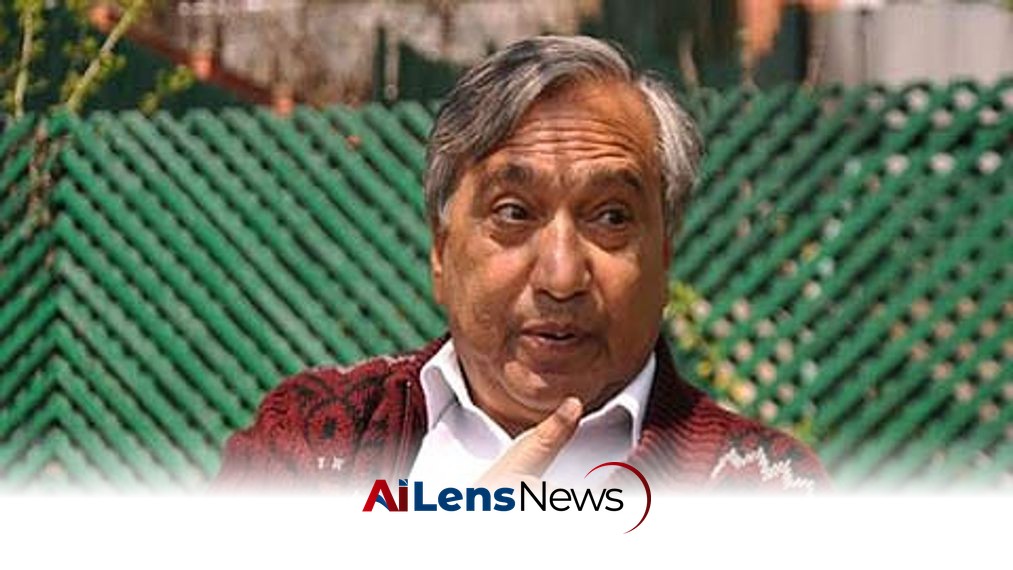


CPI(M) leader M.Y. Tarigami expresses condolences over the passing of Dr. Sheikh Mustafa Kamal, a prominent political figure in Jammu and Kashmir.
Leh, India Jul 14, 2026 ALN: CPI(M) leader and MLA Kulgam M.Y. Tarigami has expressed grief over the passing away of senior political leader Dr. Sheikh Mustafa Kamal, who remained associated with public life in Jammu and Kashmir for several decades. Dr. Kamal’s death marks the end of an era in the region's political landscape, where he played a significant role in shaping policies and advocating for the rights of the people.
Dr. Sheikh Mustafa Kamal was a prominent figure in Jammu and Kashmir's political arena, known for his unwavering commitment to public service. His career spanned numerous decades, during which he was involved in various capacities within different political parties. His most notable association was with the Jammu and Kashmir National Conference (NC), a party that has historically been influential in the region. Dr. Kamal was not only a politician but also a respected voice on social issues, often emphasizing the need for political accountability and transparency.
Throughout his career, Dr. Kamal was known for speaking his mind without hesitation. He often engaged in public discourse, addressing pressing issues such as governance, development, and the socio-economic challenges faced by the people of Jammu and Kashmir. His ability to articulate the concerns of the common man made him a beloved figure among his constituents. He was particularly vocal about the need for inclusive policies that catered to the diverse population of the region, which includes various ethnic and religious communities.
M.Y. Tarigami, in his tribute, recalled his long association with Dr. Kamal, describing him as someone who was always easy to approach. This sentiment reflects the approachable nature of Dr. Kamal, who was known for his willingness to listen to the grievances of the people. His passing away, Tarigami noted, brings down the curtain on a long political journey that has left a lasting impact on the political fabric of Jammu and Kashmir.
The loss of Dr. Kamal is not just felt within the political circles but resonates deeply with the general populace. His contributions to the region's development and his advocacy for the rights of marginalized communities will be remembered fondly. Many young politicians and activists have cited Dr. Kamal as an inspiration for their own political journeys, highlighting his role in mentoring the next generation of leaders.
In his condolences, Tarigami expressed solidarity with the bereaved family and conveyed his heartfelt sympathies to Begum Khalida Shah, Suraiya Ali Matto, Dr. Farooq Abdullah, CM Omar Abdullah, and other members of the bereaved family. This gesture underscores the unity often observed among political leaders in Jammu and Kashmir, especially in times of mourning. Such expressions of support are crucial in a region that has faced its share of political turmoil and social strife.
Dr. Kamal’s legacy is also intertwined with the broader historical context of Jammu and Kashmir, a region that has experienced significant political upheaval over the decades. The political landscape has been shaped by various factors, including the ongoing conflict, changes in governance, and the aspirations of the people for peace and stability. Leaders like Dr. Kamal have navigated these challenges, advocating for dialogue and reconciliation.
Furthermore, Dr. Kamal's contributions extend beyond politics into social activism. He was involved in various initiatives aimed at improving education, healthcare, and infrastructure in the region. His efforts were often geared towards uplifting the underprivileged and ensuring that basic rights were accessible to all. This holistic approach to leadership is what endeared him to many and solidified his place as a respected figure in the community.
As the region mourns the loss of Dr. Sheikh Mustafa Kamal, it is essential to reflect on the values he stood for: integrity, service, and dedication to the welfare of the people. His passing serves as a reminder of the importance of compassionate leadership in addressing the complex issues facing Jammu and Kashmir.
In conclusion, Dr. Kamal's death is a significant loss for Jammu and Kashmir, a region that continues to seek stability and progress amid challenges. The tributes pouring in from various quarters highlight the profound impact he had on the lives of many. As the political landscape evolves, the lessons learned from Dr. Kamal's life and work will undoubtedly continue to influence future generations of leaders and activists in their quest for a just and equitable society.
The political history of Jammu and Kashmir is marked by its unique challenges, including the long-standing conflict over territorial claims, which has shaped the aspirations and governance of the region. Dr. Kamal's involvement in this context was notable, as he often advocated for peace and dialogue to resolve these complex issues. His approach was characterized by a belief in the power of conversation and mutual understanding, which resonated with many in a region that has seen its share of violence and discord.
In addition to his political engagements, Dr. Kamal was known for his involvement in various social initiatives. He recognized the importance of education as a tool for empowerment and worked towards improving educational facilities in the region. His advocacy for better healthcare services was also a significant part of his legacy, as he understood that health is a fundamental right that should be accessible to all, particularly in a region that has faced numerous health crises over the years.
Moreover, Dr. Kamal's commitment to infrastructure development was evident in his support for projects that aimed to enhance connectivity and access to essential services. He believed that robust infrastructure is crucial for economic development and plays a vital role in improving the quality of life for the residents of Jammu and Kashmir. His efforts in this area were not just about physical structures but were also about creating opportunities for growth and development.
As we reflect on Dr. Kamal's contributions, it is essential to acknowledge the broader implications of his work. His emphasis on accountability and transparency in governance is particularly relevant in today's political climate, where trust in leadership is often questioned. Dr. Kamal's legacy serves as a reminder of the importance of ethical governance and the role of leaders in fostering a culture of integrity within the political system.
In light of his passing, many are calling for a renewed commitment to the values that Dr. Kamal championed throughout his life. This includes a focus on inclusive governance that takes into account the diverse voices within Jammu and Kashmir. As the region looks towards the future, the need for leaders who can bridge divides and promote unity is more critical than ever.
In summary, the death of Dr. Sheikh Mustafa Kamal is a profound loss for Jammu and Kashmir. His life and work have left an indelible mark on the region, and his legacy will continue to inspire those who strive for a better future. As the community comes together to mourn his passing, it is an opportunity to honor his memory by recommitting to the principles he stood for, including service, integrity, and a deep commitment to the welfare of all people in Jammu and Kashmir.
To learn more about the latest developments in Political Controversies, stay updated with our exclusive reports and analyses on AiLensNews.

