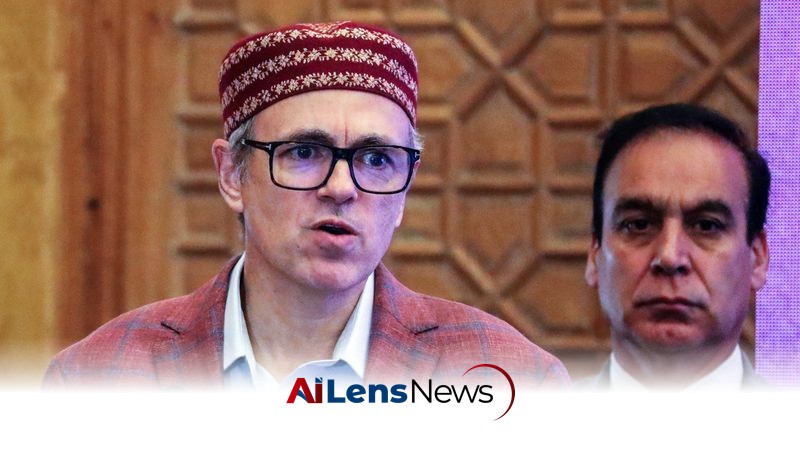


In a dramatic political move, the BJP's Jammu and Kashmir unit has sent a Rs 100 crore defamation notice to Chief Minister Omar Abdullah, who responded by calling it a 'love letter.'
Leh, India Jul 14, 2026 ALN: In a significant escalation of political tensions in Jammu and Kashmir, the Bharatiya Janata Party (BJP) has issued a defamation notice worth Rs 100 crore to Chief Minister Omar Abdullah. This move comes just two days after Abdullah accused the BJP of attempting to destabilize his government by engineering a split within the ruling National Conference. The backdrop of this confrontation highlights the ongoing struggle for power in a region that has historically been fraught with political volatility.
The notice, which has garnered considerable media attention, is seen as a direct response to Abdullah's allegations. The Chief Minister had claimed that the BJP was resorting to underhanded tactics to undermine his administration, a charge that the BJP has vehemently denied. This incident underscores the increasingly fractious nature of political discourse in the region, where accusations and counter-accusations have become a staple of the political landscape.
The political landscape in Jammu and Kashmir has been fraught with tension, particularly since the BJP's rise to prominence in the region. Historically, Abdullah's National Conference has been a significant player in Jammu and Kashmir politics, wielding considerable influence and holding power for numerous years. However, the BJP's aggressive strategies, especially since its electoral successes in the 2014 and 2019 general elections, have raised concerns among leaders of the National Conference and other regional parties.
Jammu and Kashmir has long been a focal point of political contention in India, characterized by its unique demographic composition, socio-political dynamics, and the historical backdrop of conflict. The BJP's assertion of power in the region has been marked by a concerted effort to expand its influence, which has often been met with resistance from established parties like the National Conference and the People's Democratic Party (PDP). The BJP's focus on nationalistic rhetoric and policies has resonated with certain segments of the population, while also alienating others who feel marginalized by the central government's approach.
Omar Abdullah, responding to the defamation notice, referred to it as a 'love letter,' suggesting that the BJP's actions are more about political theatrics than genuine legal concerns. This characterization highlights the ongoing rivalry between the two parties and reflects Abdullah's attempt to frame the BJP's actions as desperate. His remarks indicate a strategy to downplay the seriousness of the notice while simultaneously rallying his supporters around the narrative of BJP overreach. Abdullah's dismissal of the notice as a mere political stunt is indicative of the broader strategy employed by opposition leaders in the region to counteract BJP's growing influence.
Political analysts have weighed in on the situation, noting that the defamation notice could be an attempt by the BJP to assert its dominance in the region. The move is seen as part of a broader strategy to challenge Abdullah's leadership and solidify the BJP's position among the electorate. Analysts suggest that the BJP might be attempting to leverage this legal action to portray itself as a victim of political attacks, thereby gaining sympathy and support from voters. This strategy could be particularly effective in a politically charged environment where narratives can significantly influence public perception.
The issuance of the Rs 100 crore defamation notice marks a new chapter in the ongoing political saga between the BJP and the National Conference. As both parties prepare for future confrontations, the implications of this legal maneuver will likely resonate throughout Jammu and Kashmir's political landscape. The notice could serve as a catalyst for further political mobilization, with each party seeking to galvanize their respective bases in anticipation of future electoral contests. This mobilization could manifest in various forms, including rallies, public statements, and social media campaigns aimed at swaying public opinion.
Moreover, the situation raises broader questions about the nature of political engagement in India, particularly in regions with complex socio-political histories like Jammu and Kashmir. The use of defamation notices as a tool in political warfare could set a precedent that might encourage other parties to adopt similar tactics, potentially leading to a more litigious political environment. This trend could undermine the quality of political discourse, turning debates into legal battles rather than discussions of policy and governance.
As the political climate continues to evolve, the BJP's actions will likely be scrutinized not only for their immediate impact on the National Conference but also for their long-term effects on the party's image and electoral prospects. The ability of the BJP to navigate this controversy without alienating potential voters will be critical as the region approaches its next electoral cycle. The party's strategy will need to balance assertiveness with sensitivity to the concerns of local populations who may feel disenfranchised by the central government's policies.
In conclusion, the ongoing tensions between the BJP and the National Conference reflect deeper ideological divides within Jammu and Kashmir politics. The defamation notice serves as a reminder of the contentious nature of political discourse in the region and the lengths to which parties will go to protect their interests. As the situation unfolds, observers will be closely monitoring the reactions from both the political elite and the electorate, as these dynamics will shape the future of governance and political stability in Jammu and Kashmir. The coming months will likely be pivotal in determining the trajectory of political alliances and the overall governance of the region.
To learn more about the latest developments in Political Controversies, stay updated with our exclusive reports and analyses on AiLensNews.

