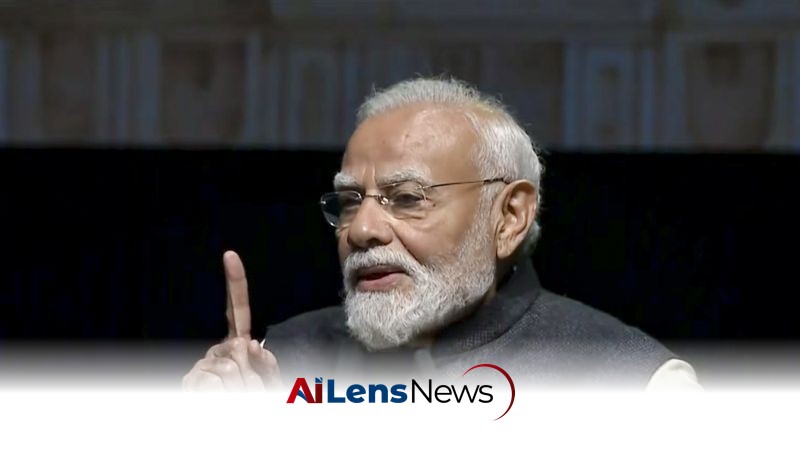


As PM Modi prepares for his visit to Punjab, the BJP and AAP present contrasting narratives, focusing on infrastructure and irrigation funding.
Leh, India Jul 16, 2026 ALN: As Prime Minister Narendra Modi gears up for his visit to Punjab, the political landscape is heating up with the Bharatiya Janata Party (BJP) and the Aam Aadmi Party (AAP) presenting competing narratives. This visit is pivotal, as both parties aim to sway public opinion and showcase their respective achievements. Punjab, known for its rich agricultural heritage and vibrant culture, has been a focal point of political activity, especially in the context of regional development and governance.
The backdrop to this political clash is the ongoing struggle for influence in Punjab, a state that has seen significant political shifts over the past few years. The BJP, traditionally stronger in northern India, has been working to establish a foothold in Punjab, a region where it has historically faced challenges. The AAP, which has made substantial gains in recent elections, particularly in urban areas, is keen to maintain its momentum and capitalize on local issues that resonate with voters.
The BJP has emphasized the significant infrastructure projects funded by the central government in Punjab. Party leaders argue that these initiatives are crucial for the state's development and are a testament to the Modi administration's commitment to improving the lives of Punjabis. They highlight various completed and ongoing projects that aim to enhance connectivity and boost economic growth, such as road construction, transportation upgrades, and energy projects. The BJP's narrative centers around the idea that a robust infrastructure is foundational for attracting investment and fostering economic opportunities in Punjab.
Moreover, the BJP has been keen to showcase its role in facilitating these projects through various schemes and funding mechanisms. This includes investments in rail and road networks that connect rural areas to urban markets, which are essential for farmers looking to sell their produce. The party's leaders often cite these achievements as evidence of their proactive governance and ability to bring resources to the state, portraying themselves as the agents of change that Punjab needs.
In contrast, the AAP is leveraging the visit to push for more central assistance, particularly for irrigation projects in Ropar. AAP leaders have criticized the BJP for what they describe as inadequate support for Punjab's agricultural sector. They argue that the state needs urgent help to address water scarcity and improve irrigation facilities, which are vital for the livelihoods of farmers. The AAP has positioned itself as the party that understands the struggles of the common man, particularly those in the agrarian sector, claiming that the BJP's focus on infrastructure overlooks the immediate needs of farmers.
The AAP's leaders have been vocal about the challenges faced by farmers in Punjab, especially in the wake of the ongoing water crisis exacerbated by climate change and mismanagement of resources. They argue that without substantial investment in irrigation and water management, the agricultural sector's sustainability is at risk. This narrative resonates with a significant portion of the electorate, particularly in rural areas where agriculture is the primary source of income.
This clash of narratives comes at a crucial time as both parties prepare for upcoming elections. The BJP aims to solidify its presence in Punjab, while the AAP seeks to capitalize on local issues to gain an upper hand. The contrasting approaches reflect deeper political strategies as each party attempts to resonate with the electorate. For the BJP, the focus on infrastructure is not just about development but also about projecting an image of competence and reliability. For the AAP, the emphasis on agricultural issues is a way to connect with voters on a personal level, highlighting their day-to-day struggles.
The implications of this political showdown extend beyond the immediate electoral contest. It also reflects broader trends in Indian politics, where regional parties are increasingly asserting themselves against national parties. The AAP's rise in Punjab can be seen as part of a larger narrative of regionalism, where local issues take precedence over national agendas. This shift could have lasting effects on how political parties engage with voters across India, particularly in states with distinct identities and needs.
Public reaction to these narratives will likely shape the political discourse leading up to the elections. Voters are keenly observing how these parties address their concerns, particularly regarding infrastructure and agricultural support. The effectiveness of each party's message will be critical in determining their success in the region. As both parties ramp up their campaigns, they will need to not only articulate their visions but also demonstrate a genuine understanding of the challenges faced by the populace.
Polling data and public sentiment will play a crucial role in shaping the strategies of both the BJP and AAP in the lead-up to the elections. The BJP's ability to effectively communicate its achievements and future plans will be tested against the AAP's grassroots campaigning and focus on immediate local issues. The AAP's narrative may appeal more to the rural electorate, while the BJP's infrastructure focus may resonate with urban voters looking for economic growth and development.
As PM Modi's visit approaches, the tension between the BJP and AAP is expected to intensify, with both parties ramping up their campaigns to capture the attention of the electorate. The visit itself is likely to be a focal point for both parties, with the BJP planning to showcase its achievements and the AAP planning to leverage the occasion to highlight its demands for greater support for Punjab. The outcome of this political battle will not only influence the immediate electoral landscape but could also set the tone for future political engagements in Punjab and beyond.
In conclusion, the clash between the BJP and AAP over narratives leading up to PM Modi's visit underscores the dynamic and often contentious nature of Indian politics. As both parties vie for the hearts and minds of voters, the stakes are high, and the implications of their strategies will resonate well beyond the borders of Punjab, reflecting larger trends in governance, regional identity, and electoral politics in India.
To learn more about the latest developments in Political Controversies, stay updated with our exclusive reports and analyses on AiLensNews.

