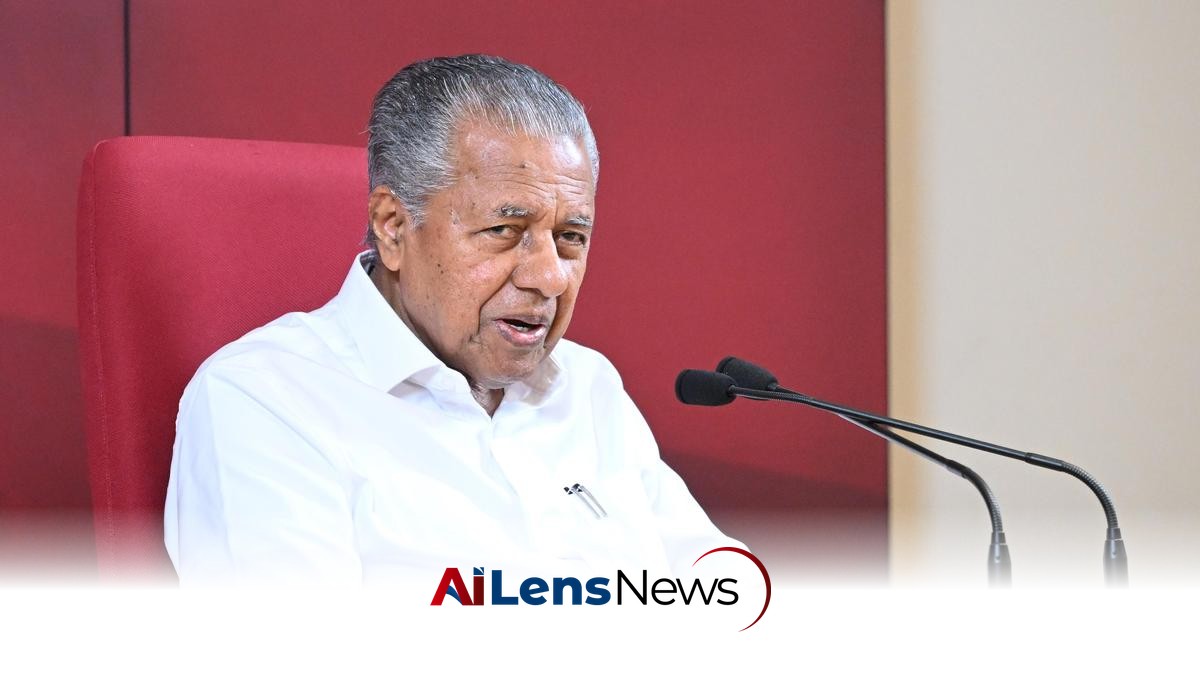


Pinarayi Vijayan condemns the arrest of Rahul Gandhi during protests against NEET exam irregularities, claiming the Centre is using force to suppress dissent.
Thiruvananthapuram, India Jul 22, 2026 ALN: Pinarayi Vijayan, the Leader of the Opposition in the Assembly, has recently voiced his strong condemnation regarding the arrest of Congress leader Rahul Gandhi, which took place a day earlier outside the Prime Minister’s residence in Delhi. This incident occurred during a protest that was organized in response to police actions against student demonstrators. The arrest has sparked significant political discourse, highlighting the ongoing tensions between the ruling government and opposition parties over issues related to education and civil rights.
Rahul Gandhi, along with his sister Priyanka Gandhi, Congress chief Mallikarjun Kharge, and other prominent leaders from the Congress party, staged a dharna, or sit-in protest, outside the residence of Prime Minister Narendra Modi. Their demands were centered around the Prime Minister's resignation in light of the police's aggressive response to students protesting alleged irregularities in the NEET (National Eligibility cum Entrance Test) examination. The NEET exam has been a controversial topic in India, with numerous allegations surfacing over the years regarding its fairness and the integrity of the examination process.
In a Facebook post, Mr. Vijayan emphasized the growing momentum of the protests against the alleged irregularities surrounding the NEET exam. He pointed out that the agitation, which began weeks prior, initially saw support from Left student organizations and activists, including education reform advocate Sonam Wangchuk and supporters of the Cockroach Janta Party (CJP). As the protests gained traction, they began to attract a broader coalition of opposition parties and leaders, indicating a significant shift in the political landscape surrounding educational reforms.
Mr. Vijayan articulated concerns that the Central government was attempting to suppress the agitation through forceful means. He noted that the protesters, alongside various opposition political figures, were vocal about their demands for accountability regarding the alleged NEET exam irregularities and were calling for the resignation of Union Education Minister Dharmendra Pradhan. The use of force against peaceful demonstrators has raised alarms about the state of civil liberties in the country, with many observers drawing parallels to other instances of governmental suppression of dissent.
In his remarks, Mr. Vijayan also referenced reports indicating that groups of individuals, described as “a gang of thugs with lathis,” were allegedly attacking protesters in conjunction with police forces. This characterization of the police response has fueled further outrage among opposition leaders and civil rights activists, who argue that such actions are indicative of a broader pattern of governmental repression against dissenters. The situation has drawn the attention of various human rights organizations, which have begun to monitor the events closely.
“The more the Central government tries to suppress the protest, the more public support it gains,” Mr. Vijayan asserted in his post, reflecting a sentiment shared by many within the opposition. This observation underscores a critical aspect of modern political protests: the perception of governmental overreach can often galvanize public support for the demonstrators, transforming localized grievances into national movements.
On Monday, thousands of students and activists converged at Jantar Mantar in New Delhi for the CJP’s proposed march to Parliament. Despite heavy security measures, including multi-layered barricades and prohibitory orders under Section 163 of the Bharatiya Nagarik Suraksha Sanhita, the demonstration proceeded, illustrating the determination of the protesters. The police response was swift and forceful; reports indicate that law enforcement utilized lathicharge (a method of dispersing crowds using batons) and tear gas to control the crowd after demonstrators attempted to march towards Parliament. Both the police and the protesters have exchanged blame for the violence that ensued, creating a complex narrative around the events.
The agitation, which commenced on June 20, has focused on several key issues: accountability for alleged irregularities in competitive examinations, necessary reforms in the education system, and the resignation of Union Education Minister Dharmendra Pradhan. The NEET exam, which serves as a gateway for students aspiring to enter medical colleges in India, has been criticized for its perceived lack of transparency and fairness. The examination's format and the conduct of the testing process are frequently scrutinized, with students and educators alike calling for comprehensive reforms.
The implications of these protests extend beyond the immediate demands of the demonstrators. They highlight a growing discontent among the youth and educational institutions regarding the current policies and governance of the education sector. The involvement of prominent political figures like Rahul Gandhi and the mobilization of various political groups signal that the issue of educational reform may become a central theme in the upcoming electoral landscape. Political analysts suggest that the government's handling of this situation could significantly influence public perception and voter sentiment in future elections.
As the protests continue to unfold, the response from the Central government will be pivotal. The potential for escalation remains, as both sides appear entrenched in their positions. The opposition's ability to unify various factions around the issue of educational reform could lead to broader coalitions against the ruling party, while the government's strategy to manage dissent will be closely watched by both supporters and critics alike. The outcome of this agitation may set important precedents for how civil rights and freedoms are navigated in India’s democratic framework.
To fully understand the implications of this political unrest, it is essential to consider the historical context of student movements in India. The country has a rich legacy of student activism, often acting as a catalyst for significant political and social change. From the anti-emergency protests in the 1970s to more recent movements against the Citizenship Amendment Act (CAA), students have played a crucial role in challenging governmental policies and advocating for civil liberties. The current protests against the NEET exam irregularities resonate with this historical backdrop, suggesting a resurgence of student activism in response to perceived injustices.
Moreover, the NEET examination itself has been a focal point of contention within the education sector. Established in 2013, NEET was designed to standardize the admission process for medical colleges across India. However, it has faced criticism for its implementation, with allegations of corruption, favoritism, and a lack of adequate preparation resources for students from marginalized backgrounds. The protests are not merely about the NEET exam; they symbolize a broader struggle for educational equity and reform in a system that many perceive as increasingly inequitable.
The involvement of various political parties in the protests also highlights the complex interplay between education and politics in India. While the Congress party has taken a leading role in the current agitation, other opposition parties have also expressed solidarity with the cause. This coalition-building is indicative of a strategic shift in Indian politics, where educational issues are becoming central to electoral strategies. The potential for these protests to evolve into a larger movement advocating for comprehensive educational reforms could reshape the political landscape in the lead-up to future elections.
In conclusion, the arrest of Rahul Gandhi and the subsequent protests against the NEET exam irregularities reflect deep-seated frustrations among students and the broader public regarding educational governance in India. As the situation develops, it will be crucial to observe how both the government and opposition navigate this complex terrain. The outcomes of these protests may not only influence immediate political dynamics but could also have lasting implications for civil rights, educational policies, and the future of democratic engagement in India.
To learn more about the latest developments in Political Controversies, stay updated with our exclusive reports and analyses on AiLensNews.

