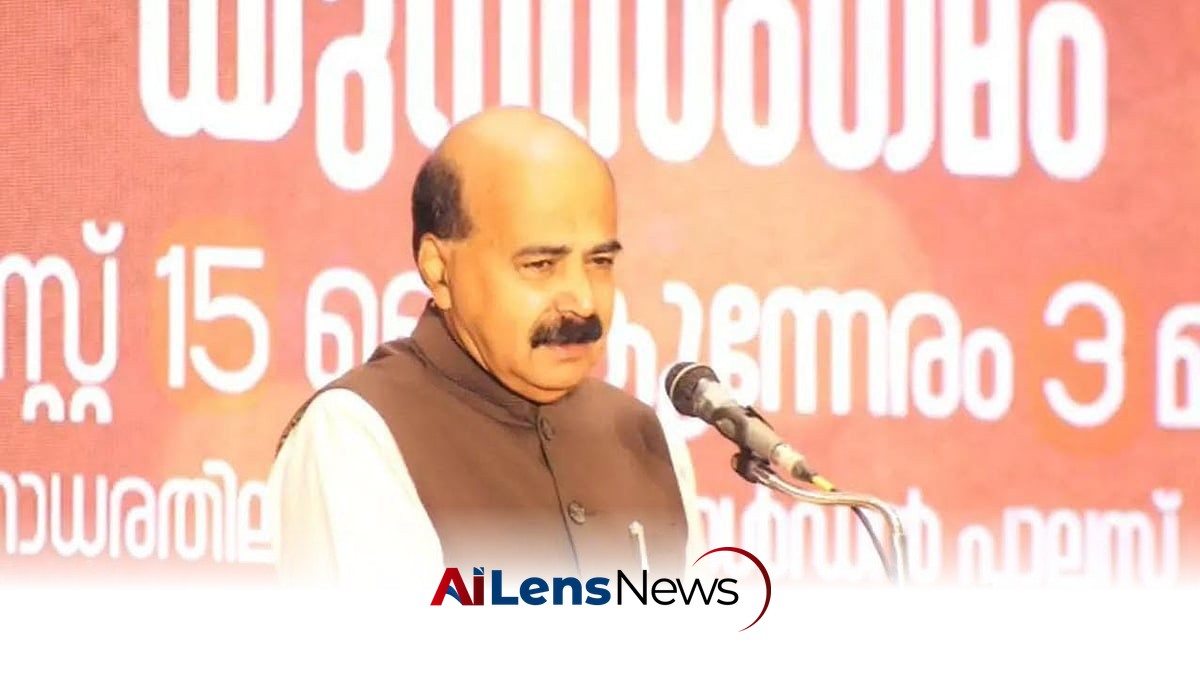



Kerala University VC Mohanan Kunnummal's comments at an RSS event about Vande Mataram have ignited political backlash, highlighting ongoing tensions in the state.
Thiruvananthapuram, India Aug 16, 2026 ALN: A speech by Kerala University Vice-Chancellor Mohanan Kunnummal at a Rashtriya Swayamsevak Sangh event has sparked significant political controversy in the state. During his address, Kunnummal stated that those who oppose singing Vande Mataram do not know who their mother is. This statement has ignited a heated debate in a state that is often characterized by its diverse political landscape and strong ideological divides.
Kunnummal, who is also the acting Vice-Chancellor of the University of Kerala, made these remarks while delivering the Independence Day message at Sankalp 2026, an RSS-organized gathering of youth in Neyyattinkara, Thiruvananthapuram, on August 15. The RSS, a right-wing Hindu nationalist organization, has been known for its efforts to promote a particular vision of Indian nationalism, often emphasizing cultural and religious elements that resonate with its ideology.
In his speech, Kunnummal emphasized the importance of the mother figure in Indian culture, explaining that India is often referred to as Bharatamba (Mother India) and that Vande Mataram is a tribute to this concept. He stated, “In India, the mother is of paramount importance; hence, we refer to India as ‘Bharat Mata’ (Mother India). That is why we pray by saying Vande Mataram. Those who oppose saying Vande Mataram are people who don’t know who the mother is. Those who know who the mother is and understand what a mother means will always say Vande Mataram.” His comments reflect a broader narrative that positions patriotism as an intrinsic part of cultural identity, particularly in the context of India's historical struggle for independence.
Following the backlash, Kunnummal clarified to a local news outlet that his reference to “mother” was meant to symbolize the motherland, an assertion that attempts to mitigate the criticism he faced. However, the damage had already been done; the remarks resonated with various student organizations, including the Student Federation of India (SFI), affiliated with the Communist Party of India (Marxist) [CPI(M)], and the All India Students' Federation (AISF). These groups have previously expressed concerns regarding Kunnummal's participation in RSS events, viewing it as indicative of a growing alignment between educational institutions and right-wing ideologies.
This controversy comes against the backdrop of a larger political debate in Kerala regarding the full rendition of Vande Mataram. The song, originally composed by Bankim Chandra Chatterjee in the late 19th century, has been a subject of contention in Indian politics. While it is recognized as a national song, its later stanzas, which include religious imagery, have faced objections from various quarters, particularly among secular and leftist groups who argue that such representations are not inclusive of India's diverse religious landscape.
Tensions escalated after Kerala Chief Secretary Bishwanath Sinha directed that the Union government’s instructions on singing the national song in its entirety be adhered to during events related to the Har Ghar Tiranga campaign. This campaign, initiated by the central government, aimed to encourage citizens to display the national flag and foster a sense of patriotism. The directive to sing the full version of Vande Mataram at these events has been met with mixed reactions, reflecting the complex interplay of nationalism, regional identity, and cultural representation in Kerala.
The Union Ministry of Home Affairs has recommended an official six-stanza version of Vande Mataram for occasions when the national song is performed. However, the later stanzas, which include religious imagery, have faced objections, raising concerns about the secular fabric of the nation. Critics argue that such elements may alienate non-Hindu communities and undermine the inclusive spirit that is essential in a diverse country like India.
Notably, Vande Mataram was not sung at the Kerala government’s Independence Day celebrations held at the Central Stadium in Thiruvananthapuram. This decision was likely influenced by the ongoing debates surrounding the song and its implications for communal harmony. In contrast, the Bharatiya Janata Party (BJP) has actively sung the full version of Vande Mataram at various events throughout the state, positioning itself as the champion of a particular brand of nationalism that aligns closely with the RSS's vision.
The controversy surrounding Kunnummal's remarks and the broader discussions about Vande Mataram reflect the ongoing ideological battles within Indian society, particularly in states like Kerala where leftist and secular ideologies have historically held sway. As the political landscape evolves, the implications of these debates extend beyond mere rhetoric, influencing educational policies, cultural practices, and the very notion of what it means to be Indian in a rapidly changing world.
In conclusion, the remarks made by Kunnummal have brought to the forefront critical questions about nationalism, cultural identity, and the role of educational institutions in shaping political discourse. As Kerala navigates these complex issues, the responses to such controversies will likely continue to shape the state's political dynamics and the broader national conversation on identity and belonging in India.
To learn more about the latest developments in Political Controversies, stay updated with our exclusive reports and analyses on AILensNews.

