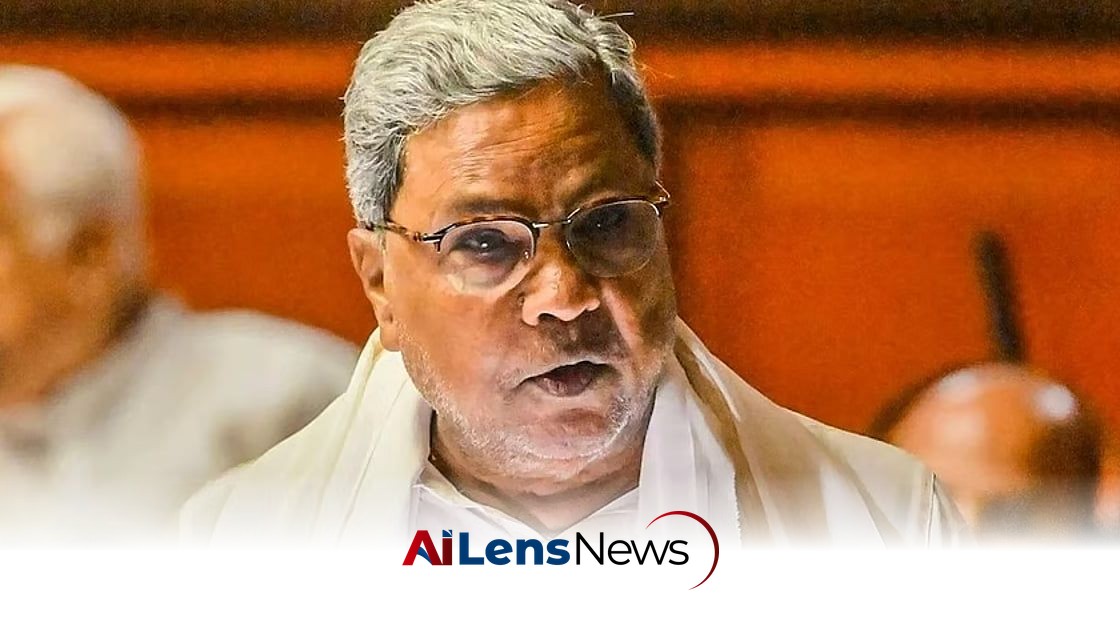


Former Karnataka Chief Minister Siddaramaiah announces he will not contest the 2028 Assembly elections, emphasizing his continued involvement in public life.
Bengaluru, India Jul 26, 2026 ALN: K R Pet (Mandya): Former Karnataka Chief Minister Siddaramaiah has confirmed his decision to retire from electoral politics ahead of the 2028 Assembly elections, a declaration that has sent shockwaves through the political landscape of Karnataka. Siddaramaiah, who has been a prominent figure in the state's politics for decades, made this announcement during an event commemorating the 86th birth anniversary of the late Krishna, a respected former speaker, held in K R Pet, Mandya district.
The former Chief Minister's statement, "I have decided not to contest the 2028 elections for any reason," was met with palpable disappointment among his supporters and party workers who had gathered in large numbers for the event. Siddaramaiah's political career has been marked by a series of significant achievements and challenges, and his decision to step back from electoral contests raises questions about the future direction of the Indian National Congress (INC) in Karnataka.
Despite his retirement from electoral politics, Siddaramaiah clarified that he would not be withdrawing from active political engagement. He emphasized, "The late K R Pet Krishna retired from politics because he didn't want to be in politics. But I haven’t given up on politics yet," indicating that he intends to remain involved in political discourse and activities, albeit not as a candidate in future elections. This distinction suggests a potential shift in how he plans to influence the party and the political scene in Karnataka.
Siddaramaiah's announcement comes at a time when the Karnataka political landscape is evolving rapidly. The Congress party, which has faced challenges in recent years, is looking to solidify its position in the state. Siddaramaiah has been a key player in the party, known for his ability to connect with the grassroots and articulate the concerns of various communities. His decision to retire from electoral politics could open up opportunities for new leadership within the party, especially as the 2028 elections approach.
The former Chief Minister's career has been characterized by his commitment to social justice, welfare programs, and inclusive governance. He has been instrumental in implementing various initiatives aimed at uplifting marginalized communities in Karnataka, including the Anna Bhagya scheme, which provides subsidized food grains to the poor. His leadership style has often been described as populist, focusing on direct benefits to the electorate. This approach has garnered him significant support among the poorer sections of society, who have benefited from his policies.
However, Siddaramaiah's journey has not been without controversy. His tenure as Chief Minister from 2013 to 2018 was marked by significant political rivalries, including with leaders from his own party. The dynamics within the Congress party in Karnataka have often been complex, with factions emerging and competing for influence. Siddaramaiah's decision to step back from electoral politics may be seen as a strategic move to allow for a new generation of leaders to emerge and potentially heal rifts within the party.
In recent months, there have been speculations regarding the internal dynamics of the Congress party, particularly concerning Siddaramaiah's relationship with other key leaders. For instance, Satish Jarkiholi, a prominent Congress leader, recently denied any rift with Siddaramaiah, asserting that their ties remain strong. This statement reflects the importance of unity within the party, particularly as it prepares for future electoral battles. The Congress party has faced challenges in maintaining cohesion, especially with the rise of regional parties and the competing influence of the Bharatiya Janata Party (BJP).
The implications of Siddaramaiah's retirement from electoral politics extend beyond the Congress party. His departure from the electoral arena could reshape the political landscape in Karnataka, influencing voter sentiments and party strategies. As the state gears up for the 2028 elections, other political parties, including the BJP and regional parties, will likely reassess their approaches in light of this development. The BJP, which has been gaining ground in Karnataka, may see this as an opportunity to consolidate its power and appeal to voters who are looking for alternatives to the Congress party.
Furthermore, Siddaramaiah's decision raises questions about the generational transition in Indian politics. As veteran leaders step back, there is an opportunity for younger politicians to take the reins and bring fresh perspectives to governance. This transition could lead to a shift in policy priorities and political strategies, particularly in a state like Karnataka, which has a diverse electorate with varying needs and aspirations. The emergence of new leaders could also be crucial in addressing the challenges posed by changing demographics and socio-economic conditions in the state.
As Siddaramaiah prepares to retire from electoral contests, his legacy will continue to be a topic of discussion among political analysts and the public. His contributions to Karnataka's political landscape, particularly in championing social welfare initiatives and advocating for marginalized communities, will likely be remembered as significant milestones in the state's history. His tenure has seen the implementation of various social welfare schemes, which have had a lasting impact on the lives of many citizens.
In conclusion, Siddaramaiah's announcement to retire from electoral politics marks a significant moment in Karnataka's political journey. While he may no longer contest elections, his continued involvement in active politics suggests that he will remain a key figure in shaping the discourse and direction of the Congress party and the state's governance. As Karnataka approaches the 2028 elections, the political ramifications of this decision will be closely watched by supporters, opponents, and political commentators alike. The future of the Congress party in Karnataka, as well as the broader implications for the state's political landscape, will depend on how effectively new leadership can emerge and adapt to the evolving political environment.
To learn more about the latest developments in Elections, stay updated with our exclusive reports and analyses on AiLensNews.

