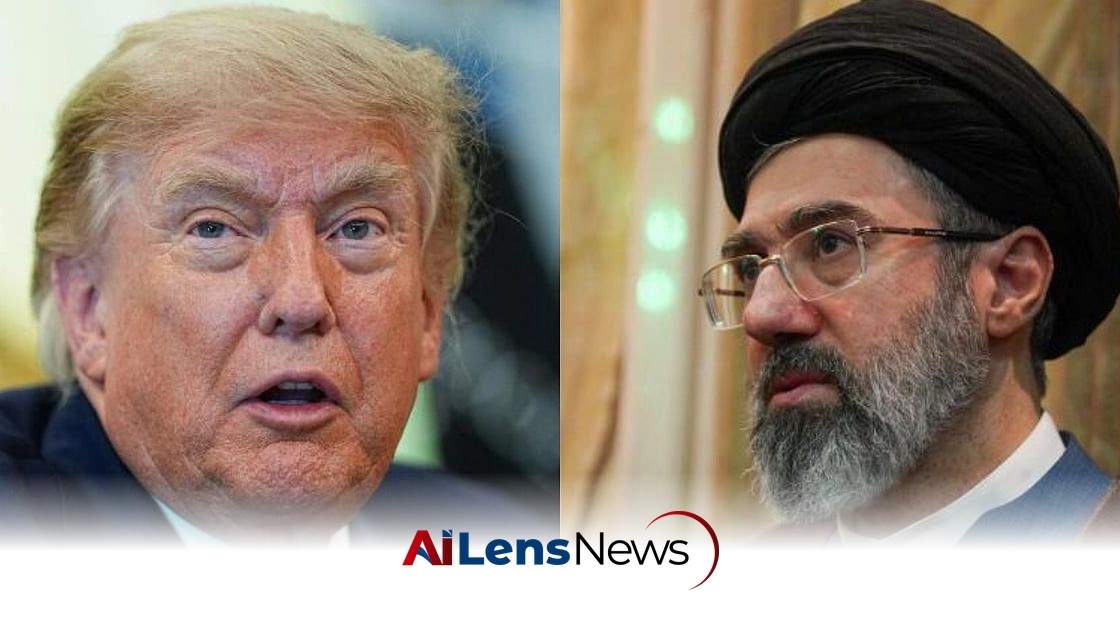


As conflict intensifies, Iran's Supreme Leader Mojtaba Khamenei warns of dire consequences for US actions, while regional allies respond to escalating attacks.
New Delhi, India Jul 18, 2026 ALN: The ongoing conflict between Iran and the United States has reached a critical point, with significant developments reported over the weekend. Two U.S. military personnel were killed in Jordan during an Iranian missile and drone attack, according to the U.S. Central Command. This incident marks a severe escalation in hostilities, which have been brewing for years, particularly since the U.S. withdrawal from the Joint Comprehensive Plan of Action (JCPOA) in 2018, a move that has been widely criticized and has led to heightened tensions in the region.
The relationship between the United States and Iran has been fraught with tension since the Islamic Revolution in 1979, which resulted in the overthrow of the U.S.-backed Shah and the establishment of the Islamic Republic. The U.S. has viewed Iran as a destabilizing force in the Middle East, particularly due to its support for militant groups such as Hezbollah and its involvement in conflicts across the region, including Syria and Yemen. Conversely, Iran perceives U.S. actions in the region, including military interventions and sanctions, as direct threats to its sovereignty and security.
The JCPOA, often referred to as the Iran nuclear deal, was initially seen as a landmark agreement aimed at curbing Iran's nuclear program in exchange for the lifting of economic sanctions. However, following the U.S. withdrawal from the agreement under President Donald Trump, Iran began to gradually reduce its compliance with the deal, leading to increased tensions and a series of confrontations.
Iran's Supreme Leader, Mojtaba Khamenei, issued a stark warning about the consequences of continued U.S. aggression. He stated that the U.S. would face 'unforgettable lessons' if it persists in its military actions against Iran. Khamenei's remarks were broadcast on state television, emphasizing the seriousness of the situation. His statement reflects a broader narrative within Iranian leadership that views U.S. actions as a direct threat to national sovereignty and regional stability.
In a separate statement, Khamenei criticized U.S. President Donald Trump's signature on agreements with Iran, labeling it as 'worthless and invalid.' This comment came after Iran announced it would suspend its commitments to a recent interim deal with the U.S., citing repeated violations by Washington. The breakdown of trust between Iran and the U.S. has been exacerbated by a series of sanctions imposed by the Trump administration, which aimed to curb Iran's nuclear ambitions but have instead led to increased hostility and military confrontations.
Lebanese President Joseph Aoun is set to meet with President Trump in Washington, marking the first visit by a Lebanese head of state since 2009. Discussions will focus on the situation in Lebanon and efforts to strengthen the ceasefire with Israel, particularly regarding Israeli withdrawals from occupied territories. This meeting occurs against the backdrop of regional instability, where Iran's influence in Lebanon, through groups like Hezbollah, has raised concerns among U.S. allies in the region.
Pakistan and Kuwait have also urged both the U.S. and Iran to adhere to a Memorandum of Understanding aimed at reducing tensions. This plea was made during a conversation between the foreign ministers of the two countries, highlighting the regional concern over escalating hostilities. The involvement of neighboring countries in mediating the conflict underscores the potential for broader regional implications, should the situation deteriorate further.
Reports indicate that Iran has suspended its commitments to the MoU due to ongoing U.S. attacks. Iranian Deputy Foreign Minister Kazem Gharibabadi stated that the U.S. has violated its obligations, prompting Tehran to focus on national defense. This shift in Iran's stance illustrates the complexity of the conflict, where diplomatic agreements can quickly unravel under the pressure of military actions.
Kuwait has reported multiple Iranian strikes on civilian infrastructure, including a power and water plant, as well as oil facilities. The Kuwaiti government condemned these actions as hostile attacks that threaten civilian safety. Such strikes not only escalate military tensions but also raise humanitarian concerns, as civilian infrastructure is crucial for daily life and stability in the region.
Bahrain's military claimed to have intercepted a new wave of Iranian aerial attacks, successfully thwarting the assaults on its territory. Meanwhile, Jordan's army reported the interception of ten Iranian missiles, emphasizing its commitment to national sovereignty amidst rising tensions. These defensive measures by regional allies of the U.S. indicate a preparedness to respond to Iranian aggressions, which could lead to a broader military confrontation in the region.
Iran's Islamic Revolutionary Guard Corps (IRGC) has warned countries hosting U.S. military forces to prepare for a 'corresponding response' to any attacks, further escalating the rhetoric surrounding the conflict. This statement reflects Iran's strategy of deterrence, where it seeks to signal its capabilities and willingness to respond to perceived threats, thereby complicating the security landscape in the Middle East.
The implications of the current situation extend beyond the immediate conflict between the U.S. and Iran. The ongoing hostilities have the potential to destabilize the entire region, affecting neighboring countries and leading to broader military engagements. The involvement of various regional players, including proxy groups aligned with Iran, could further complicate the dynamics of the conflict. The potential for miscalculation or accidental escalation remains a significant concern, as both sides may misinterpret military actions or rhetoric.
Moreover, the humanitarian impact of the conflict cannot be overlooked. Civilian populations in areas affected by military strikes face increased risks, and the destruction of critical infrastructure can lead to long-term consequences for economic stability and public health. As the situation unfolds, the international community is likely to face pressure to intervene or mediate, particularly from countries that are directly affected by the conflict.
The situation in the Middle East remains volatile, with diplomatic efforts ongoing amid military engagements. As tensions rise, the international community watches closely, hoping for a resolution to the conflict that has far-reaching implications for regional stability. The potential for miscalculation on either side could lead to a larger conflict, drawing in multiple nations and destabilizing an already fragile geopolitical landscape. The path forward will require careful navigation of diplomatic channels and a commitment to de-escalation from both Iran and the United States, as well as their respective allies.
In summary, the recent developments highlight the precarious nature of U.S.-Iran relations and the broader implications for the Middle East. The interplay of military actions, diplomatic negotiations, and regional responses will be crucial in shaping the future of this enduring conflict. As both nations grapple with their strategic interests, the hope remains that dialogue can prevail over confrontation, allowing for a more peaceful resolution to the ongoing tensions.
To learn more about the latest developments in Political Controversies, stay updated with our exclusive reports and analyses on AiLensNews.

