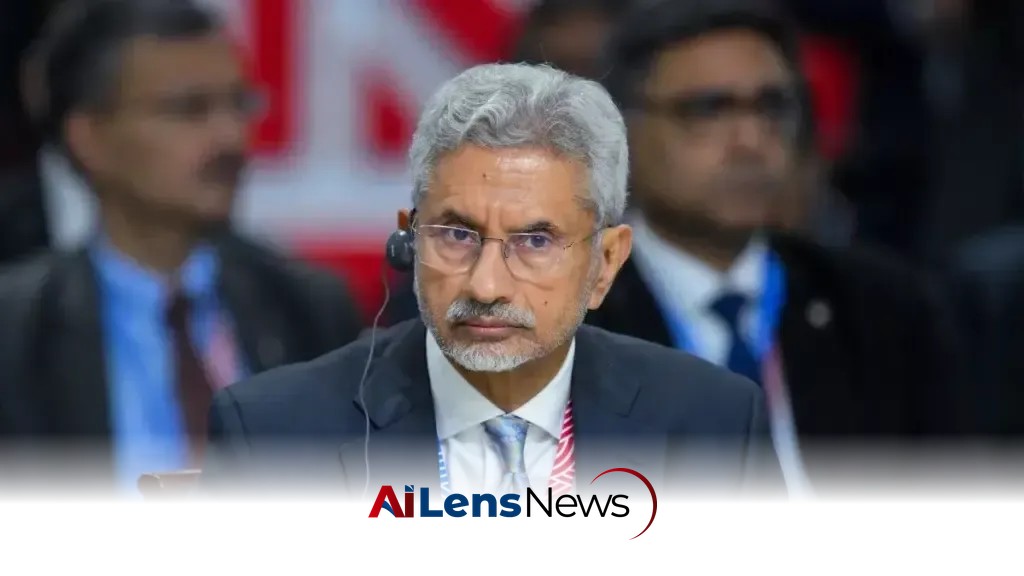


External Affairs Minister S. Jaishankar emphasizes India's commitment to global peace and security as the country campaigns for a non-permanent seat at the UNSC.
New Delhi, India Jul 15, 2026 ALN: External Affairs Minister S. Jaishankar officially launched India’s campaign for a non-permanent seat at the United Nations Security Council (UNSC) for the 2028-29 term, stating that the country’s presence in this vital body will enhance decision-making at a time when the world faces significant challenges.
India's pursuit of a non-permanent seat at the UNSC is not merely a diplomatic endeavor but reflects its aspirations on the global stage. The UNSC, composed of 15 members, including five permanent members with veto power, plays a crucial role in maintaining international peace and security. The non-permanent members serve for two-year terms and are elected by the General Assembly. India's campaign underscores its commitment to a multilateral approach in addressing global issues, particularly in a world increasingly characterized by complexity and interdependence.
“Never before has the world possessed such immense capabilities to advance human welfare at this scale. At the same time, we are witnessing levels of conflict, violence, and instability that threaten even those who may be far away. To address this complexity, the United Nations must take the lead, and the Security Council must show the way. Elections to its membership consequently assume great importance,” Jaishankar stated, highlighting the duality of progress and conflict that defines the current global landscape.
The elections for the 2028-29 term will be held in June next year, where India and Tajikistan will contest the only seat from the Asia-Pacific category. This competitive dynamic is indicative of the broader geopolitical shifts occurring within the region and the world at large. India, as one of the largest democracies and a rapidly growing economy, believes it can bring a unique perspective to the Council that reflects the aspirations of developing nations.
Jaishankar strongly advocated for India’s candidature, emphasizing the country’s focus on working towards a secure, peaceful, and equitable world. He articulated a vision for a world where the voice of the Global South is heard equally, and where peacekeeping is prepared for contemporary and future challenges. This vision resonates with many nations that feel marginalized in global governance structures, particularly in light of the historical dominance of Western nations in international institutions.
“A world where multilateralism reflects contemporary realities and provides effective solutions, not merely remains a bystander. A world where the promise of technology is fully realized while safeguarding against its misuse and misapplication. A world whose oceans are safe and secure, ensuring that maritime lifelines are not threatened. A world where the scourge of terrorism is countered by choking the resources that feed it. And a world where climate action and climate justice, clean energy transitions, and sustainable growth are both valued and pursued,” he added, outlining a comprehensive agenda that addresses the multifaceted challenges of our time.
Jaishankar's remarks touch upon several critical issues that are not only relevant to India but are also of global concern. The emphasis on technology reflects a growing awareness of its dual nature as both a tool for progress and a potential source of conflict. The call for secure oceans highlights the importance of maritime security in an era where trade routes are increasingly vulnerable to geopolitical tensions and piracy.
Moreover, the fight against terrorism remains a priority for many nations, and India’s experience in counter-terrorism can provide valuable insights to the UNSC. The mention of climate action and justice underscores the urgent need for collective action in the face of climate change, which poses existential threats to many countries, particularly those in the Global South that are disproportionately affected despite contributing the least to the problem.
According to Jaishankar, recent developments have shown that peace, progress, and prosperity cannot be sustained in a fragmented manner. “We are too tightly bound, whether it is through supply chains, technology, or communication. The world must, therefore, focus on holistic advancement, both as individual nations and as the international community. But that journey can only be undertaken effectively when global order is valued and rules are respected,” he stated, emphasizing the interconnectedness of nations in addressing global challenges.
This perspective is particularly relevant in the context of recent global events that have exposed vulnerabilities in international cooperation. The COVID-19 pandemic, for instance, highlighted the need for solidarity and collective action in health and economic recovery, while geopolitical tensions have underscored the importance of maintaining dialogue and cooperation among nations.
This, he said, places a premium on norms, trust, and integrity. “Securing Holistic Advancement through Norms, Trust, and Integrity; i.e., SHANTI, as an acronym, which is our word for peace,” he added. The use of the term SHANTI not only reflects India’s cultural ethos but also serves as a call to action for the international community to embrace principles that foster cooperation and mutual respect.
Jaishankar concluded by asserting that India believes peace is strengthened by participation, not achieved by domination. The world is inherently pluralistic, and it is imperative that globally consequential decisions and policies are made through adequate deliberation. This statement encapsulates India’s approach to international relations, which advocates for a multipolar world where diverse voices contribute to decision-making processes.
India’s bid for a non-permanent seat at the UNSC is also seen as a step towards its long-standing aspiration for a permanent seat on the Council. The question of reforming the UNSC to include more permanent members has been a contentious issue for years, with many nations advocating for a more representative body that reflects the current geopolitical realities. India’s active participation in the UNSC as a non-permanent member could bolster its case for permanent membership in the future.
The implications of India securing a non-permanent seat extend beyond its national interests; it could also influence the dynamics of international diplomacy, particularly in the Asia-Pacific region. As a rising power, India’s role in the UNSC could help address regional security concerns, promote stability, and foster development initiatives that benefit not only India but also its neighbors and the broader international community.
In conclusion, India’s campaign for a non-permanent seat at the UNSC for the 2028-29 term is a significant diplomatic initiative that reflects its aspirations for a greater role in global governance. Through its candidacy, India aims to champion the voices of developing nations, advocate for a more equitable global order, and contribute to addressing the pressing challenges of our time. As the world prepares for the elections, the outcomes will be closely watched, with potential ramifications for international relations and the future of multilateralism.
To learn more about the latest developments in Elections, stay updated with our exclusive reports and analyses on AiLensNews.

