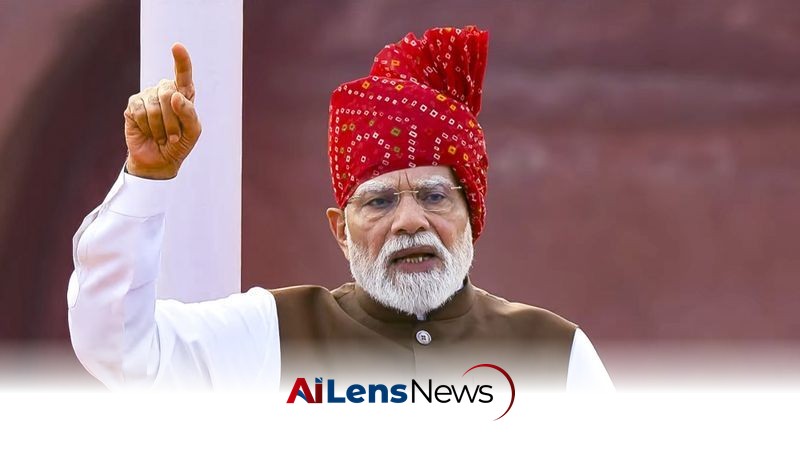


Following Prime Minister Modi's controversial remarks, the government clarifies that he was referring to Maoist supporters, not opposition leaders.
New Delhi, India Aug 17, 2026 ALN: In the wake of Prime Minister Narendra Modi's controversial reference to "dimagi naxals" during his 80th Independence Day address, the government has stepped in to clarify the intent behind his remarks. The comment sparked a political storm, with leaders from the Congress party and the Cockroach Janta Party expressing their outrage and demanding explanations.
The term "dimagi naxals" was interpreted by many as an attack on opposition leaders, leading to accusations of political maneuvering. However, government officials have since clarified that Modi was actually referring to individuals who support Maoist ideologies, rather than targeting any specific political opponents. This clarification is crucial in understanding the context of the Prime Minister's speech, where he aimed to address the broader issue of extremism and its impact on national security.
The backlash from opposition parties was swift. Congress leaders condemned the Prime Minister's remarks, arguing that such language is divisive and undermines democratic discourse. They emphasized the need for political leaders to engage in constructive dialogue rather than resorting to derogatory terms. The Congress party, which has been a vocal critic of the Modi administration, highlighted that using terms like "dimagi naxals" could further polarize the already charged political environment.
In contrast, supporters of the Prime Minister defended his comments, asserting that they were aimed at addressing the real threat posed by Maoist insurgents and their sympathizers. They argue that the Prime Minister's focus on national security is a priority that should transcend party lines. Supporters have pointed out that the term "naxal" refers to a specific ideology rooted in Maoist extremism, which has led to violence and instability in various regions of India, particularly in rural areas where the influence of such groups has historically been stronger.
In response to the uproar, a government spokesperson stated, "The Prime Minister's remarks were not directed at any political party or leader. They were aimed at highlighting the dangers posed by those who support extremist ideologies that threaten our nation's integrity." This clarification aims to quell the rising tensions and redirect the conversation towards national issues. It reflects the government's intention to focus on the challenges posed by extremism rather than engage in political mudslinging.
The clarification also underscores the government's commitment to addressing the issue of Maoist insurgency, which has been a longstanding concern for successive administrations. The Maoist movement, which originated in the late 1960s, has been responsible for numerous violent incidents, and the government has been working to combat this insurgency through a combination of security measures and developmental initiatives aimed at addressing the root causes of discontent in affected regions.
This incident raises important questions about the nature of political discourse in India. As political leaders navigate a complex landscape of alliances and rivalries, the language used in public addresses can have significant implications for public perception and party dynamics. The use of charged language can easily lead to misinterpretations and escalate tensions between parties, further complicating the already intricate political landscape.
Political analysts suggest that leaders should be cautious in their choice of words, especially in a climate where every statement is scrutinized and interpreted in various ways. The challenge remains for politicians to communicate effectively while fostering a respectful and constructive political environment. The incident serves as a reminder that political rhetoric can have far-reaching consequences, not only for the immediate political climate but also for the broader societal discourse.
Moreover, this situation highlights the growing trend of political polarization in India, where terms and phrases can quickly become rallying points for both support and opposition. As political parties increasingly rely on social media and other platforms to convey their messages, the potential for miscommunication and backlash becomes even more pronounced. This necessitates a more thoughtful approach to political communication, where leaders must balance the need for strong rhetoric with the imperative of maintaining civil discourse.
As the political landscape continues to evolve, the fallout from Modi's remarks serves as a reminder of the power of language in shaping public opinion. The government's clarification may help to mitigate some of the backlash, but the incident underscores the need for thoughtful communication in politics. As India approaches future elections, the manner in which political leaders express their views will be crucial in determining not just their electoral prospects, but also the overall health of democratic dialogue in the country.
In conclusion, the controversy surrounding the "dimagi naxals" comment reflects broader themes in Indian politics, including the challenges of addressing extremism, the importance of respectful discourse, and the delicate balance between security and civil liberties. As political leaders move forward, the lessons learned from this incident may shape their strategies and rhetoric in the months and years to come.
To learn more about the latest developments in Political Controversies, stay updated with our exclusive reports and analyses on AiLensNews.

